Field Notes
Biennale Arte 2026: In the Absence of… 2/2
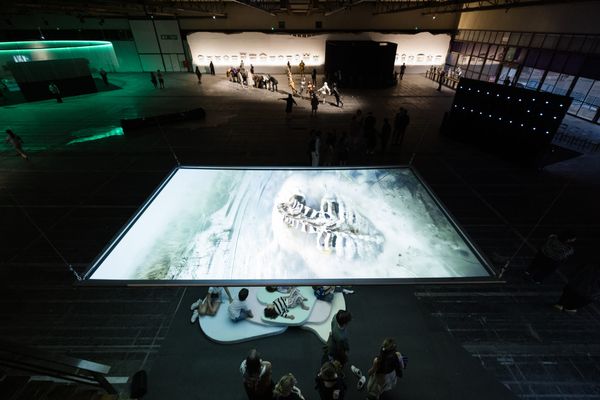
Maja Ćirić reviews the second part of Minor Keys, the 61st Venice Biennale, tracing Koyo Kouoh’s absence through delegated curating, mourning, accumulation, and polyphonic form.
Field Notes
Maja Ćirić reviews the second part of Minor Keys, the 61st Venice Biennale, tracing Koyo Kouoh’s absence through delegated curating, mourning, accumulation, and polyphonic form.
How Artists Build
The Art Students League’s Works in Public 2026 call points to a quieter stage of public sculpture: the training, site knowledge and fabrication thinking required before an artwork can enter shared space.
Field Notes
Women are already central to the art world’s labour. The question is why recognition so often fails to become protected time, authority, and continuity.
Art Market Watch
The cooling of ultra-contemporary art shows what happens when attention moves faster than the structures needed to protect value.
Field Notes
As Pace cuts artists and staff while calling the gallery model “unfixable,” the question is not only whether the market has weakened, but how many obligations a gallery of this scale can still credibly hold.
Art Market Watch
As high-value art moves through quieter formats, the public record becomes less a map of the market than a partial shadow of it.
Field Notes
Maja Ćirić reviews Minor Keys, the 61st Venice Biennale, tracing absence through protest, authority, national pavilions, and institutional rupture.
Law & Politics
Arts Council England’s replacement of Let’s Create moves the Hodge review from diagnosis into implementation, testing whether a new Strategic Framework can reduce procedural control rather than restate it in simpler language.
Art Market Watch
Auction recovery is easier to announce than to feel. Inside the trade, the question is no longer only what can sell, but what can still be defended after it sells.
Industry Mapping
As TEFAF New York nears closure, its tenth-anniversary edition shows how historic architecture, disciplined scale, cross-category collecting, museum presence, and object pressure convert market assurance into an atmosphere before the fair has fully ended.
Field Notes
As the Lucas Museum of Narrative Art opens with a founder‑curated inaugural programme, the question shifts from what is being shown to how narrative authority is being positioned before the institution fully enters public use.
Field Notes
As museums navigate unprecedented scale, technological mediation, and shifting demographics, the question is no longer only how to attract audiences, but how institutions organise themselves for the publics already shaping their future.