When Culture Is Asked to Become a Health Behaviour
A new study links arts and cultural engagement with slower epigenetic aging, with effects comparable to physical activity. The deeper issue is what happens when culture enters the evidence systems that decide what counts as health, value and public need.


The claim is easy to flatten.
Visit museums, age more slowly. Listen to music, protect the body. Take part in culture, live better. In the language of lifestyle journalism, a new study linking arts and cultural engagement with slower epigenetic aging almost asks to become another health tip.
But the more important shift is not that art can be added to the wellness list.
It is that cultural participation is entering a new evidence system.
Research like this does not arrive as a simple headline to be repeated. It has to be translated without being flattened, placed inside the cultural field without becoming advocacy, and read for what it changes in the language of value.
Researchers from University College London, writing in Innovation in Aging, analysed data from 3,556 adults in the UK Household Longitudinal Study and compared arts and cultural engagement with seven epigenetic clocks, measures that estimate aspects of biological aging through DNA methylation. They found associations between arts and cultural engagement and slower epigenetic aging in PhenoAge, DunedinPoAm and DunedinPACE, with comparable associations for physical activity.
The finding was not universal across all seven clocks. It appeared in one second-generation clock and two pace-of-aging clocks, but not in the older clocks trained more directly on chronological age. That difference matters because the study is not saying that culture simply makes people younger. It is pointing to a more specific relationship between leisure, health behaviour and the biological markers now used to understand aging.
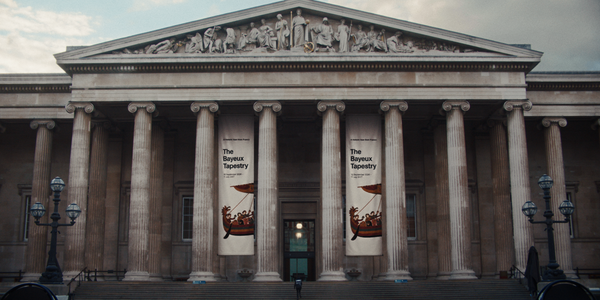
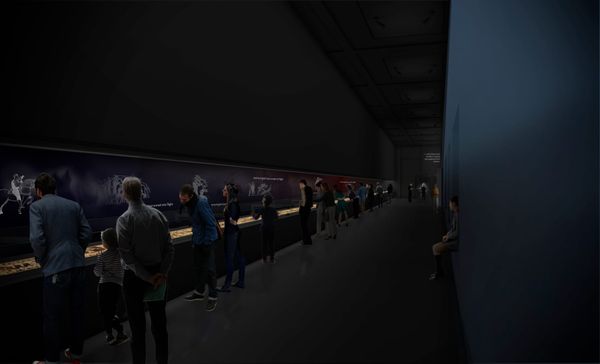
The study’s definition of arts and cultural engagement was broad. It included participatory arts such as singing, dancing, painting, photography and craft; receptive arts such as exhibitions and events; visits to heritage sites; and cultural activities including museums, libraries and archives. In other words, the evidence does not attach only to the museum visit. It attaches to a wider ecology of cultural participation.
That comparison with physical activity matters.
For decades, cultural participation has been defended through language that often sits outside the strongest policy channels: enrichment, identity, access, expression, social connection, learning, civic life. These remain necessary words. But they do not always travel easily through health systems, funding models or public-policy frameworks increasingly organised around measurable outcomes.
The new study moves culture into a different register.
Arts and cultural engagement is no longer being discussed only as something that improves mood, reduces isolation or supports wellbeing in a broad sense. It is being tested against biological markers associated with aging itself. That does not make a concert, a library visit, a museum afternoon or a dance class equivalent to a prescription. It does mean that the body is becoming one of the places where cultural life is asked to leave evidence.
That is both powerful and uncomfortable.
The power is clear. If arts engagement can be recognised as a health-promoting behaviour alongside physical activity, the argument for access changes. Culture becomes harder to treat as optional decoration around the serious work of health. Museums, libraries, galleries, heritage sites, music, making and participation can be understood as part of the conditions through which people stay socially, mentally and biologically supported across the life course.
But the discomfort matters too.
Once culture enters biological evidence, it becomes more legible to systems that may also narrow it. A museum visit can be counted. A singing group can be measured. A workshop can be translated into stress reduction, inflammation, social connection, cognitive stimulation or epigenetic association. That can strengthen the case for investment, but it can also shift the burden of proof. Art risks being valued less for what it opens in human experience and more for what it can demonstrate inside the body.
The UCL study is careful. It does not prove that arts engagement directly slows aging. The authors acknowledge limitations including self-reported behaviour, possible unmeasured confounding, whole-blood DNA methylation data and the fact that the behavioural data were collected more than a decade ago. The finding is an association, not a simple causal instruction.
That caution is not a weakness. It is part of the significance.
The study’s importance lies in the kind of question it makes possible. It asks whether cultural engagement belongs in the same public-health conversation as exercise, diet, stress reduction and other behaviours already understood as biologically consequential. It also asks whether diversity of engagement matters: not only how often someone takes part in arts and culture, but how many forms of cultural life they are able to access.
That detail moves the issue away from individual lifestyle alone.
If variety matters, then access matters. If access matters, then geography, cost, transport, disability, education, time, class, age and local cultural infrastructure matter too. A person cannot diversify cultural engagement with what is not available, affordable, welcoming or reachable.
This is where the study becomes more than a longevity story.
It points back to the public conditions that make cultural life possible. Museums, libraries, choirs, heritage sites, workshops, community arts, local theatres and galleries are not only institutions of content. They are infrastructures of participation. If participation has health relevance, then the erosion of cultural access is not only a cultural loss. It becomes part of the wider architecture of unequal health.
The finding does not make art medicine.
It makes the separation harder to maintain.
Culture still exceeds health. It should not have to justify itself only through biomarkers, clocks or clinical relevance. But when biological evidence begins to show that cultural participation may leave traces in the body, public policy can no longer treat the arts as a soft extra without consequence.
The question now is whether cultural access will be treated as part of the infrastructure of healthy life, rather than as enrichment added after the serious systems have already been funded — and whether evidence around culture can grow without reducing art to only what measurement can recognise.
Read the full research paper: “Does leisure activity matter for epigenetic aging? Analyses of arts engagement and physical activity in the UK Household Longitudinal Study,” published in Innovation in Aging.
© ART Walkway. All Rights Reserved.