Industry Mapping
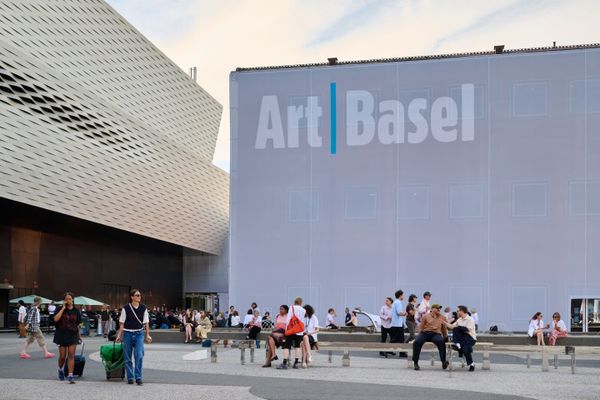
Art Basel Basel 2026: First Access as Control System
The flagship fair is not simply showing market strength. It is using delayed visibility, historical depth, and physical encounter to make selective confidence legible again.
Industry Mapping
The flagship fair is not simply showing market strength. It is using delayed visibility, historical depth, and physical encounter to make selective confidence legible again.
Art Market Watch
At the top of the art market, value is not decided by broad demand but by whether a small pool of buyers can be activated around the same object at the same moment.
Art Market Watch
The cooling of ultra-contemporary art shows what happens when attention moves faster than the structures needed to protect value.
Field Notes
As Pace cuts artists and staff while calling the gallery model “unfixable,” the question is not only whether the market has weakened, but how many obligations a gallery of this scale can still credibly hold.
Art Market Watch
As high-value art moves through quieter formats, the public record becomes less a map of the market than a partial shadow of it.
Art Market Watch
Auction recovery is easier to announce than to feel. Inside the trade, the question is no longer only what can sell, but what can still be defended after it sells.
Industry Mapping
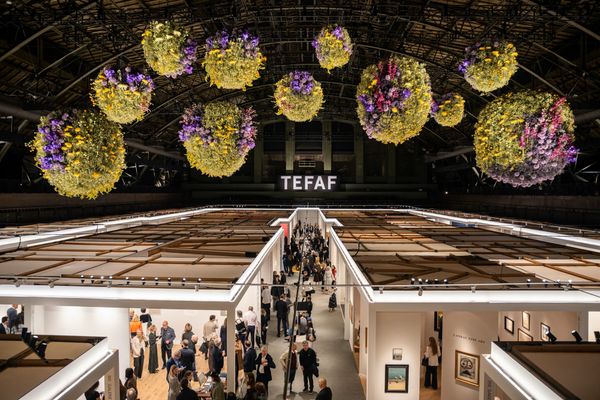
As TEFAF New York nears closure, its tenth-anniversary edition shows how historic architecture, disciplined scale, cross-category collecting, museum presence, and object pressure convert market assurance into an atmosphere before the fair has fully ended.
Industry Mapping
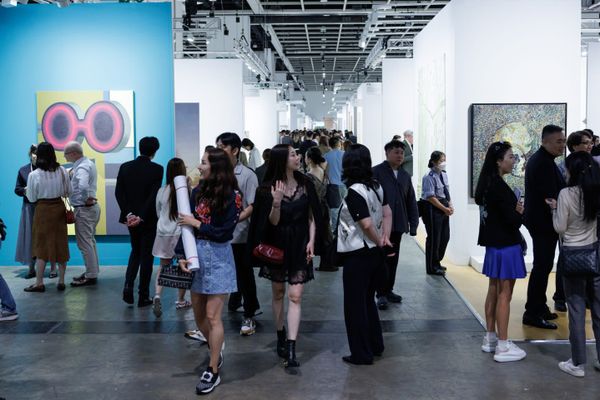
How Art Basel Hong Kong aligns museums, districts, independent spaces, public programs, and gallery networks into a shared legitimacy surface—making Hong Kong’s art ecology more visible while increasingly organizing how that ecology is timed, converted, and read.
Industry Mapping
How Art Basel Hong Kong turns regional density, institutional attendance, and slower collector behavior into a new evidentiary system—proving centrality less through Western symmetry than through Asia-Pacific concentration, calibrated seriousness, and managed selectivity.
Industry Mapping
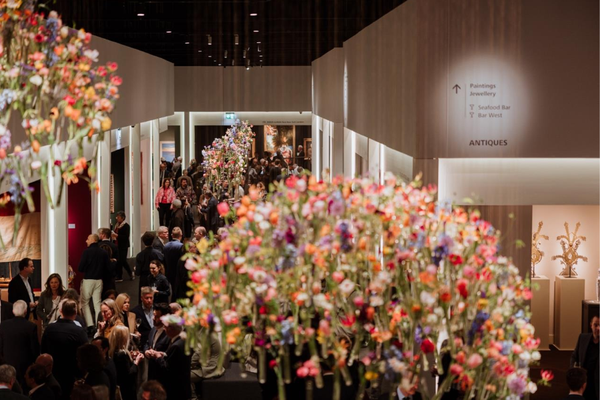
How TEFAF narrows the field before opening—through vetting, provenance pressure, institutional delay, and inherited standards that make some objects, dealers, and categories easier to carry than others.
Industry Mapping
How Frieze LA turns ‘momentum’ into a proof regime—routing availability through priority, producing civic optics without public obligation, and keeping hierarchy readable as logistics.
Industry Mapping
How “In Minor Keys” re-routes authority from curatorial voice to procedural continuity—governing reception through cadence, thresholds, rest, and structured publics alongside the pavilion system’s parallel geopolitical tempo.