
Sotheby’s Record Half-Year Shows the Auction House Becoming a Platform
Sotheby’s $4.4 billion first-half result is more than a market rebound. It shows how the auction house is expanding beyond auctions into private sales, finance, luxury, hospitality and destination-building around the collector.

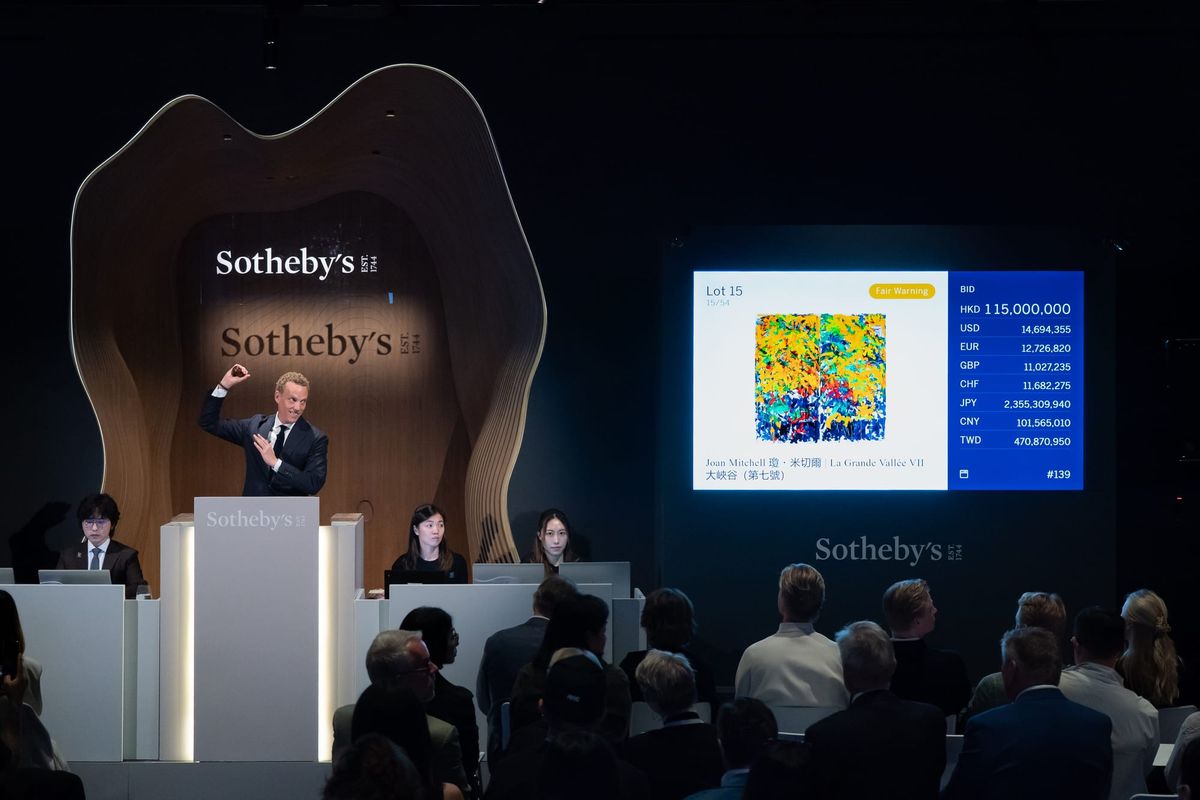
Sotheby’s record first half begins with a number.
The company reported $4.4 billion in consolidated sales for the first six months of 2026, up 58 percent year over year and described by Sotheby’s as an all-time high. Auction sales reached $3.4 billion. Private sales rose to $826 million, also an all-time high. The sell-through rate reached 90 percent, the strongest level Sotheby’s has reported since at least 2010.
Those figures would be enough for a recovery story. But the announcement keeps moving beyond the saleroom.
It moves from auctions to private sales, from private sales to financial services, from financial services to watches, jewelry, wine, spirits, cars and real estate. It mentions the Breuer building on Madison Avenue, the rise in visitor numbers, the opening of Marcel restaurant, an $825 million bond issuance and a $900 million securitization through Sotheby’s Financial Services.
The result is not a single market signal. It is a view of how much Sotheby’s now wants to hold around the collector.
An auction house still needs the visible drama of the hammer. It needs the evening sale, the estimate, the room, the bid, the public result. But Sotheby’s first-half statement does not read only as a record of objects sold. It reads as a map of relationships: where collectors enter, how long they stay, what services surround them, and how many categories can be placed under one institutional roof.
A collector may arrive for a painting and stay for a private conversation. Another may enter through a watch sale, a car auction, a wine event, a design collection, a selling exhibition, a restaurant reservation or a loan against an existing collection. The transaction is still there, but it is no longer the only point of contact.
The auction house becomes a place where the collector is kept in motion. That is the more important meaning of the record.
Sotheby’s has always converted collections into events. A major single-owner sale gathers provenance, design, memory, scarcity and theatre into one public sequence. In the first half of 2026, that older strength remained visible. Sotheby’s New York marquee season brought $908.6 million, with a 92.5 percent sell-through rate. London’s June marquee sales reached $556.5 million, described by the company as the highest total for any season of sales staged in Europe. The Lewis Collection alone realised more than $400 million.
These are still the kinds of results that allow an auction house to perform confidence in public. But the event now sits inside a wider structure.
A collection is not only sold. It is staged. It is previewed. It brings people into the building. It generates private meetings, press attention, digital circulation and reassurance for other sellers. It lets the house show not only that it can transact, but that it can surround an object with the right atmosphere before the sale takes place.
The public result becomes a signal to private clients: this is the house that can still make value visible.

The Breuer matters because of that atmosphere.
Sotheby’s called attention to what it described as the “Breuer effect,” saying the Madison Avenue headquarters drew more than twice the visitors year over year compared with its former York Avenue location. That figure does not only belong to foot traffic. It belongs to destination-making.
A sale can last an evening. A destination can hold attention for longer.
Inside this model, the building is not neutral. It is part of the service. It gives the market a place to gather, look, dine, return and feel that collecting is taking place within a broader cultural setting. The auction house begins to borrow some of the language of the museum, some of the intimacy of the club, some of the hospitality of luxury retail and some of the discretion of private banking.
That combination is not accidental. It is how a saleroom becomes a platform.
Private sales are central to this shift because they reduce dependence on the public auction calendar. They allow the house to operate continuously, away from the theatre of the evening sale. They give collectors discretion, timing and access. They also move part of the market’s trust out of public view. An auction result announces itself. A private sale confirms a relationship.
The growth of Sotheby’s Financial Services pushes the model further.
Art-backed lending and capital solutions are not simply additions to the auction business. They change where the auction house sits inside the collector’s financial life. When the same name can sell, source, lend, stage, advise and create liquidity, the house is no longer only between buyer and seller. It becomes part of the financial architecture of ownership.
The public sees the record. The collector sees the infrastructure.
That infrastructure now stretches far beyond fine art. Sotheby’s announcement places luxury categories beside fine art performance: watches, jewelry, wine and spirits, collector cars and real estate. These categories widen the relationship to wealth. They make it possible for the house to stay near collectors even when they are not buying paintings.


Collector cars and jewelry show how Sotheby’s is extending the client relationship beyond fine art. The 1961 Ferrari 250 GT SWB California Spider by Scaglietti and the 10.02-carat Fancy Intense Blue Diamond sit inside a wider platform of art, luxury, finance and collector services. Photos courtesy of Sotheby’s.
A watch sale, a car auction or a wine event may seem far from the old picture of the auction room. But for Sotheby’s, they bring the same client back through another door.
This is where the record first half becomes more than good news. It shows a collector being drawn through one system rather than meeting Sotheby’s only at the point of sale.
That system can make the top of the market feel stronger. If one category cools, another may carry momentum. If auctions slow, private sales can continue. If a collector is not consigning, they may be borrowing. If they are not buying art, they may be looking at cars, watches, wine, design or real estate. If they are not bidding, they may still be inside the building.
The auction house becomes less episodic. It becomes continuous.
But this continuity also changes the shape of power in the market. A record at Sotheby’s does not mean the entire art market is liquid, balanced or secure. It shows that the highest-value collections, luxury categories and collector services can still generate strong demand. That is not the same thing as health across the field.
A major auction house can report record consolidated sales while smaller galleries, regional auction houses, emerging artists and less liquid parts of the market remain under pressure. Confidence does not move evenly. It tends to appear first where wealth, rarity, service and access are already concentrated.
The platform model can deepen that separation.
When the same house can offer auctions, private brokerage, lending, luxury categories, hospitality, global client access and cultural staging, it becomes harder for smaller parts of the market to compete on relationship, visibility or service. The issue is not only that Sotheby’s is large. It is that it can surround the collector in ways few other market actors can.
That is why the record needs to be read carefully.
Sales totals show transaction volume and market confidence. They do not, by themselves, show the full financial condition behind the business, its margins, or how evenly strength is distributed across the market. But they do show where Sotheby’s wants attention placed: on breadth, resilience and the scale of its collector network.
The announcement’s strongest message is not only that Sotheby’s sold more. It is that Sotheby’s can touch more of the collector’s life.
This matters for sellers too. A consignor does not only choose a house because of one auction result. They choose a structure of confidence: who can place the collection in the right room, bring the right buyers, manage the private conversations, produce the catalogue, stage the exhibition, control the press narrative, and make the sale feel like a cultural event rather than only a disposal of assets.
At the top end, selling is not only a transaction. It is reputation management.
Sotheby’s platform model is built around that understanding. The public-facing sale gives the result its drama. The private network gives it depth. The financial services give it liquidity. The luxury categories keep the collector close. The Breuer gives the system a stage. Marcel gives it another reason to stay.
Seen from outside, these may look like separate lines in a corporate announcement.
Seen from inside the collector relationship, they belong together.
They are all ways of reducing distance between the house and the client.
The saleroom has not disappeared. It has been surrounded.
That may be the future of the auction house at the top of the market: not only a place where objects are sold, but a system where collections are financed, categories are connected, wealth is hosted, cultural prestige is staged, and the collector moves through a managed environment of access.
The record first half is what the market can see.
The platform is what keeps the collector inside.
© ART Walkway. All Rights Reserved.


