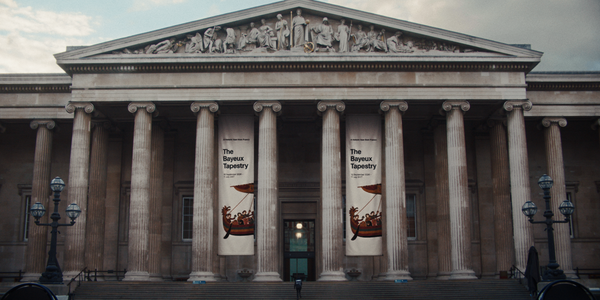
British Museum Secures £30m as Masterplan Funding Takes Shape
A £30 million gift advances the British Museum’s £1 billion redevelopment, adding to private commitments alongside government-funded infrastructure. The museum’s accounts show how different parts of the Masterplan are progressing under different financial conditions.


The British Museum has secured £30 million for a redevelopment whose largest architectural phase still depends on further fundraising.
The gift, announced at the museum’s second annual ball on 17 October, comes from an unnamed longstanding supporter and will go towards the Masterplan, a transformation of the Bloomsbury site estimated to cost at least £1 billion.
It is separate from the proceeds of the evening itself. The museum has not specified which elements of the programme will receive the money.
Some parts of the Masterplan are already advancing. Others remain at the design and fundraising stage.
The British Museum Archaeological Research Collection in Berkshire is operational. Construction is under way on the government-funded Energy Centre Programme, which will replace much of the museum’s heating and power infrastructure.
Plans by Studio Weave for new visitor entrance pavilions received planning permission in June 2026, subject to a Section 106 agreement. Intended to remain for up to ten years, the pavilions will replace the temporary security structures currently used at the museum’s entrances, improving visitor screening and circulation while the longer redevelopment progresses.
The largest architectural undertaking is still ahead.
Lina Ghotmeh — Architecture is leading the redesign of the Western Range, a complex of ten buildings developed over approximately 190 years. Together, they contain around a third of the museum’s gallery space, including displays associated with the Rosetta Stone, the Parthenon sculptures and major collections from ancient Egypt, Greece and Rome.
The work extends beyond redisplay. The museum must address historic building fabric, roofs vulnerable to water ingress, environmental conditions and the movement of visitors through interconnected galleries.
In its 2025–26 annual accounts, the museum identifies the ability to raise sufficient funds as a condition for delivering the Western Range redevelopment.
Private support for the Masterplan has been building for several years.
In December 2023, BP committed £50 million over ten years towards redevelopment. At the inaugural British Museum Ball in 2025, the Garfield Weston Foundation pledged £10.3 million for the Visitor Welcome Programme.
The Garfield Weston pledge is directed towards entrance facilities. BP’s agreement extends across a decade. The latest £30 million gift supports the wider Masterplan, without a published allocation to individual projects.
Public investment is financing other work.
HM Treasury approved full funding for the Energy Centre Programme in 2024. The project is under construction, with completion scheduled for 2029. It will modernise the museum’s heating and power systems, reduce its reliance on fossil fuels and improve environmental conditions for the collections.
At 31 March 2026, the British Museum held £16 million in a designated Masterplan fund, comprising BP receipts and unspent self-generated income. That balance is not the total value of the programme’s funding commitments.
During 2025–26, the museum recorded £47.6 million in capital expenditure across its estate and other capital projects, including Energy Centre construction, building repairs, security improvements, Masterplan design and visitor entrance works.
Neither figure establishes the funding still required for the wider Masterplan.
The financial pressure is not limited to construction. The museum’s accounts report that workforce and operating costs have increased by 14% since 2023–24, compared with 6% growth in income excluding donated heritage assets. Inflation, staffing changes, fundraising capacity and investment in organisational transformation have contributed to the difference.
The museum is managing construction, conservation and visitor operations while seeking support for later phases.
Major private giving has long formed part of its development. Lord John Sainsbury contributed £25 million towards an earlier exhibition and conservation extension in 2010. In 2024, the Sir Percival David Foundation transferred a collection of Chinese ceramics valued at approximately £1 billion into the museum’s permanent ownership.
The latter secured a collection rather than providing construction finance. The objects became part of the museum’s permanent holdings, with the responsibilities of conservation, storage and public access that accompany them.
The museum’s annual ball has also become a prominent occasion for bringing existing and prospective supporters into its institutional programme.
Its first edition raised more than £2.5 million for international partnerships. According to the museum, nearly 900 guests attended, with 70% new to the institution. This year, the event’s proceeds were directed towards the Masterplan, while the separate £30 million donation was announced during the evening.
The gathering also attracted protests.
Energy Embargo for Palestine demonstrated outside the museum, challenging existing corporate and private partnerships, including its relationship with BP. Those objections concern established funding arrangements and are distinct from the newly announced anonymous gift.
The museum’s fundraising takes place alongside its obligations to protect a historic building, care for its collections and maintain public access during a prolonged period of construction.
Earlier this month, ART Walkway examined the funding pressures facing England’s national museums following the government’s decision to retain universal free admission. At the British Museum, part of that responsibility is already visible in ageing galleries, new entrance facilities and the replacement of infrastructure that supports the collections.
The Western Range brings these requirements into particularly close contact. Its galleries occupy buildings of different ages and construction, where roof deterioration and water ingress have previously affected access to displays.
The museum’s accounts identify such deterioration among the physical risks to its collections. They also recognise the possibility of extending the Masterplan timetable to accommodate essential works, alongside the need to secure further external funding.
The new £30 million gift advances the programme without resolving those requirements.
Its buildings are being renewed on different timetables, through different funding arrangements, while the collection and the public remain inside them.
© ART Walkway. All Rights Reserved