Free Museum Entry Remains, but the Funding Question Does Not
The government has ruled out charging overseas visitors to England’s national museums, protecting universal free entry. The decision keeps access at the door simple, but leaves the harder questions of funding, infrastructure and museum strategy unresolved.


The government has kept free museum entry intact, but has not solved the funding problem behind it.
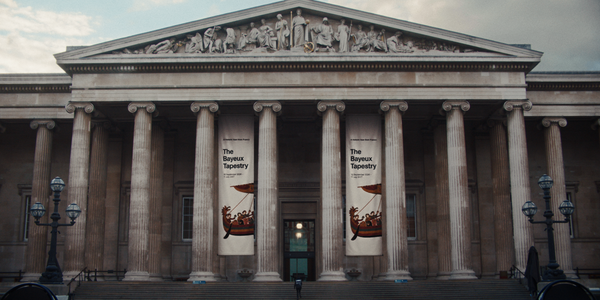
England’s national museums will remain free for all visitors, including overseas tourists, after ministers ruled out a charging model that had been considered following the Hodge review of Arts Council England.
The decision protects the door, but it does not remove the pressure behind it.
The Department for Culture, Media and Sport said charging overseas visitors could deter domestic visitors, and that the impacts and benefits of charging would not be felt equally across the sector. The government will therefore not introduce charges for international visitors.
That closes one of the more visible questions raised after Baroness Margaret Hodge’s review. The review had suggested that, once digital ID cards were established, the government could consider charging international visitors to national museums while retaining free entry for UK citizens and children. The proposal was presented as one possible longer-term funding mechanism, rather than the whole answer to the museum sector’s financial pressure.
The government has now rejected that mechanism.
It has not rejected the underlying problem.
National museums remain free, but the financial pressures around cultural infrastructure, maintenance, staffing, programming, energy costs, visitor services and long-term resilience have not disappeared. Free admission answers the question of access at the door. It does not answer every question about what must be funded behind it.
This is why the announcement matters beyond the admission debate.
Universal free entry, introduced in 2001, has become one of the most legible cultural policies in Britain. It is simple to understand and difficult to reduce to a narrow subsidy. The public can enter. Collections held in trust can be seen. Visitors do not have to decide whether the permanent collection is worth a ticket before encountering it.
That clarity is part of the policy’s strength.
It also makes charging more complicated than it first appears. A dual system for overseas visitors might have created revenue for some institutions, especially those with high international tourism. But it would not have done so evenly. Museums with different visitor profiles, locations and administrative capacities would have experienced the policy differently.
The government’s reasoning recognises that a fee applied to one visitor category is not only a technical adjustment. It changes the threshold through which the whole public experience is organised.
The decision therefore keeps the threshold universal.
Everyone enters on the same terms.
For museums, that is a public gain, but not a financial settlement.
The government has pointed instead to wider investment and reform. It says national museums contribute more than £1 billion a year to the economy and attract visitors from around the world. It has also highlighted museum funding through the Arts Everywhere Fund, infrastructure support for national museums, investment in local and regional museums, the Museum Estates and Development Fund, and the Museum Transformation programme.
Those commitments now carry more weight because the admission-charge route has been closed.
The question is whether public investment, commercial income, philanthropy, estate renewal and long-term planning can support free entry without leaving the institution behind the open door under strain.
That is where the announcement connects back to the Hodge review.
Hodge’s review was not only about Arts Council England’s bureaucracy or the future of Let’s Create. It also called for a clearer long-term plan for museums, developed by Arts Council England, DCMS and the wider museum sector. It recognised that museums need more than occasional funding fixes. They need a strategic framework that understands their role across access, collections, buildings, public trust, education, regional provision and cultural infrastructure.
The government’s free-entry decision sharpens that need.
If admission remains free for everyone, then the sustainability question has to be handled elsewhere. It has to sit in the long-term museums plan, in capital funding, in local and regional support, in commercial strategy, in philanthropy and in how public value is measured.
That may be the more honest place for it.
Charging overseas visitors would have made the funding question visible at the door. Keeping free entry means the funding question remains inside the system: in budgets, estates, governance, regional inequalities and the long-term cost of caring for national collections.
That pressure should not be read as a failure of free entry. It is the condition that now has to be governed around it.
A free museum is not free to operate. It is publicly supported, commercially supplemented, philanthropically assisted, strategically managed and politically defended.
The government has chosen to defend the principle.
What follows has to prove the structure.
Free entry remains.
The test now is whether the funding, maintenance and museum strategy around it can keep that open door from becoming an unfunded promise.
© ART Walkway. All Rights Reserved.