
British Museum Bans Bayeux Tapestry Photography to Keep Visitors Moving
The British Museum has restricted photography at its Bayeux Tapestry exhibition after visitors stopping for pictures slowed movement through the sold-out display. The rule shows how phones can become a crowd-control issue inside major exhibitions.

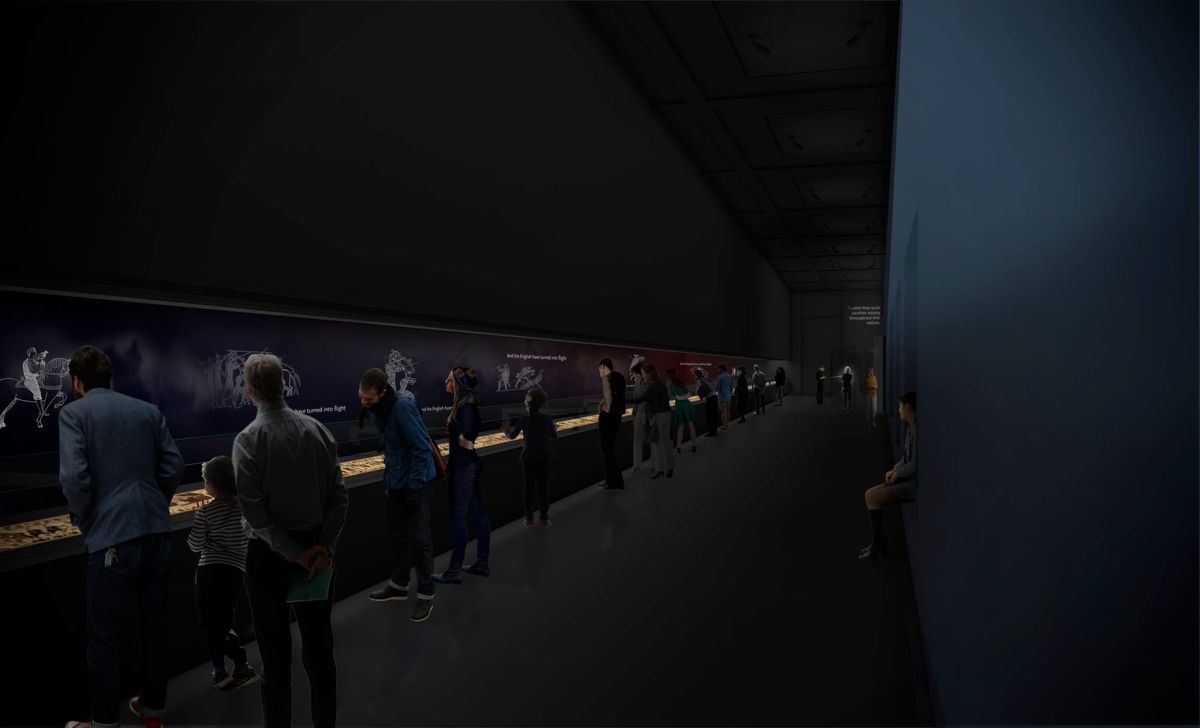
The British Museum has banned visitors from photographing the Bayeux Tapestry while moving along the length of the work, after queues built up inside one of London’s most in-demand exhibitions.
The museum had initially allowed photography, but reversed that decision after visitors stopping to take pictures slowed the flow of ticket-holders through the display.
The Bayeux Tapestry is on loan from Normandy and is being shown in Britain for the first time in nearly 1,000 years. The 11th-century work, technically an embroidery rather than a woven tapestry, depicts the events leading up to the Norman conquest of England and the Battle of Hastings in 1066.
At the British Museum, visitors are admitted in timed groups and asked to move in one direction along the 68-metre work. Tickets are sold out until the end of December, with more expected to be released for later dates.
The museum said its priority was to give visitors the best possible experience. Photography had become a practical problem because people pausing along the display were delaying later groups.
That makes the ban less about protecting the object from cameras than protecting the pace of the visit.
For major museum exhibitions, photography is no longer a side issue. It shapes how people move, how long they stop, how others see, and how quickly a crowded room can function. A phone held up for a few seconds is small on its own. Repeated across hundreds of visitors, it becomes a crowd-management problem.
The Bayeux Tapestry makes that pressure unusually visible because of its form. It is not a single painting that visitors gather in front of and leave. It is a long narrative object that has to be followed scene by scene. The experience depends on movement as much as looking.
Blockbuster exhibitions now have to manage both viewing and recording.
In this case, the British Museum chose the first. Visitors can still encounter the embroidery directly, but they are being asked to keep moving rather than turn the line into a series of photo stops.
The result may frustrate some visitors. It may also make the exhibition easier to see.
For the British Museum, the rule is a reminder that visitor experience is not only about access to an object. It is also about how thousands of people move around it.
© ART Walkway. All Rights Reserved.


