Hoor Al Qasimi Returns to Venice Between Two Exhibition Histories
From the UAE Pavilion in 2015 to the international exhibition in 2028, Al Qasimi's appointment brings different forms of curatorial responsibility into a Biennale whose recent questions of authorship, representation and institutional authority remain open.

In 2015, Hoor Al Qasimi came to Venice with an exhibition about exhibitions.
1980–Today: Exhibitions in the United Arab Emirates, presented at the UAE National Pavilion, traced an artistic field through the exhibitions, archives and relationships that had sustained it. More than 100 works by fifteen artists were brought together through newspaper archives, catalogues, artists' writings and earlier exhibition histories.
The arrangement resisted a straightforward chronology. Works were grouped, paired or placed in dialogue across different periods, allowing artistic histories to emerge through relationships that had not always been visible in their original settings.
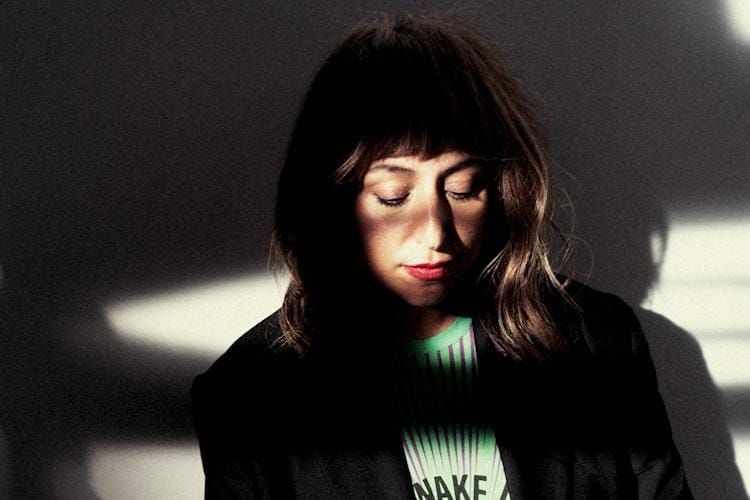
Thirteen years later, Al Qasimi returns to direct the Biennale's international exhibition.
Appointed by La Biennale di Venezia's board on 20 November, following the recommendation of president Pietrangelo Buttafuoco, she will curate the 62nd International Art Exhibition, opening on 8 April 2028.
In 2015, the exhibition's subject included the ways artistic histories had already been assembled and made visible. In 2028, Al Qasimi will develop an international exhibition whose own selection, arrangement and interpretation will become part of how those artistic histories are subsequently encountered.
The two positions belong to the same Biennale, but their responsibilities operate through different institutional arrangements.
The Histories an Exhibition Carries
The UAE Pavilion's research drew substantially upon the Emirates Fine Arts Society and the less visible exhibition histories surrounding modern and contemporary art in the Emirates.
Its installation also brought earlier and later works by individual artists into proximity. Practices that had become associated with particular materials or styles could be encountered alongside earlier directions in their development.
When the exhibition travelled to Sharjah's Flying Saucer in 2016, another institutional history entered the presentation. The building, previously used for commercial activities and later incorporated into Sharjah Art Foundation's exhibition programme, was itself the subject of archival research into its place in the city's changing urban life.
An exhibition concerned with the histories of artistic presentation had moved into a space whose own history of use was being recovered.
That relationship between exhibition research, place and institutional memory has appeared elsewhere in Al Qasimi's work, though under different conditions.
Sharjah Biennial 15, Thinking Historically in the Present, was conceived by Okwui Enwezor and curated by Al Qasimi in 2023 with a working group of his longtime collaborators. Its realisation followed Enwezor's death in 2019, carrying an intellectual framework into another historical moment through further curatorial decisions, artistic commissions and the resources of Sharjah Art Foundation.
The originating proposition remained present, but the exhibition was developed by people working in circumstances different from those in which it had first been imagined.
Venice's 2026 edition brought another configuration of that relationship into view.
From the Framework to the Exhibition
Koyo Kouoh's In Minor Keys was completed by her appointed team following her death in May 2025.
Before its opening, ART Walkway's February 2026 institutional mapping examined how Kouoh's framework was expected to operate through spatial rhythms, forms of reception and the organisational structures surrounding the exhibition. It also considered the national pavilion system, where separate institutional and political responsibilities coexist with the central curatorial programme.
Maja Ćirić's subsequent two-part field review encountered the realised exhibition differently.
Across the Arsenale, Central Pavilion and national participations, she found moments where artworks developed convincing relationships through their juxtaposition, alongside others where the density of artistic positions loosened the connections between them.
The February mapping had followed the proposed framework. The field reviews encountered what that framework made possible, and what remained less clearly articulated once the works occupied the exhibition spaces.
The difference is consequential without constituting a simple measure of success or failure. Curatorial selection establishes one set of relationships; installation, interpretation and encounter can alter their visibility.
The comparison with Sharjah is not one of equivalent circumstances. In each case, however, artistic authorship remained entangled with the work of collaborators and institutions, including decisions that became visible only as an exhibition took form.
For 2028, Al Qasimi enters this relationship as the originating curator.
The central international exhibition will develop alongside national participations with their own programmes, resources and representational responsibilities. The distinctions between those structures were particularly visible in 2026, when the central exhibition's proposed modes of attention unfolded amid political disputes and interventions elsewhere across the Biennale.
Al Qasimi's 2028 concept has not yet been announced. Nor can the institutional experience she brings from Sharjah or other biennials be read as an exhibition plan for Venice.
But her return creates a particular historical proximity.
In 2015, she assembled an account of artistic practices by revisiting the exhibitions, archives and institutions through which they had become visible. In 2028, she will make choices about which practices enter an international exhibition, how they are brought into relation and what histories become available through those encounters.
Those choices will unfold within a Biennale whose previous edition remains open to competing readings, including the distance between its proposed framework and the relationships identified in subsequent field criticism.
The next exhibition will add another history to that record. Which relationships endure beyond Venice, and which remain particular to its exhibition spaces, cannot yet be seen.
© ART Walkway. All Rights Reserved.