Design Your Exit: Build a Practice That Can Survive Graduation
Turn student momentum into a believable next chapter by designing the structures, rhythms, and direction that can carry your work after the institution falls away.
As Disney cuts around 1,000 roles under new CEO Josh D’Amaro, the layoffs are landing inside a wider creative anxiety: not only about automation, but about whether human-made work will remain visible, valued and clearly distinguishable at all.
Refine your work in public, understand what actually lands, and turn casual attention into the kind of early support that can continue beyond the crit room.
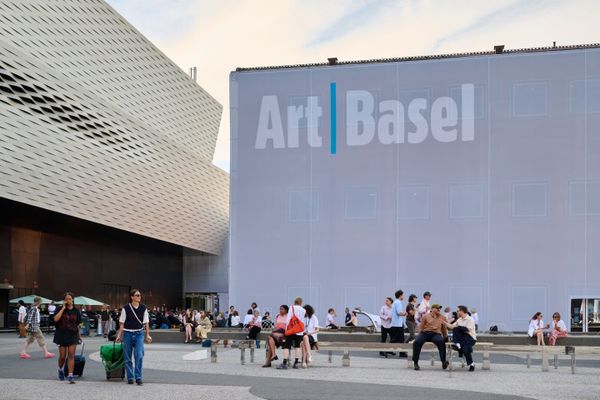
How Art Basel Hong Kong aligns museums, districts, independent spaces, public programs, and gallery networks into a shared legitimacy surface—making Hong Kong’s art ecology more visible while increasingly organizing how that ecology is timed, converted, and read.
Learn why students who begin building visibility, language, and momentum before graduation are the ones most likely to leave school with a real artistic life already in motion.
ART Walkway’s Art Student Masterplan — the complete blueprint for students who want to leave school with stronger work, stronger language, and real momentum already in motion.
As the David Geffen Galleries open in Los Angeles, the issue is no longer only whether Peter Zumthor’s building succeeds as architecture, but what an encyclopedic museum has to build around art once chronology, geography, and medium stop doing as much of the public work.
As Ireland opens applications for its new Basic Income for the Arts scheme, the issue is no longer only whether artists should receive income support, but what happens when a measure first framed as pilot, recovery and research begins to harden into cultural policy.
How Art Basel Hong Kong turns regional density, institutional attendance, and slower collector behavior into a new evidentiary system—proving centrality less through Western symmetry than through Asia-Pacific concentration, calibrated seriousness, and managed selectivity.
Singapore Art Book Fair’s withdrawn Walking Exhibitor open call exposed a deeper question about access, constraint, and how smaller art fairs distribute instability across emerging participants.
As JD.com and Tencent push ahead with new museums in Shenzhen, the issue is no longer only private support for culture, but what happens when corporate power begins shaping the institution itself.
As Basque leaders press to move Picasso’s Guernica to Bilbao for the 90th anniversary of the bombing that produced it, the dispute is no longer only about location, but about whether historical memory can be re-sited once conservation fixes the work in place.
Latest Art News
A language quiz about how the art world learned to make conviction, care, salesmanship, and public virtue sound almost the same.
Law & Politics
After works by Renoir, Cézanne and Matisse were stolen from the Magnani-Rocca Foundation in under three minutes, the issue is no longer only breach, but whether museum security can prevent removal once entry is forced.
Law & Politics
By excluding certain charitable cultural and heritage memberships from the new subscription regime, the government has preserved a funding model that sits uneasily between donation, access and sale—without fully settling its legal category.
Law & Politics
As government prepares its response to the Hodge review, the focus shifts from diagnosis to implementation—testing whether Arts Council England can move beyond procedural control.
Structures & Conditions
The question is not whether creativity belongs to the young or the old, but how cultural fields decide when originality becomes legible, investable, and worth sustaining.
Law & Politics
As proposals to charge overseas visitors resurface, the outgoing Tate director shifts the debate from admission to funding structure—redirecting pressure toward tourism levies and donor capital.
Law & Politics
After abandoning its opt-out model for AI training, the UK government shifts from a defined proposal to an open policy problem—how cultural material enters machine learning systems.
Industry Mapping
How TEFAF narrows the field before opening—through vetting, provenance pressure, institutional delay, and inherited standards that make some objects, dealers, and categories easier to carry than others.
Industry Mapping
How Frieze LA turns ‘momentum’ into a proof regime—routing availability through priority, producing civic optics without public obligation, and keeping hierarchy readable as logistics.
Field Notes
After the 2023 theft scandal, the museum is moving to make recovery a full-time function—pursuing missing gems and jewellery while confronting a deeper problem of cataloguing and control.
Field Notes
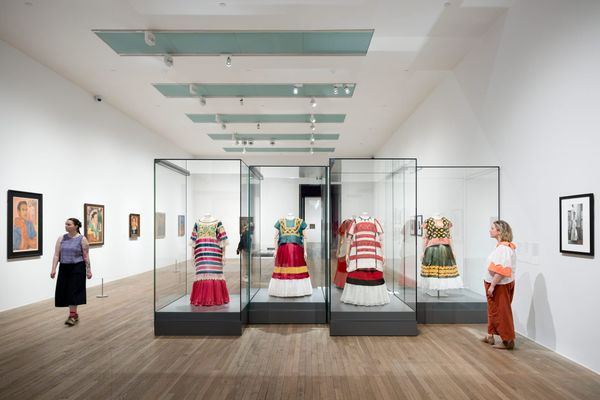
At Tate Modern, A Second Life situates biography within institutional time, where survival, controversy, and public access settle into structure.
Industry Mapping
How “In Minor Keys” re-routes authority from curatorial voice to procedural continuity—governing reception through cadence, thresholds, rest, and structured publics alongside the pavilion system’s parallel geopolitical tempo.