The Visibility Trap
The cooling of ultra-contemporary art shows what happens when attention moves faster than the structures needed to protect value.

The ultra-contemporary market did not cool because young artists stopped mattering.
It cooled because visibility had been asked to do too much.
For several years, attention itself carried financial force. Waiting lists, fair exposure, early auction results, social circulation and collector competition could quickly turn an artist into a market story. The speed was seductive because it made demand look deep before it had been properly tested.
But visibility is not liquidity.
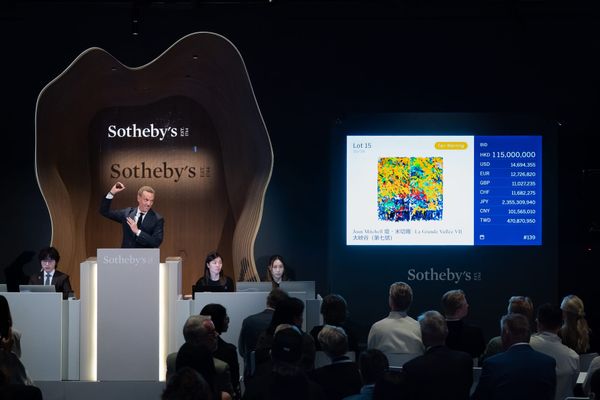
Recent auction data makes the condition harder to ignore: ultra-contemporary art sales have fallen sharply from their 2021 peak, while the wider market has become more selective around provenance, estimate discipline, rarity and historically supported material.
That is the problem now being exposed.
A work can be widely discussed and still have a narrow resale market. An artist can be institutionally promising and still be financially fragile at auction. A price can rise quickly without creating the collector base needed to support it later.
Visibility can look global before demand is actually distributed. Attention can travel faster than ownership depth.
When the wider market becomes more cautious, buyers stop rewarding heat alone. They ask who else will buy, which institutions are involved, whether the artist’s market has depth, and whether the price was built by conviction or momentum.
Those questions are harder on young markets because their support systems are still forming.
A mature artist can lean on decades of exhibitions, scholarship, ownership history, museum validation and collector memory. A younger artist may have attention, but not yet enough structure. If auction prices move too far ahead of that structure, the correction can be severe.
The danger is not only financial. It can affect the artist’s public reading.
A market reversal can make serious work look overhyped, even when the problem was not the art but the speed at which attention was converted into price. The artist is left carrying the reputational cost of a price structure they may not have controlled.
This is one of the more difficult conditions in the current market. The industry wants discovery, but often prices discovery as if it were already historical consensus. It wants young artists to become visible, but visibility can expose them before they are protected.
For galleries, the task is not only to create attention. It is to pace it. Placement, institutional context, collector discipline and controlled release become ways of preventing visibility from becoming pressure too early.
For collectors, the question is no longer only whether an artist is visible. It is whether that visibility has become durable enough to survive resale, slower demand, and a less forgiving market.
The ultra-contemporary correction is therefore not just a market trend.
It is a warning about the cost of acceleration.
Visibility can open a market.
It cannot hold one by itself.
© ART Walkway. All rights reserved.