After the Building, the Academic Museum Has to Prove Its Use
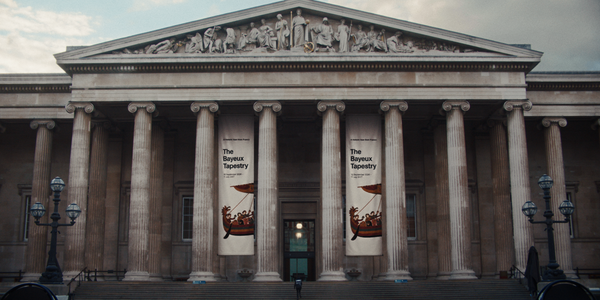
Kim Conaty’s appointment as director of Dartmouth’s Hood Museum is more than a move from the Whitney to a university museum. After a major expansion, the Hood’s next test is how its collection, building and academic mission become active inside student life, scholarship and public engagement.
The Hood Museum of Art has already been rebuilt. That makes its next question harder.
A new building can change how a museum looks, how it receives visitors and how it appears inside a campus. It can give the collection more room, the institution more visibility and the university a clearer public symbol for the arts. But after the architecture settles, another form of work begins.
In an academic museum, that work often begins away from the public announcement. An object comes out of storage for a seminar. A class uses the collection to test an idea. A student meets a work before having the language for it. The museum becomes important not only because people visit it, but because its objects begin to work inside teaching, research and attention.
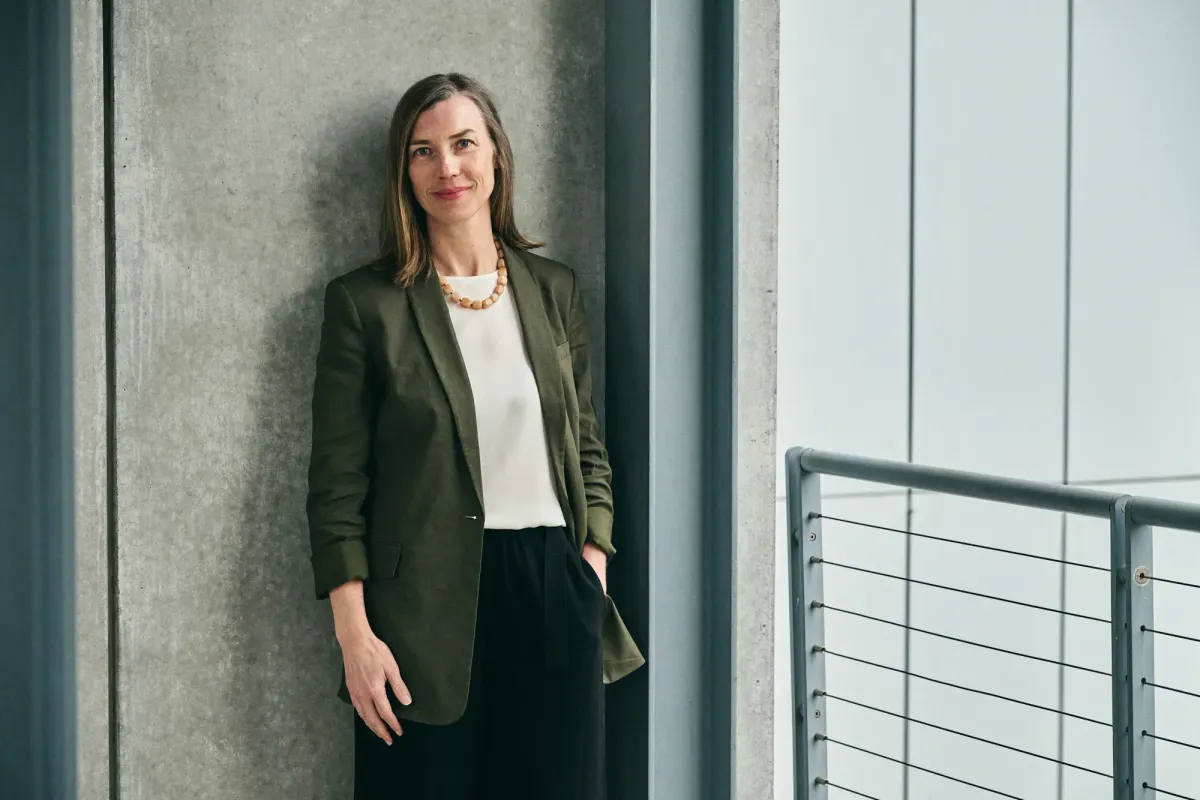
Kim Conaty’s appointment as the next director of the Hood Museum of Art at Dartmouth College is not only a leadership change. It marks the beginning of that second stage. Conaty arrives from the Whitney Museum of American Art, where she served as chief curator after earlier roles at the Whitney, the Museum of Modern Art and the Rose Art Museum. She will become the Hood’s eighth director in October, succeeding John Stomberg, who led the museum through a $50 million renovation and expansion.
That background matters, but not because the Hood is now importing Whitney visibility into Hanover.
An academic museum is not a smaller version of a major city museum.
It works under another pressure. It has to hold a public collection, but it also has to serve a university. It welcomes visitors who come for exhibitions, but also students who arrive through a class, faculty who need the collection to think with, alumni who understand the museum as part of the institution’s identity, and local audiences who enter without the obligations of campus life.
Its value may appear in quieter places: a seminar room, a study table, a print pulled from storage, a student staying with an object longer than the assignment required.
These moments can look small from the outside. A tray of prints brought into a seminar room does not have the public drama of a major exhibition. A faculty member building a course around a group of works may not become a headline. A student arriving without much context may not seem like an institutional event. But in an academic museum, these are often the encounters through which the museum does its deepest work.
A university museum has to make objects available to different kinds of attention. A drawing may become evidence in an art-history seminar, but also material for a course in anthropology, history, literature, religion, studio art or environmental studies. A print may open one student toward technique, another toward politics, another toward the conditions of its making.
The collection does not sit beside education. It enters it.
That is why Conaty’s appointment is more interesting than a straightforward move from one institution to another. Her career has combined scholarly work, public exhibition-making and collection strategy. At the Whitney, she helped lead the museum’s collection planning, oversaw exhibitions, acquisitions, publications and conservation, and organised exhibitions that could reach both specialists and broad publics. Her Edward Hopper’s New York became one of the Whitney’s major public successes, while projects around Mary Corse and Ruth Asawa brought close attention to bodies of work that needed institutional depth as much as visibility.
That range matters because the Hood’s next phase will require more than curatorial distinction. It will require translation: between collection and classroom, scholarship and public entry, campus mission and museum autonomy.
The museum is not entering an expansion campaign. It is entering the period after one. The building has already changed the terms of arrival. The next director inherits a different task: to turn architecture into use, collection into encounter, and institutional ambition into daily practice.
Dartmouth’s announcement does not place the Hood alone. It places the museum inside a wider Arts District, alongside the Hopkins Center for the Arts, the Black Family Visual Arts Center, the Literary Arts Bridge and The Warehouse, a laboratory for sonic arts. That context matters because it suggests that the Hood is not being treated only as a museum with galleries. It is part of a campus ecology where the arts are expected to move between objects, performance, writing, sound, research, teaching and public life.
Inside that ecology, a museum director has to do more than schedule exhibitions.
The director has to decide how the collection becomes available. How does a museum with more than 74,000 objects remain legible to students who may not begin with art history? How does it serve faculty without becoming a closed academic tool? How does it welcome general visitors without making the collection too thin? How does it remain scholarly while still giving viewers “points of entry,” the phrase Conaty used in Dartmouth’s announcement?
Those points of entry are not only about access.
They shape how the museum becomes usable.
A student who does not expect to care about art may need an object to open slowly. A label may be enough, or it may not. A class visit may turn a collection into evidence. A curator may place a work where it can speak across disciplines. A storage room, a study center or a teaching session may matter as much as a public exhibition. In an academic museum, some of the most important encounters may happen away from the crowd.
That is different from the pressure of a major urban museum.
At the Whitney, exhibition visibility carries its own force. A show must address artists, critics, donors, publics, press, market attention and the larger cultural field. At the Hood, visibility still matters, but it is not the only measure. The museum also has to work through repetition: semester after semester, course after course, student after student, object after object.
Its audience is renewed every year.
That gives the academic museum a particular kind of responsibility. It does not only preserve works for a distant public. It brings them into the formation of attention. It can teach students how to look, how to compare, how to sit with ambiguity, how to understand materials, how to connect an object to history without flattening it into a lesson.
This is where Conaty’s collection background may become especially important.
In a university museum, collecting is not only growth. It is responsibility. Every acquisition brings storage, conservation, interpretation and future teaching obligations. Conaty has spoken before about the need to be intentional in building collections, noting that gifts are not free because works have to be cared for. That kind of thinking belongs directly to the academic museum, where a collection has to remain both stewarded and usable.
A large collection can be an asset. It can also become silent if it is not continually brought into relation with students, faculty and publics.
The Hood’s collection gives the museum depth. Its renovated building gives it presence. Dartmouth’s Arts District gives it context. Conaty’s appointment now asks how those elements will be made to work together.
This is the less visible test facing many university museums.
After the capital campaign, after the architectural unveiling, after the new galleries open, the institution has to prove that the building has changed more than circulation and square footage. It has to show that students use it differently, faculty teach through it differently, communities enter it differently, and the collection becomes more available to thought.
The Hood Museum has already been given a new frame.
What follows will be less visible than the renovation itself: the slow work of making a collection available, again and again, to students, faculty and publics who may not yet know what they need from it.
© ART Walkway. All Rights Reserved.