When Narrative Becomes the Institution
As the Lucas Museum of Narrative Art opens with a founder‑curated inaugural programme, the question shifts from what is being shown to how narrative authority is being positioned before the institution fully enters public use.

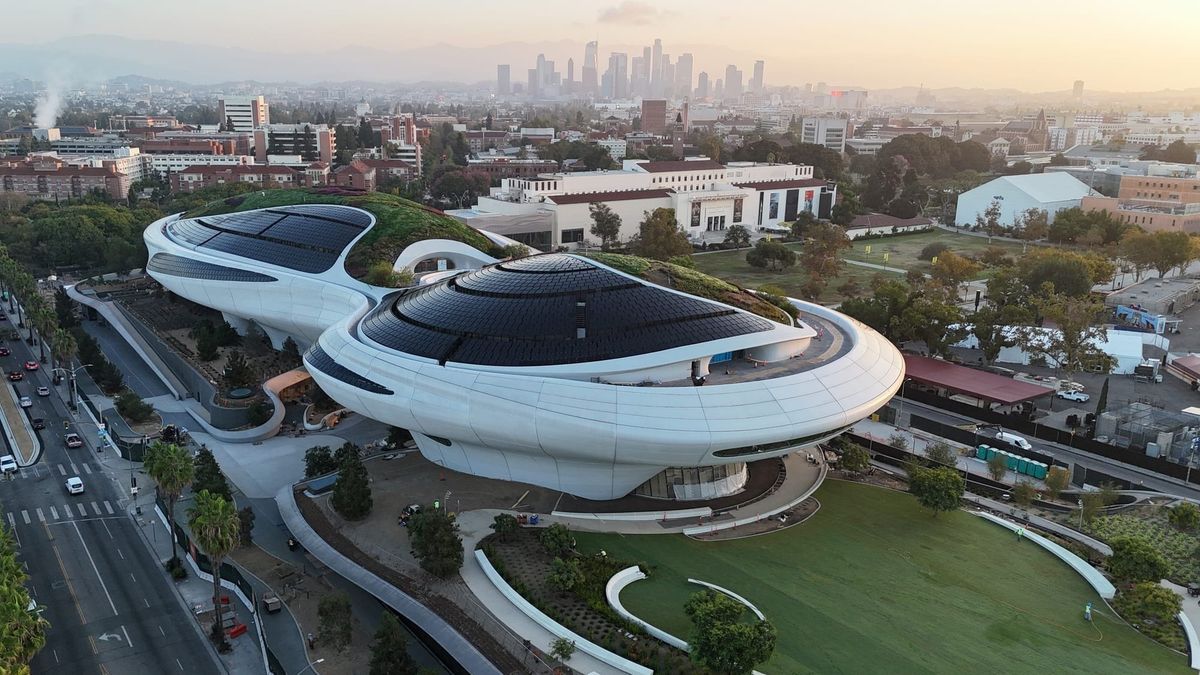
As the Lucas Museum of Narrative Art approaches its opening in Los Angeles this September, the issue is no longer only what the inaugural exhibitions contain, but what kind of institutional condition they introduce before the museum is fully exposed to public interpretation.
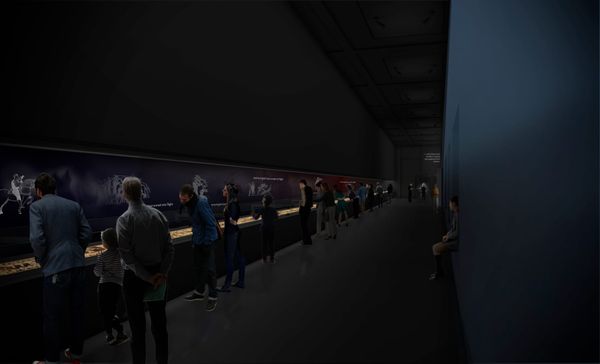
The inaugural programme will span more than thirty galleries and over 1,200 objects drawn from George Lucas’s personal collection. It has been curated by Lucas himself. That detail has been presented plainly in press materials, but it quietly carries institutional weight.
This is not a beginning in the neutral sense of the term. It functions more as a reference point.
Museums rarely open without inherited assumptions. Some arrive through collections, others through architecture or governance structures. At the Lucas Museum, narrative arrives already articulated at full institutional scale. It does not appear experimentally or provisionally. It arrives as an organising frame, comprehensively installed.
The exhibitions are structured thematically: love, family, childhood, work, community, adventure, civic life. Alongside these sit galleries devoted to individual illustrators, narrative genres, and a focused presentation of the Lucas Archives. Together, they span a long temporal arc, from ancient sculpture to contemporary cinema, proposing continuity rather than rupture as the primary logic of visual storytelling.
This framing does not argue for narrative so much as assume it.
Narrative is positioned less as a category to be tested than as a connective condition already shared. The museum’s language emphasises repetition, recognition, and accumulation. Stories are understood as binding forces that persist across cultures and generations. Difference appears, but largely within a field already oriented toward coherence.
That positioning does important institutional work.
By establishing narrative as its primary organising logic at the outset, the museum places certain interpretive questions to the side. Storytelling is not treated as a site of distortion, exclusion, or failure, but as a stabilising human practice. The inaugural exhibition does not prohibit other readings, but it sets a tonal baseline against which later deviations will need to register.
This is neither unusual nor inherently limiting. But it is consequential.
Because the inaugural exhibition is authored at founder scale — at a moment when the institution has undergone leadership transition and remains without a named chief curator — interpretive authority enters the public domain already consolidated. Narrative coherence precedes curatorial plurality.
What follows from that arrangement remains open.
Future exhibitions could mobilise narrative as a critical tool rather than a harmonising one. The breadth of the category could allow for fracture, contradiction, or institutional self‑reflection once the museum is operational. The inaugural configuration does not exclude these possibilities. It simply does not model them.
That distinction matters.
Museums often rely on opening gestures to absorb uncertainty. In this case, narrative operates as a frame that can hold organisational flux without making it legible inside the galleries themselves. The exhibitions foreground completeness at a moment when governance remains in motion. Coherence appears where contingency otherwise might.
Seen this way, narrative functions not as an argument but as an orientation.
For curators, this establishes a particular future condition. Interpretive distance does not disappear, but it may have to be reintroduced deliberately. Exhibitions that treat storytelling as unstable, political, or insufficient will need to generate their own justification inside an environment that initially privileges continuity.
There is also a quieter implication embedded in the exhibition structure.
The thematic organisation — grounded in recognisable life categories and familiar visual languages — produces a mode of entry that does not require prior training. Childhood illustration, comics, murals, photography, and cinema are presented not as peripheral forms, but as core narrative practices. The museum does not describe this as an educational strategy, yet it performs interpretive legibility across generations as a matter of form rather than programme.
That choice aligns with broader pressures facing large museums, particularly new ones, as they attempt to hold family audiences, first‑time visitors, and long‑term publics within the same conceptual frame. Narrative makes that convergence administratively plausible. It allows the museum to welcome without instructing, and to orient without imposing sequence.
Whether that orientation remains elastic over time is the open question.
Inaugural exhibitions do not determine everything, but they do establish what initially feels natural rather than effortful inside an institution. The Lucas Museum begins with an assumption that stories bind, that continuity anchors meaning, and that authority can be exercised through coherence rather than interpretive distance.
That configuration does not resolve the museum’s future. It conditions it.
What the Lucas Museum has done, before opening its doors, is not to conclude an argument about narrative art, but to place narrative in a position of structural trust. How that trust is tested — and whether it is later redistributed — will shape what kinds of stories become easier, or harder, to tell once the museum moves from promise into practice.
© ART Walkway. All Rights Reserved.