Frida Kahlo and the Distance of Fame
At Tate Modern, Frida: The Making of an Icon traces how Kahlo became a global image — and shows how recognition can sometimes make an artist harder to encounter.

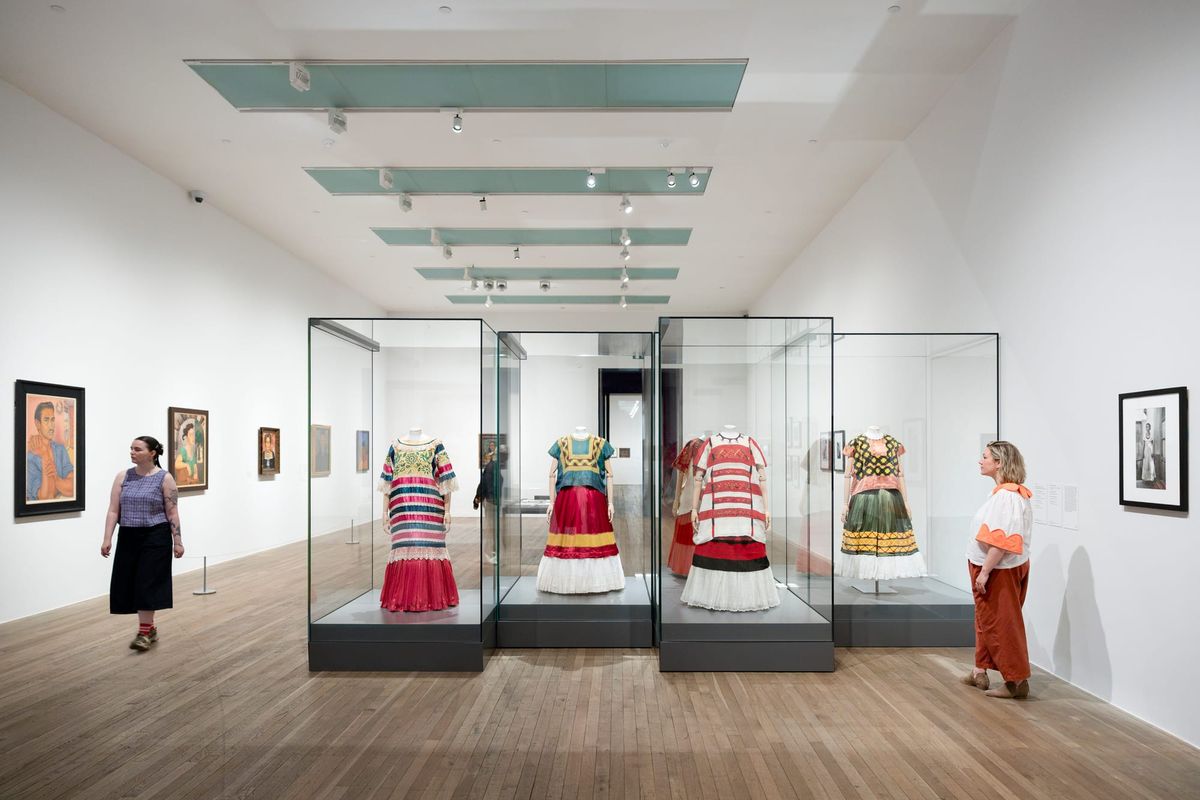
Frida Kahlo is present before the exhibition begins. Her face arrives first: the joined brows, the flowers, the direct stare, the composed severity of someone who seems already to know how she will be seen. At Tate Modern, that familiarity is not a prelude to Frida: The Making of an Icon. It is the exhibition’s material.
Kahlo is one of the few modern artists many visitors recognize before they have properly looked at the work. Her image has travelled faster than her paintings: through biography, fashion, politics, fandom, merchandise and collective memory. By the time the visitor reaches the first rooms, Frida has already appeared as symbol, style and story.
The exhibition begins inside this already-formed familiarity. It does not present itself as a conventional retrospective, and it would be unfair to expect one. Its subject is not only Kahlo’s art, but the long transformation of a painter into an icon — a figure claimed by artists, activists, feminists, queer communities, disabled viewers, Chicana/o movements, museums and markets.
Visitors arriving for a full survey of Kahlo’s paintings may feel the absence quickly. The exhibition is more convincing when approached not as a retrospective, but as a study of what happened to Kahlo after the world learned to recognize her.
This is worth asking. Few artists have been made to carry so much meaning. Fewer still have had their meaning circulate so widely that recognition can begin to replace looking.
Before the Icon
The strongest rooms are those in which Kahlo’s own self-construction remains close to the work. Paintings, photographs, garments, jewellery and medical objects gather around one another without becoming simple biography. They show how deliberately Kahlo made herself visible.
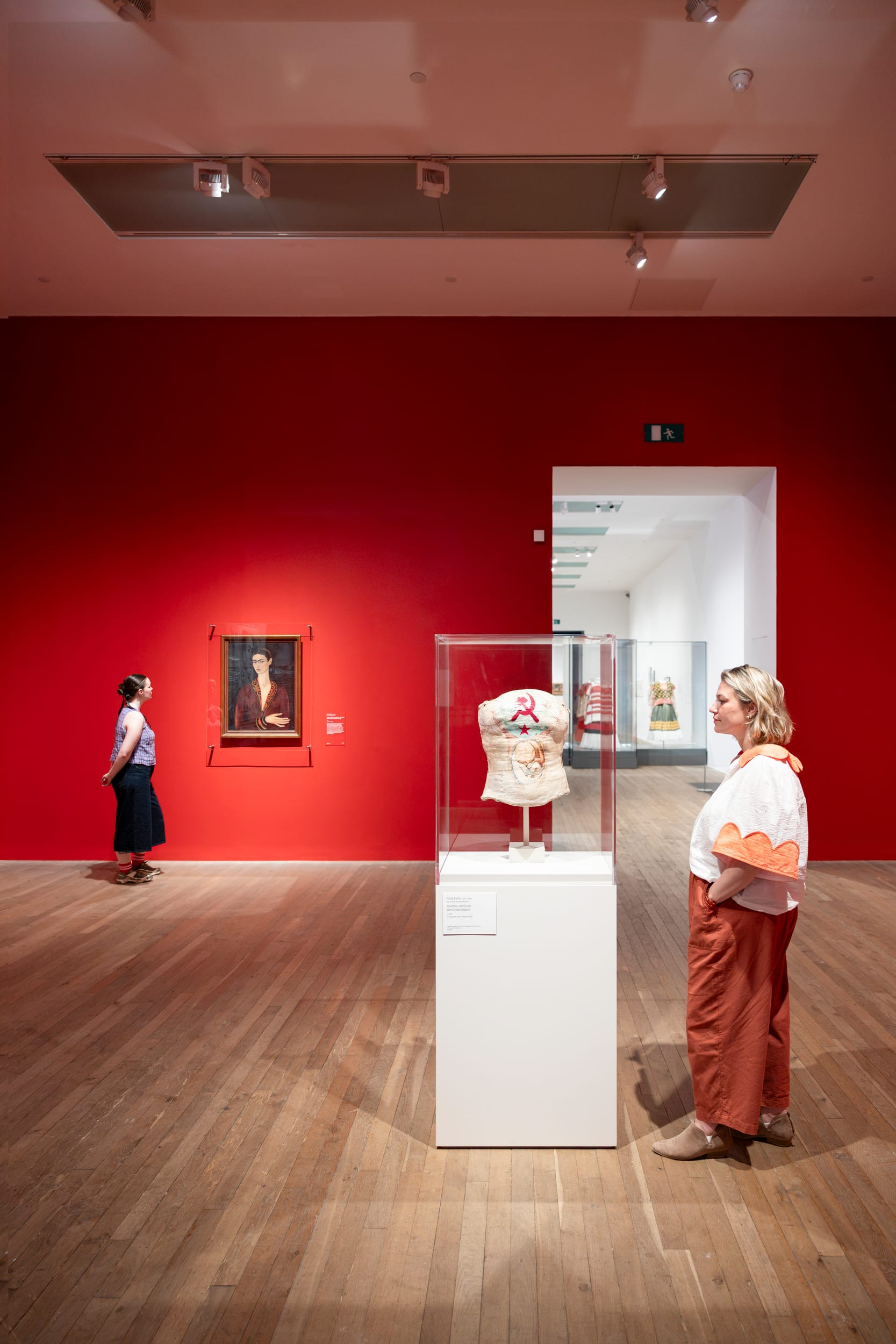
Dress was not ornament. Pose was not secondary. The body was not only the site of injury, but a place where politics, desire, pain and self-command could be staged. Kahlo did not wait for later culture to invent her image. She helped build it.
This is why the personal objects matter. The garments, corsets and jewellery do not merely illustrate a life. They show how closely Kahlo’s art was tied to the daily work of self-presentation. She did not separate image from life, or life from painting, in any easy way.
But the paintings remain different.
In Self-Portrait with Thorn Necklace and Hummingbird, the familiar face is not softened by recognition. It is held in tension: frontal, still, surrounded by foliage, animals and small violences. The thorns touch the skin. The hummingbird hangs like an omen. Nothing in the image behaves like an emblem alone.
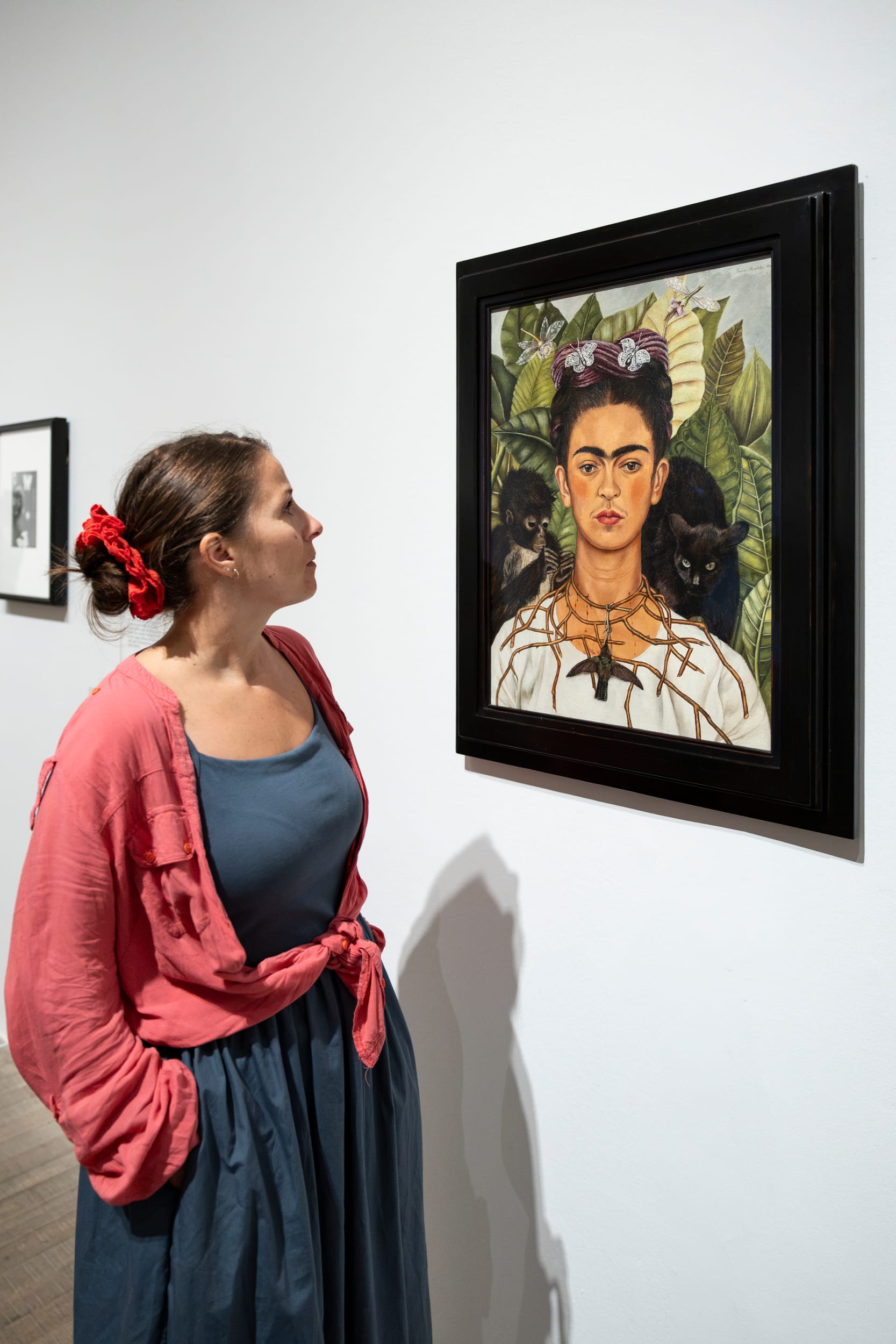
Kahlo’s paintings are often small enough to resist the scale of the institution around them. Their force comes from compression. A body is wounded but composed. A face looks outward but does not explain itself. Hair, dress, animals, plants, medical supports and political signs gather around the self without turning it into a single message.
These are not images asking to be decoded quickly. They slow the room down.
Kahlo’s power lies partly in this refusal to become transparent. She is often described through familiar words: resilience, suffering, authenticity, defiance. The paintings are stranger than those words allow. They invite recognition, then complicate it.
For a while, the exhibition lets this happen.
When the Room Widens
Then the show begins to expand. Other artists enter: contemporaries, admirers, inheritors, performers, activists, photographers, image-makers. The shift is not wrong. Kahlo’s posthumous life belongs to the story. Her image was taken up because it offered recognition where institutions had often failed to provide it.
At its best, this widening shows reclamation as an active process: not imitation, but use; not admiration, but transformation. Kahlo becomes a tool through which later artists think about their own conditions. In those moments, her afterlife feels alive rather than merely repetitive.
But the rhythm changes.
The visitor moves less from painting to painting than from claim to claim. Kahlo becomes a point of return for many different histories. Some of these encounters deepen the story. Others feel thinner, as if recognition has been mistaken for depth.
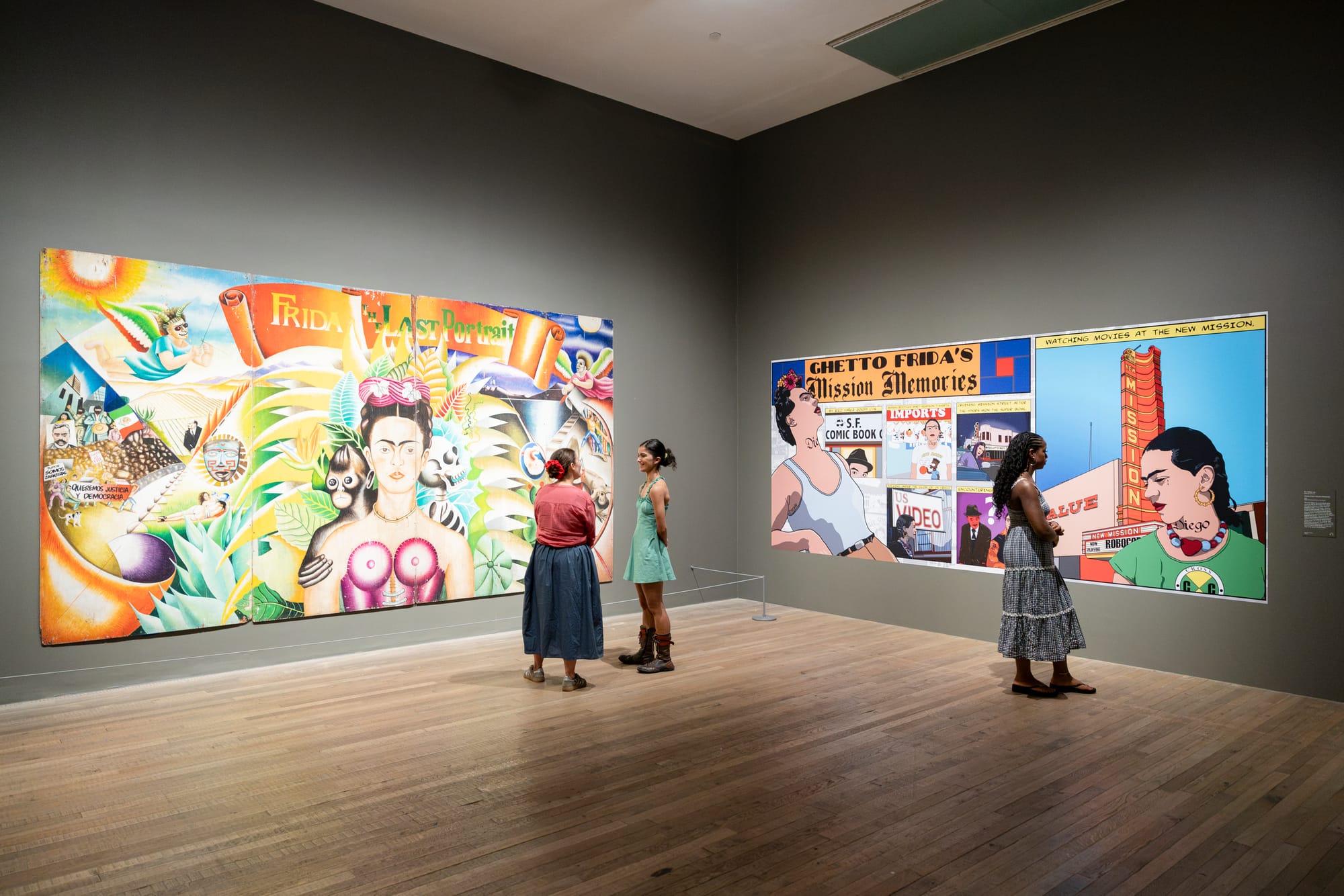
A face repeats. A name gathers force. The artist begins to recede.
A show with a limited number of Kahlo’s own works must be careful about the pressure placed around them. Later responses can open an artist. They can also crowd her. Here, both things happen.
Once an image becomes instantly recognizable, it can begin to function without being looked at. Kahlo’s face can signal intensity, independence, injury, resistance or style before any particular work has been considered. It can become a shortcut.
The exhibition knows this. Yet it cannot always escape the shortcut itself.
Fridamania
By the time the exhibition reaches Fridamania, the logic has become almost unavoidable. Kahlo’s image has passed through devotion, politics, identity, fandom and commerce. The glass cases make the transformation visible: Frida as object, accessory, souvenir, surface, shorthand.
This final movement could easily be treated as satire, but it is more complicated than that. Commercial culture did not invent Kahlo’s force. It fed on it. The face became marketable because it had already become meaningful.
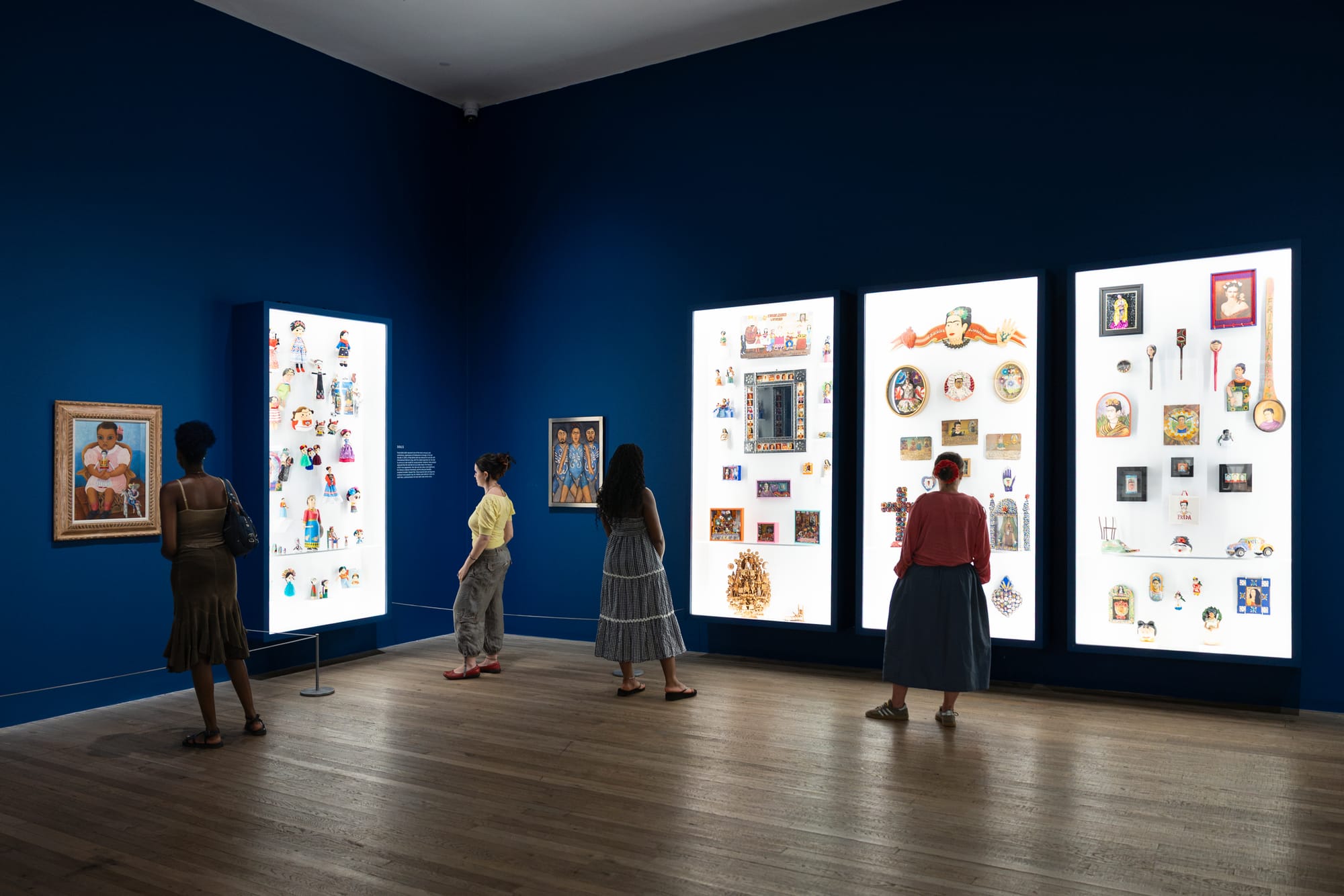
Still, the effect is uneasy. A Frida object is never only an object. It carries the memory of paintings about pain, illness, selfhood and survival, while also becoming something to buy, wear, collect or display. A tote bag, a doll, a cosmetic image, a shelf of souvenirs: each depends on instant recognition, and each makes that recognition easier next time.
The distance between devotion and consumption grows very small.
The difficulty is that this final room does not feel sealed off from the rest of the experience. It continues outside it. The museum shop is not an interruption of the argument but one of its afterimages. The visitor leaves the exhibition and remains inside the system the exhibition has described.
This does not make Tate uniquely cynical. Museums now operate inside economies of attention, membership, hospitality, sponsorship and merchandise. Blockbuster exhibitions carry financial and symbolic work far beyond the gallery. But the closeness between critique and participation matters.
Tate is not only showing Frida’s commodification. It is also extending it.
That may be unavoidable. It may even be honest. But it changes how the exhibition feels. The viewer does not leave Fridamania behind. The viewer exits through it.
Fame Is Not Presence
Kahlo’s fame has done important work. It has kept her visible. It has allowed generations of viewers to approach her through identification, admiration, politics, biography, fashion and myth. It has carried her into places where modern art history did not always make room.
But fame is not presence.
Presence requires time with the work before it becomes a symbol. It requires the possibility that Kahlo may be more difficult, more precise and more contradictory than the icon permits. It requires looking at the paintings without immediately converting them into lessons about suffering, strength or style.
The exhibition wants to show how Kahlo became available to the world. What it also shows is how availability can become distance.
That is the distance of fame. It brings an artist close enough to recognize instantly, but not always close enough to encounter.
Kahlo is everywhere here: in paintings, photographs, garments, tributes, merchandise and memory. The question is not whether she deserves such attention. She does. It is whether being everywhere has made her easier to see — or only harder to stay with.
Frida: The Making of an Icon is on view at Tate Modern from 25 June 2026 through 3 January 2027.
© ART Walkway. All Rights Reserved.