Why Escape to Moominvalley Matters Now: Tove Jansson and the Architecture of Gentleness
At Helsinki’s Architecture & Design Museum, Escape to Moominvalley reframes Tove Jansson not as a nostalgic figure, but as a world-builder whose imagined environments trained generations in how to live with others.

In Finland, the Moomins are not remembered the way stories usually are. They linger more like posture — absorbed unconsciously, carried in the body rather than recalled through quotation. Many adults struggle to cite specific scenes, yet recognize the patterns instinctively: how to leave without cruelty, how to return without apology, how to be alone without becoming hard, how to meet what is unfamiliar without treating it as a threat.
This is not nostalgia so much as internalization.
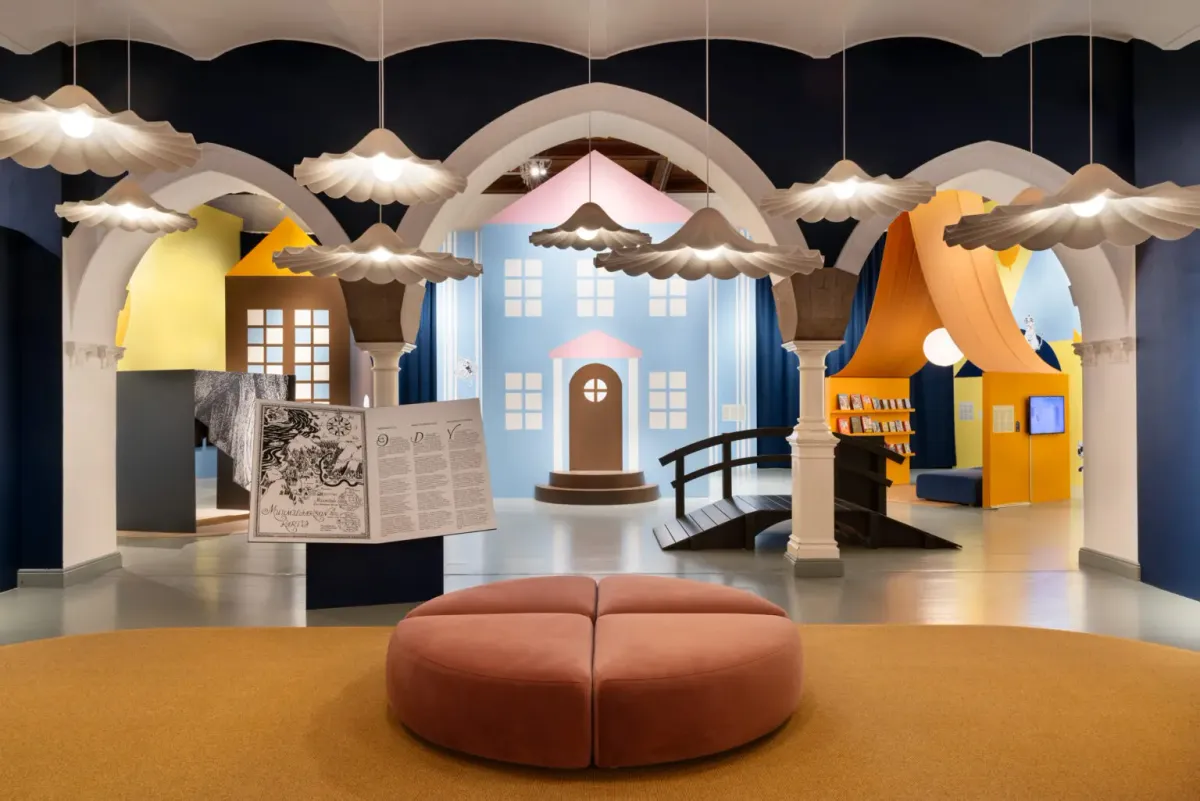
The exhibition Escape to Moominvalley, now on view at the Architecture & Design Museum, approaches Jansson at the scale she consistently worked. Not as a maker of isolated characters or individual works, but as an artist attentive to how places, habits, and relationships accumulate into a coherent environment.
Jansson never concealed that Moominvalley functioned as a form of refuge. She began writing the stories during wartime, when reality itself felt unstable. Yet the refuge she imagined was not an evasion of the world. It was a reordering of it — into something that could be lived through, tested, and returned from.
A World, Not a Comfort Object
Outside Finland in particular, Jansson is often compressed into something smaller: a childhood memory, a brand, a gentle image preserved against harsher realities. But comfort was not the objective. Comfort emerges when systems are reliable.
Moominvalley’s gentleness does not stem from decoration or softness, but from careful organization — from how space, time, and social roles are arranged.
Homes absorb disruption rather than magnify it. Winters are allowed to last. Characters may be difficult without being expelled. Visitors arrive unannounced and are met without correction or performance. Belonging is not conditional on cheerfulness.
What can be mistaken for sentimentality is better understood as spatial and social intelligence — attention to how lives are structured, rather than how emotions are displayed.
The museum’s framing is therefore precise rather than interpretive. Jansson worked spatially. Studio homes, islands, staircases, bathhouses, and lighthouses recur not as scenery, but as tools. She understood that ways of living shape ways of thinking, and that imagination depends on material and emotional conditions to remain viable.
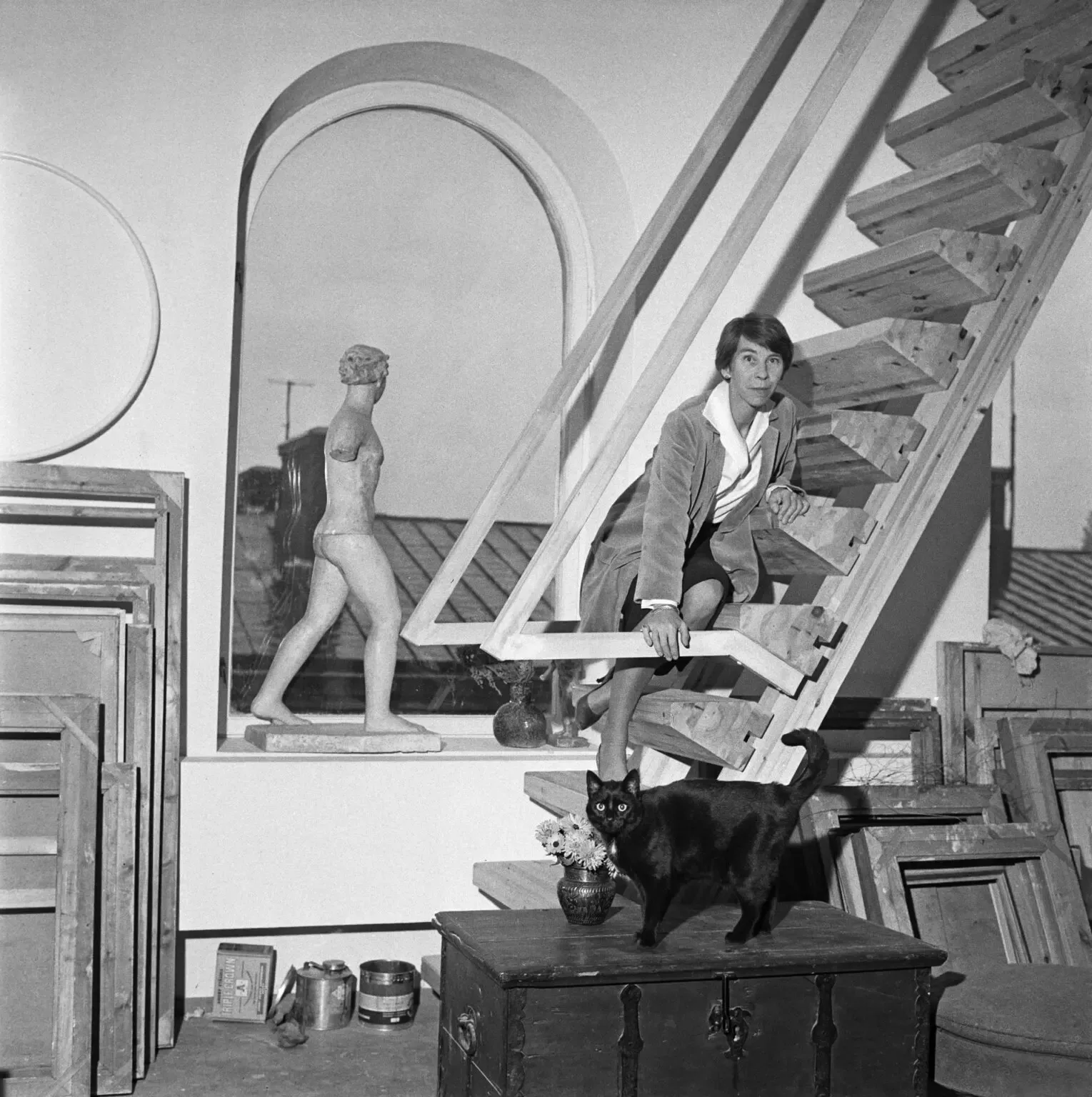
As the exhibition unfolds, the boundary between Jansson’s lived spaces — her Helsinki studio, the island of Klovharun — and the imagined spaces of Moominvalley grows permeable. Furniture, rooms, and landscapes reappear not as symbols, but as answers to recurring questions. A loft enables autonomy. A house with many doors encodes hospitality.
What Moomin Actually Teaches
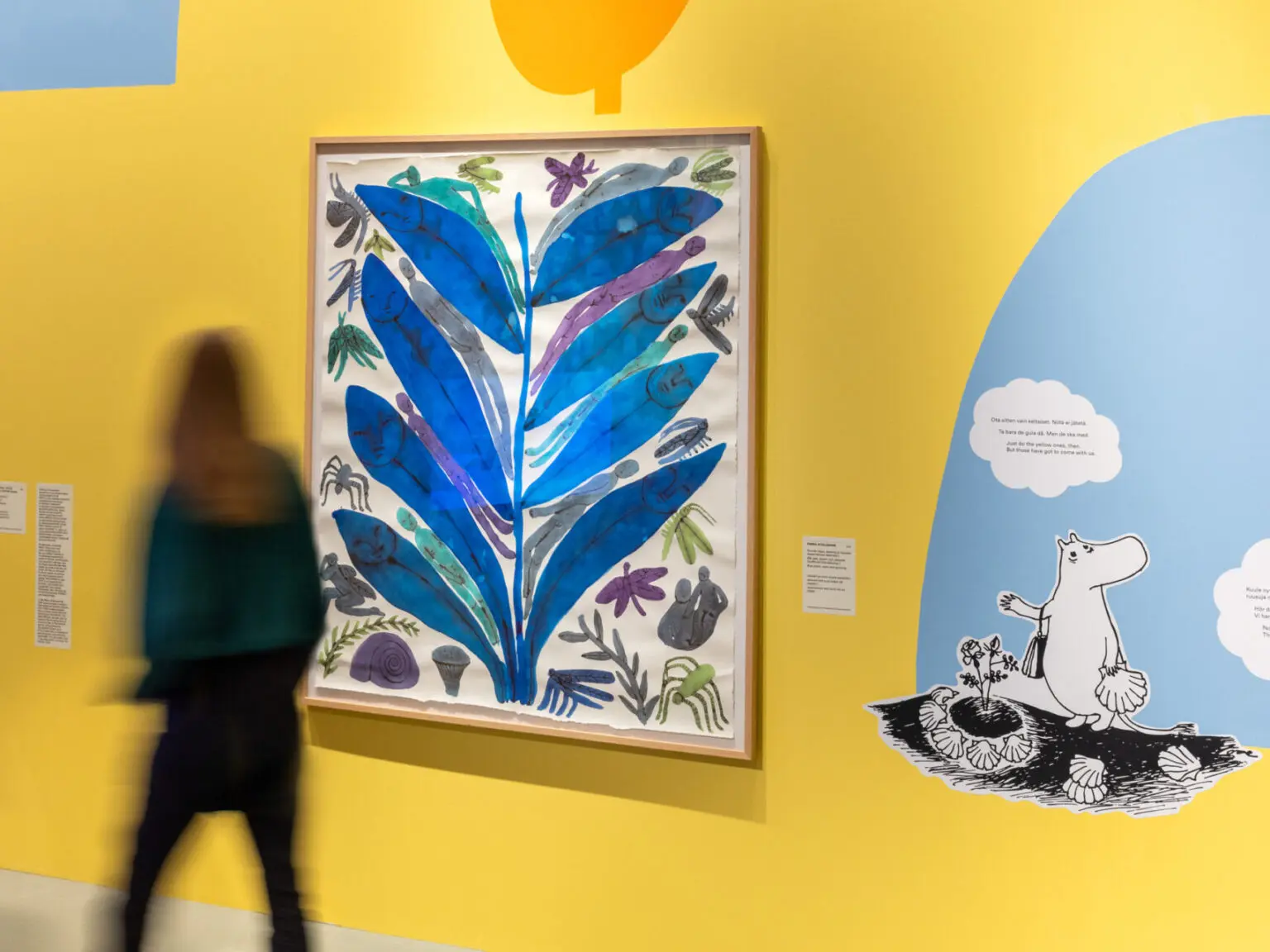
The durability of Moomin is often attributed to warmth. That explains part of its appeal, but not its resilience. Jansson did not eliminate darkness; she gave it a place.
Floods come. Winters isolate. Fear appears without warning. The distinction lies not in the absence of threat, but in how threat is managed.
Rather than moral instruction, the stories operate through shared principles:
- Solitude is permitted; leaving is not betrayal.
- Fear is acknowledged without spectacle.
- Community expands under pressure instead of contracting.
- Tenderness functions as a practiced capacity, not a mood.
- Complexity is allowed to remain unresolved.
These are not childhood lessons. They are adult competencies.
This is why Moomin does not fade with age. Children enter through the drawings, but adults stay because the system holds. The environment Jansson articulated does not collapse under reinterpretation or crisis; it accommodates them.
Why This Exhibition, Now
Escape to Moominvalley arrives at a moment when architecture, design, and art are increasingly asked to optimize behavior rather than sustain living. Ambiguity is treated as inefficiency. Care is often reduced to messaging.
Jansson offers no slogans in response — only a working model.
The exhibition’s engagement with contemporary architects and designers does not attempt to update her work. It reveals how little updating it needs. Shelter, shared space, survival without brutality — these remain ongoing conditions rather than historical concerns.
What emerges is that Jansson’s lasting contribution was not the creation of endlessly reproducible figures, but the articulation of an environment people have returned to for decades without it wearing thin.
Moomin became a comfort object precisely because its internal structure was capable of bearing weight. The risk lies not in comfort itself, but in forgetting what sustains it.
Not a Brand, a Climate
Jansson is often described as Finland’s most beloved artist. The description is accurate, but incomplete. Love implies passivity. Her work provides something closer to orientation.
She shaped an emotional and social climate that trained generations in how to live without becoming cruel. That effect is not softness. It is discipline.
Escape to Moominvalley does not ask visitors to rediscover Jansson. It asks them to recognize what they have been carrying — and to notice how rarely the environments they now inhabit are constructed with comparable care.
What does it mean that so many adults recognize themselves in a fictional valley, yet struggle to recognize themselves in the systems they live inside?
The exhibition does not answer this question. It leaves the structure intact — and allows the visitor to measure the difference.
Escape to Moominvalley is on view at the Architecture & Design Museum in Helsinki from 10 October 2025 through 27 September 2026.
© ART Walkway 2025. All Rights Reserved.