Tracey Emin’s Second Life at Tate Modern
At Tate Modern, A Second Life situates biography within institutional time, where survival, controversy, and public access settle into structure.

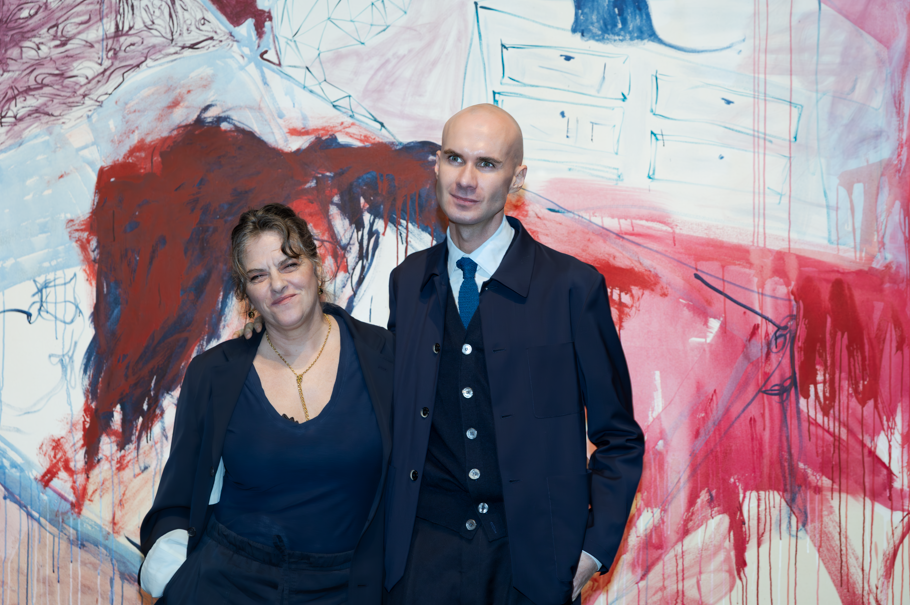
When Tracey Emin: A Second Life opened at Tate Modern, the scale was expected. The surrounding alignment was not.
My Bed sits at the center of the chronology. The sheets remain stained; the debris remains intact. What has shifted is not the work but the atmosphere around it. The installation no longer reads as interruption. It sits within a sequence that moves from early volatility through abortion, addiction, and breakdown into illness, surgery, and survival.
The steadiness of that sequence rests on material that was never steady.
The exhibition does not soften these episodes. The stoma photographs are shown without mediation. The neon texts remain direct. The paintings expand in scale, loosen in gesture. The composure of the galleries carries that memory.
The institution holds the material. Its original temperature remains.
Emin’s public position has shifted in parallel. A damehood in 2024. Trusteeship at the British Museum. Interviews defend the principle of free entry. Financial strain across national museums, including reported deficits at the National Gallery, remains visible.
The artist who once operated at the edge of institutional tolerance now speaks from within its framework. The trajectory reads as absorption rather than reversal. The teenager from Margate who entered London museums without paying now anchors one of their largest retrospectives.
Access remains central to her account. So does responsibility. Those who can afford to contribute, she suggests, should do so. The free-entry model reads less as entitlement than as compact.
Margate persists in the background. After her cancer diagnosis, Emin returned there permanently, investing in studios and training initiatives in a town already reshaped in part by the presence of Turner Contemporary.
London and Margate are less opposed than interdependent.
Across A Second Life, the 1990s recede without disappearing. The velocity associated with the Young British Artists gives way to something steadier. Illness interrupts the narrative but does not fracture it. The bed that once signified collapse now reads as artifact — not corrected, not redeemed, simply carried.
The phrase “second life” refers to recovery. It also hovers over the institutions surrounding the work: funding debates, restitution pressures, questions of legitimacy. Emin, as trustee, defends reform from within. Critics continue to press the British Museum over its colonial holdings. These positions remain unresolved.
Nothing in the exhibition attempts to reconcile them.
Nothing in the work ever did.
The question is no longer whether the work belongs.
What remains less clear is what the museum becomes by holding it.
Tracey Emin: A Second Life is on view at Tate Modern, London, from 27 February through 31 August 2026.
© ART Walkway 2026. All Rights Reserved.