TEFAF Maastricht 2026: Admissibility as Market Form
How TEFAF narrows the field before opening—through vetting, provenance pressure, institutional delay, and inherited standards that make some objects, dealers, and categories easier to carry than others.

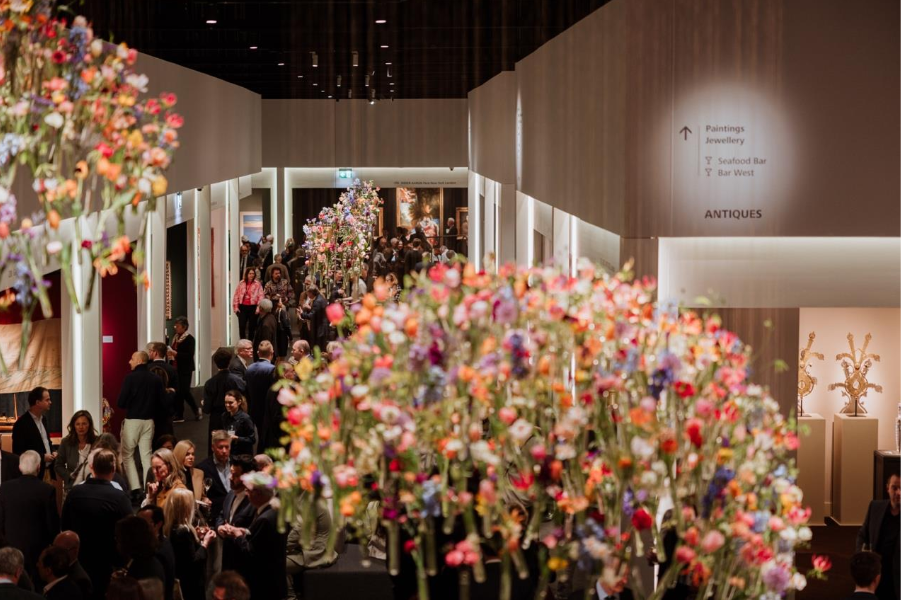
Long before the aisles fill, the fair has already started reducing itself.
TEFAF Maastricht is usually described through scale—thousands of years of art history, hundreds of exhibitors, a field running from antiquity to contemporary design. The week begins elsewhere: what can be defended, what can be documented, what can survive condition review, what can carry attribution without slipping into qualification, what can enter the room without exposing strain in paperwork, restoration history, or the dealer’s own language around the piece.
Breadth comes later.
By opening day, range will already have been narrowed into admissibility. Doubt will not have disappeared. It will have been distributed, delimited, and deferred enough for the room to function.
A fair like this does not simply reward scholarship. It rewards the capacity to convert scholarship into admissibility—and to absorb the cost when admissibility takes time. Documentary depth and legal clarity matter. So does the ability to keep a work under pressure without letting confidence fray around it. Some categories arrive with established routes of legitimacy. Others arrive needing translation. The burden is uneven before the week has even begun.
Breadth is not the fair’s condition. It is its finished image.
What Vetting Sorts
Around two hundred specialists, organized into committees across disciplines, examine the works submitted for display. The process is usually described as a seal of quality. It functions more broadly as selection architecture. It sorts what can be shown without defensive speech, what arguments can be sustained on a work’s behalf, what forms of uncertainty can be absorbed without destabilizing a stand.
Some works arrive already aligned with that structure. Published scholarship, stable attribution, exhibition history, a long ownership chain: these do not settle everything, but they reduce the amount of explanation required before a conversation can proceed. Other works arrive carrying more friction. Importance is not enough. It has to survive comparison, condition scrutiny, provenance questions, and the steady accumulation of qualifying language that weakens confidence by degrees.
A Renaissance panel with stable attribution enters this system differently from an ancient work whose lawful export history has to be reconstructed across jurisdictions and decades. A contemporary design object may arrive with less historical burden, but once placed at TEFAF it meets a procedure built to privilege depth, defensibility, and comparative knowledge over quick legibility.
The same scrutiny does not fall on equally prepared ground. Nor does it produce equal ease once the week begins.
New Material, Old Grammar
The increased presence of modern and contemporary art, photography, design, and contemporary jewelry is easy to describe as diversification. The more decisive shift sits elsewhere. Newer material does not enter on its own terms. It enters through procedures built for older forms of authority.
That transfer redistributes value unevenly. A contemporary jewel or design object can shed some of the volatility of trend and acquire the density of craft, rarity, and material intelligence. Other work loses force under the same pressure. It remains legible, but too quickly to acquire density. It does not withstand prolonged explanation. It does not survive comparison with the same ease.
Focus and Showcase move inside that same grammar. They introduce rediscovery, concentration, younger dealers, sharper presentations. They do not rupture the fair’s operating logic. A Nigerian modernist ceramic practice, a Mapplethorpe presentation, or less canonical inventory can enter, but entry still depends on whether the material can be routed through inherited languages of expertise without dispersing into qualification.
Adaptation appears here less as expansion than as disciplined absorption.
Institutional Time
Museum presence does not simply validate the fair. It reorganizes tempo.
Curators and trustees will move through the aisles with acquisition committees, donor consultation, conservation review, internal approvals, and public accountability attached to them. Interest from a museum can elevate a work immediately while delaying its release into the market. A hold does not only signal seriousness. It withholds.
That withholding redistributes pressure across the floor. For the private buyer, museum attention can intensify desirability by suspending access. For the dealer, the same hold can function as validation and blockage at once. The work can remain visible, discussed, and not yet available. Institutional interest extends scholarly and symbolic value while delaying release.
Not all exhibitors can absorb that suspension equally. Dealers with enough capital and patience can treat museum delay as long-horizon placement. Others cannot afford to let time lengthen that way. The apparent alignment between scholarship and commerce rests on unequal tolerances for waiting.
Institutional attention does not simply certify. It allocates by delay.
Where Provenance Hardens
For categories of cultural goods entering the European Union under tighter lawful-export requirements, provenance no longer functions as background support. It functions as access infrastructure.
Some works arrive supported by long documentary records. Others require reconstruction from partial archives, old invoices, estate trails, or dealer memory. In those cases, the labor of admission is incurred upstream, before the fair has sold anything.
That labor does not distribute evenly. European material long normalized within the market’s own circuits often carries fewer immediate frictions than works whose movement has to be justified across colonial histories, changing legal regimes, and fragmented ownership records. The imbalance predates the fair. TEFAF makes it operational.
What remains easy to show, easy to trust, easy to buy does not separate from documentation. It is produced by it.
What Still Passes
Each year the field has to be narrowed again. Each year dealers prepare works for a level of scrutiny that is part scholarship, part risk management, part confidence management. Each year newer categories decide whether the gain in authority offsets the discipline of entry. Each year institutions confirm seriousness while slowing release. Each year breadth depends on prior exclusions, qualifications, and managed doubt.
Not every uncertainty has to be resolved. It has to be contained within limits the room can absorb.
That is the fair’s narrower force. In a market saturated with image-speed and flattened distinction, TEFAF begins not by making value visible but by making it admissible.
That protection is not distributed evenly. Some categories pass through it more comfortably than others. Some dealers inherit its advantages more easily. Some forms of historical material still fit the fair’s procedures with less friction than work requiring longer documentary reconstruction or translation into older languages of legitimacy.
The aisles will suggest range. The prior condition is narrower. Before anyone calls it breadth, the fair will already have been asking a more selective question:
what this room can still admit.
© ART Walkway 2025. All Rights Reserved.