Stop Building Only for Assessment: Create Signal Before You Graduate
Learn why students who begin building visibility, language, and momentum before graduation are the ones most likely to leave school with a real artistic life already in motion.


← Back to guide
Most art students still treat graduation as the beginning. First the work, then the deadlines, then the crits, then the degree show, then the graduation — and only after that, maybe, the portfolio, the audience, the opportunities, the real artistic life. In a slower world, that made more sense. Artistic careers used to take years to gather shape, and much more of that timing came from the outside. Institutions paced things. Galleries paced things. Teachers, curators, gatekeepers, expectations, politics — they all did more of the sorting for you.
But that is not really the field students are stepping into now.
Now the field is faster, more fragmented, more layered, and much more self-directed. There are more paths, yes, but also more noise. More access, but also more competition. More ways to make yourself visible, but also more pressure to self-manage. So if you are still thinking, “I’ll start building my artistic life after I graduate,” that is one of the most expensive assumptions a student can make. Not because you need a complete career before graduation — you don’t. And not because you need to leave school with collectors, representation, press, and a finished five-year plan — you don’t. But because if you wait until graduation to begin building language, visibility, habits, relationships, and context around the work, then you are trying to build everything at the exact moment the school structure disappears.
That is where people get lost.
So part one of the Art Student Masterplan is about a simple shift. Stop building only for assessment. Start creating signal before you graduate. Not a finished career. Not a fake professional identity. Just signal — enough signal that when school ends, the work does not have to begin from zero.
The School Container
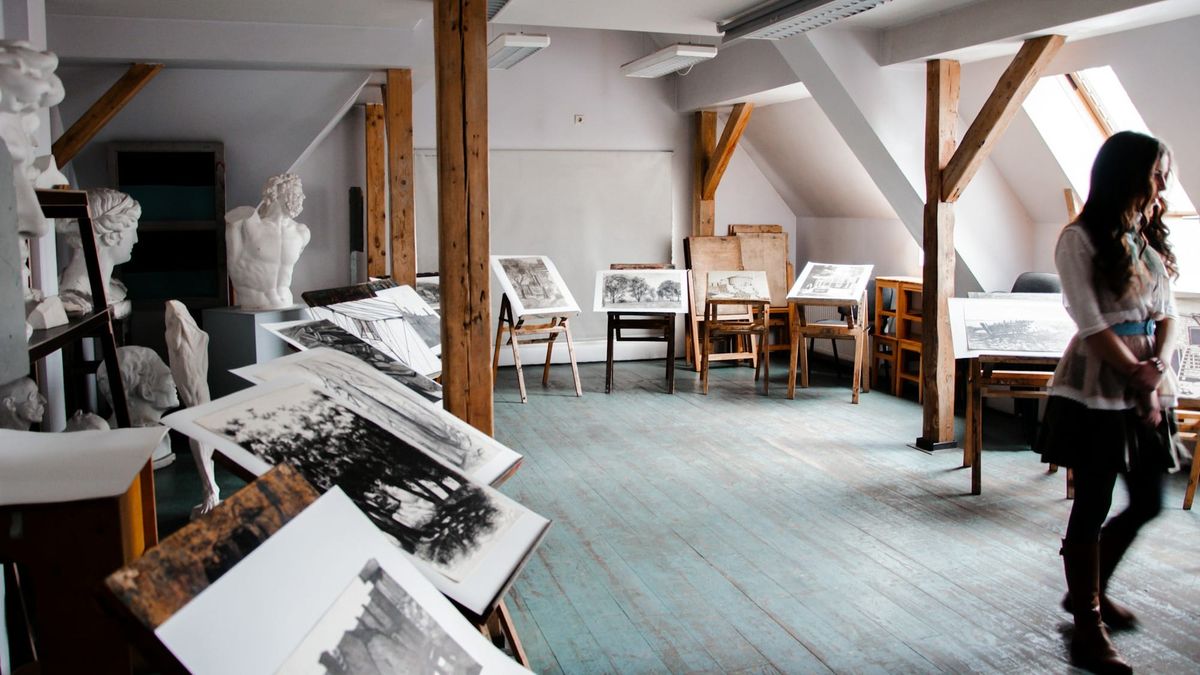
One of the most important things students need to understand is that school is not the whole field. It is one container. One structure. One temporary world with its own rules, its own internal language, its own biases, its own politics, its own sense of what counts and what gets missed. That does not make it unimportant. Quite the opposite. School can be incredibly valuable. It gives you access to history, criticism, curating, peers, pressure, friction, and ways of thinking you would not reach alone. But it is still one container.
And the problem is that many students begin making work as if the container is the whole world. They build for deadlines, for tutors, for crits, for what reads as serious inside the institution, for what satisfies assessment. That can still produce strong work. But if the work only knows how to live inside school, graduation becomes a cliff.
Let’s say you are in your final year. You have made work, you have had good crits, maybe tutors respond well, maybe your degree show project is coming together. Fine. But outside the institution, who knows what you are building? Who understands the project? Who has seen the work in a way that is not filtered through school? What language do you have for it that is not just crit-room language? Who, beyond your course, is following the development of the work?
For a lot of students, the answer is: almost no one.
And that is not because they are lazy. It is not because they are unserious. It is because they have unconsciously treated school like the whole field. They built for the container. Then the container goes, and suddenly the question becomes: what holds the work now?
That is the real danger.
Start the Artistic Life Before Graduation
And this is where I want to be precise. The goal is not to complete the whole career before graduation. The goal is to begin the artistic life before graduation. That is a very different thing.
Let’s say your work is still changing. Your medium is still shifting. You do not yet know whether your future practice leans more toward exhibitions, curation, publishing, design, teaching, commissions, research, or something else entirely. Fine. That is normal. You do not need total certainty. You do need to begin.
You begin building language. You begin building writing. You begin building habits. You begin building visibility. You begin building relationships. You begin learning where the work resonates. You begin understanding what school is giving you — and how to maximize it while it is still there.
Because the goal is not to leave with a degree alone.
Quality Before Strategy
Here is another thing students need to hear early. More people can call themselves artists now. The platforms are wider, the access points are wider, and the old gatekeepers do not hold the same monopoly they once did. People can make work, publish work, share work, and frame themselves much more easily than before.
But that has not made quality less important. If anything, it has made quality more important.
Because when the field gets noisier, discernment matters more. Standards matter more. Judgment matters more. Writing matters more. Context matters more. Strong work matters more. Students need this because it is very easy now to hear conversations about visibility, self-management, audience, and community and assume the message is: market yourself well enough and you will be fine.
No.
Weak work does not become strong because it is visible. Weak work does not become durable because it is well-packaged. Strategy can help strong work travel. It cannot make weak work last.
And that is exactly why education still matters. Not because the degree itself is magic, and not because years spent around art automatically sharpen the work — they don’t. Plenty of people stay in the field for years without really developing stronger judgment. But art education, at its best, teaches history, criticism, exhibition logic, curatorial awareness, material understanding, standards, reflection, and the discipline of developing work over time. It gives you friction. It puts you in contact with ideas outside your own. It can raise your standards if you let it.
So this guide is not anti-education. It is almost the opposite.
School matters too much to waste.
Project Language
Now let’s go deeper, because this is where a lot of students get stuck. A lot of people think they are becoming artists because they feel artistic. They are sensitive. They have had a difficult life. They feel different. They have strong emotion, strong memory, pain, instability, identity material, family material. Fine. All of that may absolutely feed the work. But that is not yet the same thing as building a practice.
Being artistic is not yet the same as building an artistic practice.
Let’s say your work is about your mother, your childhood, your grandmother, grief, loneliness, fear, healing. Fine. Now what? Can you speak about it as a project? Can you talk about the conditions it emerged from, the references around it, the medium choices, the structure, the tension, the visual logic? Can you talk about what the work is doing — not just what happened to you?
Because autobiography is not yet maturity. Personal material is not automatically deep just because it is personal. The work has to do something with it.
And one of the great jobs of school is to help students move from identity language to project language. Not by removing the personal, and not by flattening the emotional, but by helping them transform raw feeling into stronger work, stronger language, and stronger judgment.
That is where seriousness begins to show.
Writing Builds Distance
This is also where writing becomes so important. Many students do not fully realize how valuable it is to write about their own work while they are still in school. Not just because applications require it, and not just because institutions like statements. I mean writing as part of development.
Because when you write about your work, you do not just explain it. You begin to understand it differently. You slow it down. You hear yourself. You catch vague language. You notice patterns. You remember what you were thinking three months ago. You begin building project language instead of only emotional language. You begin learning criticism, and maybe even more importantly, self-criticism.
Let’s say you have made a body of work and in your head it feels obvious, emotional, lived, true. Fine. Now write one paragraph on what it actually is. Then one paragraph on what references shaped it. Then one paragraph on what formal decisions are carrying it. Then one paragraph on what is still unresolved in it. Suddenly you are in a different relationship to your own work. Now you can hear where you are vague. Now you can hear where you are hiding. Now you can hear where the project is stronger than your explanation — or where the explanation is trying to carry what the work itself has not yet earned.
That is useful.
A lot of students stay trapped inside intention. They know what they meant. But they do not yet know how the work travels, how it reads, how to frame it beyond themselves. Writing starts to build that bridge.
So no — writing is not extra. Writing is part of the work.
The 15-Minute Lead
Now maybe at this point you are thinking: yes, but this still sounds like a lot. And yes, if you imagine building the whole thing at once, it is a lot. That is why students need a smaller entry point.
Fifteen minutes a day.
That is enough to begin changing the trajectory.
Fifteen minutes to write down what happened in crit and what you actually think about it now. Fifteen minutes to document one piece properly. Fifteen minutes to share another exhibition or another artist’s work with a real thought attached to it. Fifteen minutes to ask one practical question — how someone built a simple site, how editioning works, how someone structures their images. Fifteen minutes to write one paragraph on your own project. Fifteen minutes to post one image with one clear sentence. Fifteen minutes to reply carefully to someone who engaged seriously with your work. Fifteen minutes to ask: what here actually belongs to my practice, and what belongs only to the assignment?
That does not sound dramatic. And that is exactly the point. The students who seem “ahead” later are often not ahead because they had one giant breakthrough. They are ahead because they compounded small moves earlier. A little more writing. A little more visibility. A little more practical knowledge. A little more relationship to the field outside the institution. A little more articulation.
And by the time graduation arrives, that small compounding becomes real momentum.
Signal Before Graduation
So let’s talk about signal, because that is really the central idea of this chapter. Signal is not fake polish. Signal is not pretending you are established. Signal is not performing adulthood in a way that feels hollow. Signal is the first visible shape of your artistic life.
It is your work having language around it. It is your name beginning to appear in relation to ideas, projects, images, conversations, and spaces. It is a few people starting to understand what you are concerned with. It is your rhythm becoming visible. It is your seriousness becoming legible. It is someone saying, “Oh yes, I have seen what they are doing.”
And students can build signal in very human ways. You can show up at other exhibitions. You can share work that genuinely opens something in you. You can speak about your own project once in a while in a clear sentence. You can document process not just as proof of labor, but as part of the thinking. You can ask better questions. You can start conversations. You can make it possible for your work to exist in relation to a world beyond your course.
That is signal.
And the beautiful thing is, signal does not require that you be finished. A lot of the time it is stronger when people can feel that something is genuinely forming.
School Holds You — Use That
This is maybe the deepest point in the whole piece. School holds you. It gives you deadlines, peers, friction, facilities, tutors, expectations, language, pressure, access, and a reason to keep making even when you are unsure. That does not make it perfect. Institutions come with politics, biases, constraints, and blind spots of their own. But it is still a structure.
And once that structure disappears, you feel it. The deadlines go. The crit rhythm goes. The constant peer contact goes. The automatic context goes. The feeling that your work is being held inside something larger often goes too.
So the students who benefit most from school are usually not the ones who simply survive it. They are the ones who use it. They use it to sharpen quality, sharpen writing, sharpen judgment, build signal, test habits, and understand what kind of artistic life they might actually want to build.
That is how you maximize the value of school.
Not by turning it into hustle culture. Not by panicking. Not by building a fake little empire. Just by understanding that this period can give you more than a degree if you let it.
Direction, Not Noise
And that brings us back to the center. This is not about getting louder. It is not about becoming a content machine. It is not about fake professionalism. It is not about pretending you have finished something that is still forming.
It is about direction.
It is about not letting graduation be the first moment you begin building the life around the work. Because strong work without language often gets lost. Strong work without signal often gets missed. Strong work without any rhythm around it can vanish the moment school ends. A lot of that can be softened before graduation. Not all at once. Not perfectly. But meaningfully.
So if you are still in school, start small. Write a little. Share a little. Document a little. Learn a little. Ask one question. Make one contact. Visit one exhibition. Clarify one project. Take one small step that your future self will not have to build from zero.
Because the goal is not to leave school as a finished artist.
The goal is to leave with stronger work, stronger language, and stronger momentum than when you entered.
And that begins before graduation — not after it.
© ART Walkway. All Rights Reserved.
 Learning Lab
 Learning Lab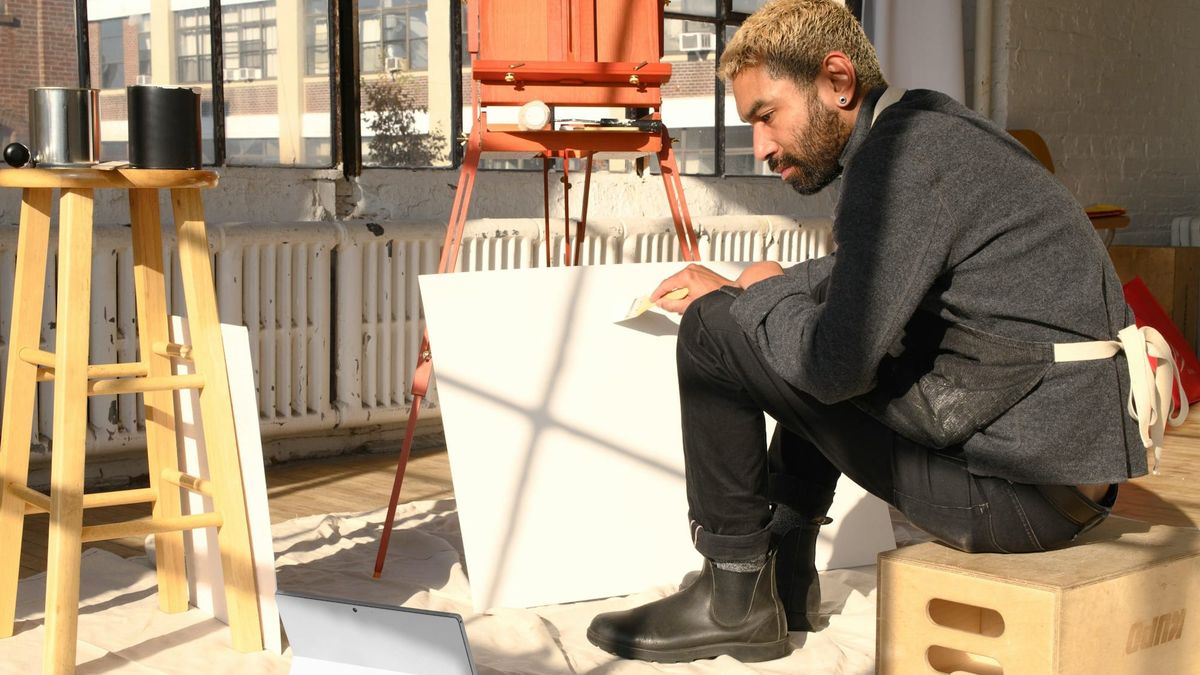
 Learning Lab