Singapore Art Book Fair, Flexible Entry, and the Walking Exhibitor Backlash
Singapore Art Book Fair’s withdrawn Walking Exhibitor open call exposed a deeper question about access, constraint, and how smaller art fairs distribute instability across emerging participants.

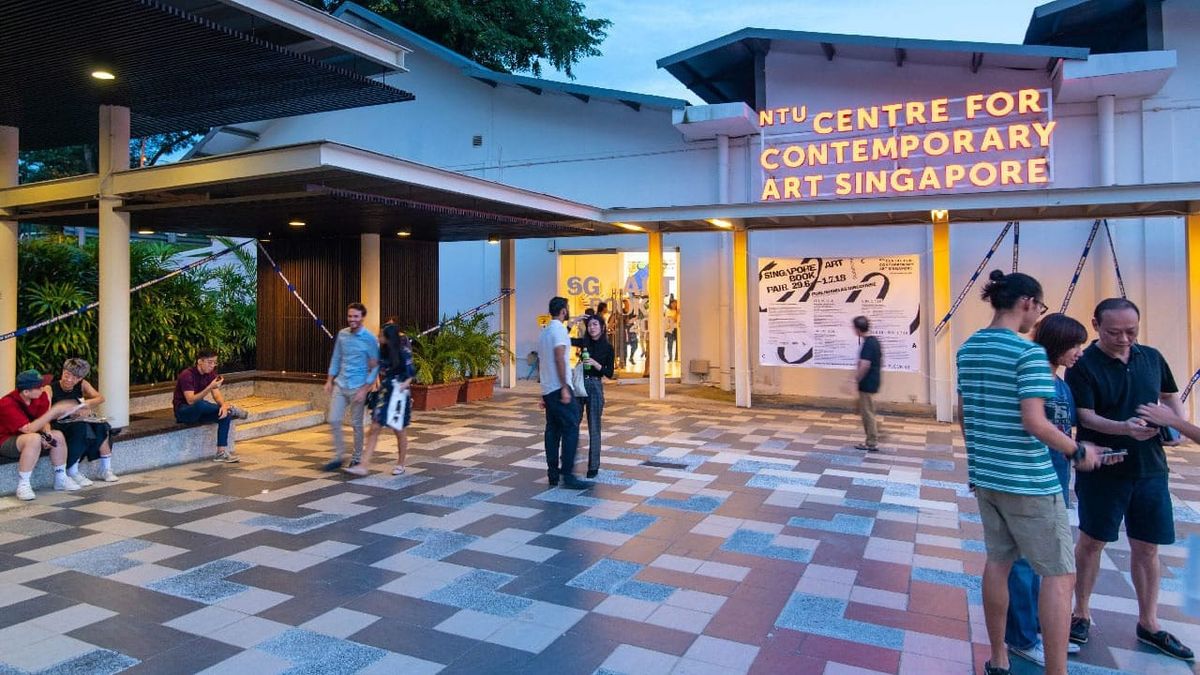
Singapore Art Book Fair has withdrawn the open call for its proposed “Walking Exhibitor” format after criticism from artists and members of the public, closing the scheme three days after it was announced and saying it would “take some time to workshop through the mechanics of the fair”. The proposal had invited selected new and emerging art bookmakers to display and sell publications from a portable display case rather than a booth table, at a fee of S$150. Announced on 6 April for the 2026 fair, scheduled to run from 28 to 30 August, the open call had originally been due to close on 1 May before being withdrawn on 9 April. Organisers later acknowledged that the display case they had chosen was “inappropriate” and said the concept was never intended to come at the expense of new and emerging artists.
The issue is not only that one format was poorly received. It is that the fair’s attempt to keep participation open under reduced conditions made a deeper question visible: when a small cultural platform cannot remove constraint, where does it place it?
At an art book fair, a table is not just furniture. It is a basic condition of presence. It gives a small publisher or artist a place to stop, display work, and be encountered without having to convert movement itself into part of the event structure. Once that support is removed, even experimentally, participation changes shape.
That is what the proposal exposed.
SGABF had framed the initiative as a way to “soften spatial hierarchies” and make the fair “less of a marketplace and more a field of encounter”. In principle, that language belongs to a recognisable art-fair desire: to loosen fixed positions, reduce commercial rigidity, and produce more fluid forms of exchange. But the proposal ran into the operating realities of an art book fair, where visibility, stamina, accessibility, and the simple ability to remain in place are not secondary details. They are part of the infrastructure of participation. Commenters challenged the format on exactly those grounds, raising concerns not only about labour and cost but about the assumption that prolonged walking or standing could function as a neutral condition of entry.
That does not make the proposal cynical. It does show how quickly flexibility becomes legible as unevenness once the body is asked to absorb what space no longer can.
The contradiction was not hard to see. Those with booths remained anchored. Those entering through the experimental tier had to remain mobile in order to be visible.
That changed the meaning of access.
In its 9 April statement, SGABF also said the 2026 edition would be significantly smaller than previous years, operating at roughly one-third the scale of the 2025 fair in both exhibitors and visitors as organisers test new formats at a more manageable size. That detail matters because the walking proposal did not emerge in abundance. It emerged in contraction. The format was not only an experiment in encounter. It was also one attempt to organise entry under less space, less scale, and likely less margin.
Seen that way, the backlash did more than reject a bad design. It showed how narrow the margin of trust has become between independent organisers and the communities they serve. A fair can spend years building goodwill, international visibility, and a sense of shared ownership. But once a new format appears to shift instability downward onto the least established participants, that accumulated trust can become briefly unstable too.
The open call has been closed. The constraint remains.
So does the harder question the proposal made visible: when a small art system tries to stay open under pressure, who is asked to carry the adjustment?
© ART Walkway. All Rights Reserved.