Guernica and the Limit of Commemorative Transfer
As Basque leaders press to move Picasso’s Guernica to Bilbao for the 90th anniversary of the bombing that produced it, the dispute is no longer only about location, but about whether historical memory can be re-sited once conservation fixes the work in place.

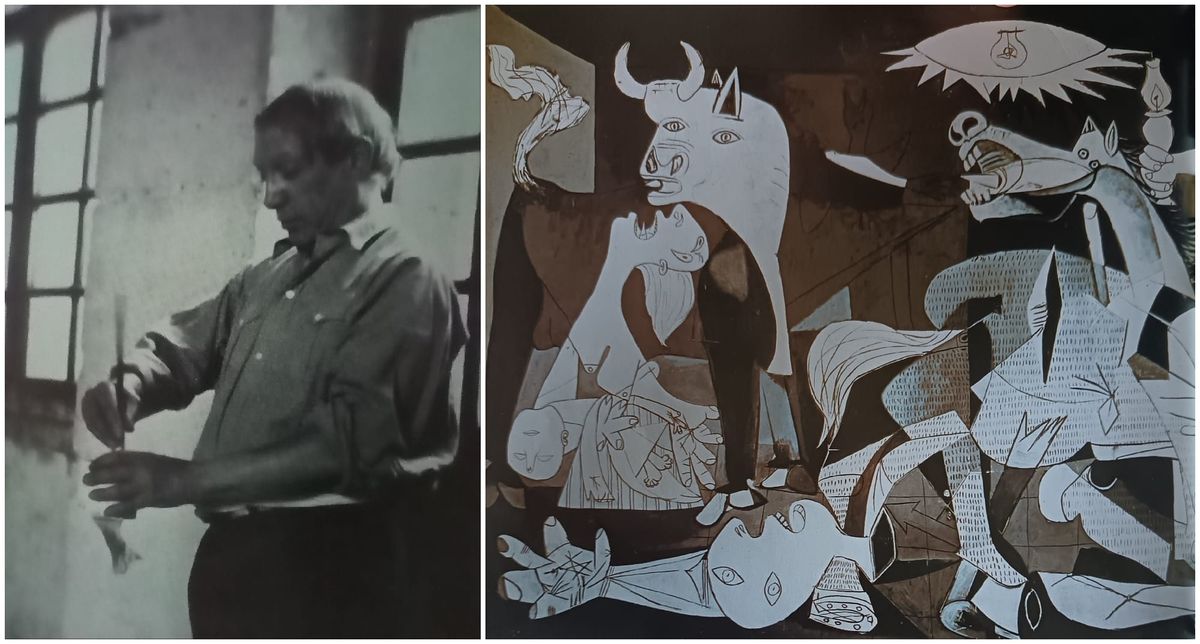
The Basque government wants Pablo Picasso’s Guernica moved from Madrid’s Reina Sofía to the Guggenheim Museum in Bilbao from 1 October 2026 to 30 June 2027, presenting the transfer as an act of historical memory and symbolic reparation ahead of the 90th anniversary of the bombing of Gernika. Spain’s culture ministry has again relied on the Reina Sofía’s position that the work is too fragile to travel.
The issue is not ownership. It is whether commemorative claim can require movement once movement itself becomes the risk.
Guernica is already in Spain. What is being contested is not title, but whether the national museum that holds the painting can treat custody as settled authority, or whether the site of the violence that produced it can still make a stronger claim on where the work should appear.
The answer from Madrid comes through conservation.
The Reina Sofía has again advised against transfer, preserving a position it has held through earlier refusals to lend the work. That does more than block a request. It fixes the terms of the dispute. Once non-movability is accepted, commemorative force no longer determines placement. Memory may remain attached to Gernika. The object remains where conservation holds it.
That is the limit.
The work returned to Spain in 1981 after decades at MoMA, moved to the Reina Sofía in 1992, and has repeatedly been withheld from travel on grounds of fragility. Over time, that immobility has become more than a technical condition. The painting’s continued presence in Madrid now sits inside the symbolic structure of the museum itself. To move it would not only expose the work to risk. It would disturb a geography of cultural authority already made to seem permanent.
The current dispute exposes that arrangement.
If the painting cannot move, reparation cannot take the form of relocation. Government is left to absorb a conflict between two claims that do not operate on the same level: conservation on one side, commemorative claim on the other.
The work remains fixed in Madrid. The historical claim does not disappear with it.
© ART Walkway. All Rights Reserved.