From Monument to Capacity: The Louvre and the Recalibration of Presidential Authority
As leadership shifts at the Louvre, executive monumentality yields to managerial legitimacy, recasting the museum from legacy instrument to demonstration of state capacity.

At the Louvre, succession operates as correction.
The transition from Laurence des Cars to Christophe Leribault consolidates exposure accumulated through security failures, maintenance strain and governance scrutiny. Official emphasis has fixed on infrastructure, oversight and operational discipline. Authority is measured by control of systems rather than projection of form.
The “Louvre – Nouvelle Renaissance” renovation remains formally active. Its function has shifted. What was articulated as transformation now proceeds, if at all, within the language of necessity. Monumentality is conditional on demonstrable capacity.
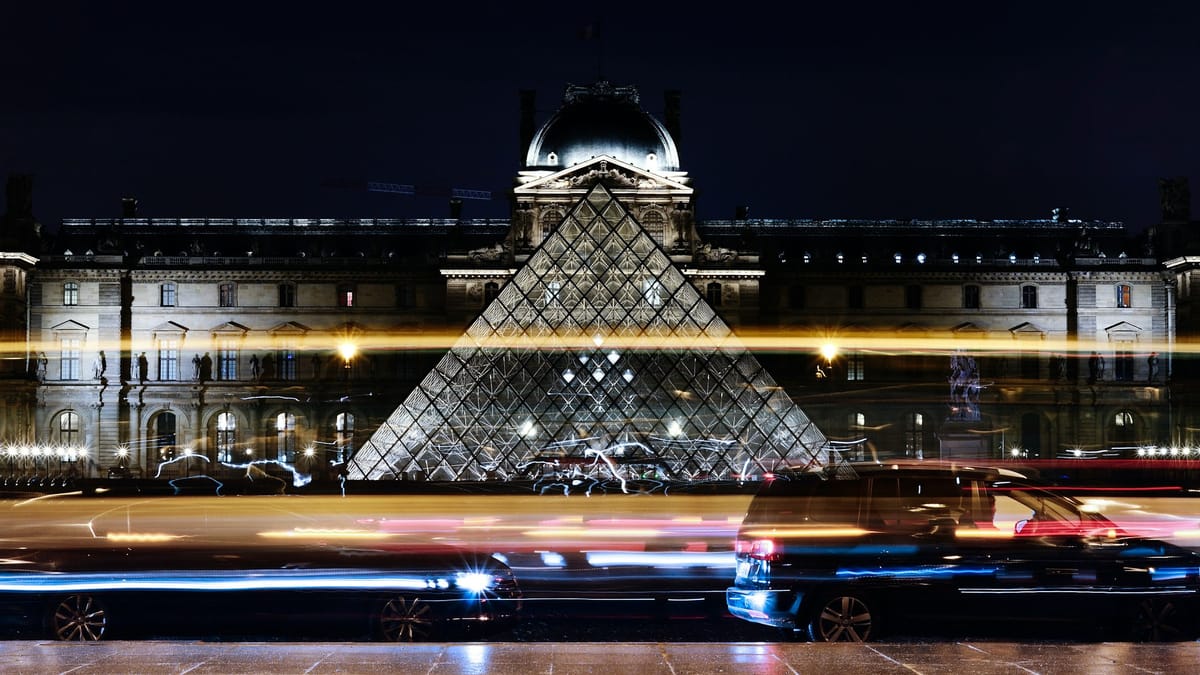
Under Emmanuel Macron, the Louvre has served as executive terrain. The 2017 victory address before the Pyramid aligned political ascent with architectural continuity, extending a Fifth Republic sequence in which built form absorbed presidential authorship. François Mitterrand embedded authority through the Pyramid; Jacques Chirac through the Musée du Quai Branly. Architecture extended mandate into structure.
That sequence no longer governs.
The Louvre receives nearly nine million visitors annually within a palace conceived for dynastic display, not contemporary throughput. It functions simultaneously as archive, tourism infrastructure, diplomatic instrument and continuous media surface. At this scale, fragility is public and immediate. Institutional strain registers as state capacity.
Executive monumentality has been subordinated to managerial legitimacy. The museum now demonstrates governance before it performs inscription. Security, maintenance, audit compliance and operational coherence determine the plausibility of expansion. Architectural ambition follows systemic proof.
Succession contains exposure within administrative continuity, but scale remains non-negotiable. The presidency cannot attach legacy to structure without first stabilising infrastructure. Monumentality has become evidentiary rather than declarative.
The renovation persists as framework. Its meaning is administrative.
Where earlier presidencies concluded through architecture, the Louvre now conditions authority through capacity.
© ART Walkway 2025. All Rights Reserved.