LACMA’s David Geffen Galleries and the Cost of Letting Order Soften
As the David Geffen Galleries open in Los Angeles, the issue is no longer only whether Peter Zumthor’s building succeeds as architecture, but what an encyclopedic museum has to build around art once chronology, geography, and medium stop doing as much of the public work.

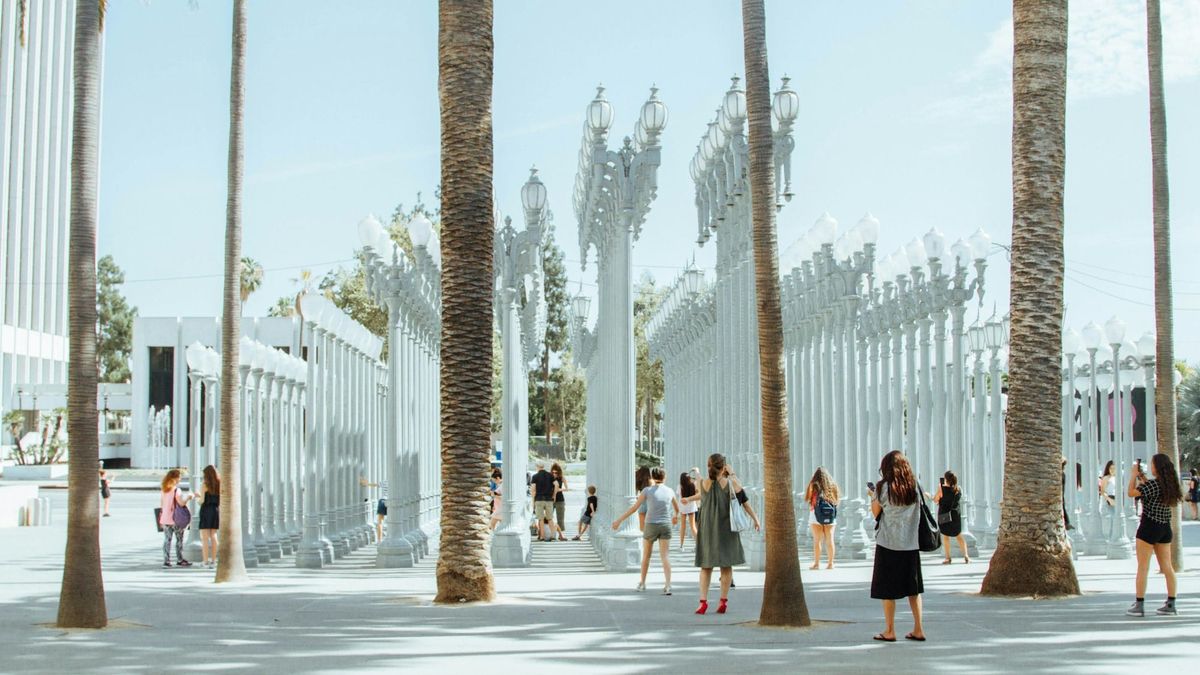
The new David Geffen Galleries at LACMA have been argued over for so long that the building now arrives with its own ready-made positions. Too much concrete. Too little clarity. A compromised triumph. An urban landmark. A curatorial breakthrough. A very expensive drift away from what an encyclopedic museum is supposed to be.
Most of those arguments catch part of it. None quite settles the thing people will actually have to deal with once they are inside.
How does a visitor understand where they are, why this object is here, and what kind of relationship the museum is asking them to see?
That question has always mattered in museums. At LACMA it now matters differently.
For a long time, encyclopedic museums relied on familiar structures of orientation. Art was grouped by period, by region, by medium, by sequence. Those structures were never innocent. They carried exclusions, simplifications, and older civilisational assumptions that museums have spent years trying to complicate. But they also performed a practical function. They told visitors what kind of claim the institution was making through arrangement.
The Geffen Galleries loosen that arrangement on purpose.
LACMA has framed the new building as a place without prescribed pathways or visible hierarchy, where art from different cultures and eras can be encountered in more open relation. The inaugural installation is organised through oceans rather than through the older categories of period or medium. The building’s single elevated level, its long lateral movement, and its many galleries all reinforce that shift. Visitors are not being led through a settled sequence. They are being asked to move through a field of relations.
There is real promise in that. Older museum orders could make history feel more fixed than it was. They could separate objects too cleanly from one another. They could turn categories into truths. A museum that wants to show exchange, migration, contact, and uneven overlap has good reason to test a different arrangement.
Still, once those older structures are loosened, something else has to take on the work they used to do.
That work does not disappear. It moves.
It moves into curatorial placement, into wall text, into adjacency, into pacing, into architectural atmosphere, into the institution’s ability to make a visitor feel that the encounter has been shaped with reasons stronger than novelty. If the older sequence retreats, the museum has to carry more of the burden through relation itself.
That is where much of the unease around the project has been sitting.
The criticism of the Geffen Galleries has often focused on what is easiest to point to: the concrete monotony, the practical questions around hanging and rehanging art, the long-running concern over reduced intelligibility, the sense that architectural conviction may have come at the expense of public clarity. The defence has been just as consistent: openness, experimentation, Los Angeles light, movement across categories, freedom from stale taxonomies, a collection released from inherited partitions.
Both sides are describing a change in how order is being handled.
LACMA has tended to name that change in the language of nonhierarchy. One level. No upstairs or downstairs. No prescribed route. No single art history enforced through movement. It is an appealing proposition, especially for a museum that wants to distance itself from older structures of authority.
But a museum does not become less authoritative because its order becomes less declarative.
It simply has to exercise authority in a different register.
That is one reason the opening of the Geffen Galleries has never been only about architecture. The building is arriving together with commissions, plaza installations, donor-backed talks, hospitality spaces, branded public programming, member previews, youth access initiatives, and a broader environment of activation around the collection. What is opening is not only a new container for art. It is a new institutional surface through which LACMA can organise movement, attention, meaning, and support.
That matters for patronage as much as for display.
The museum’s newer language of openness, flexibility, and encounter is also legible as a funding language: broad enough to welcome major donors, corporate partners, civic stakeholders, educators, tourists, and local audiences into the same institutional story. That does not make the claims false. It does show how much now has to be held together at once. The building is carrying collection display, architectural authorship, public experience, and patronage confidence in a single frame.
That is a demanding arrangement.
If it works, LACMA may gain something older museum structures made harder to achieve. It may allow objects to meet across histories in ways that feel alive rather than dutiful. It may produce a more elastic sense of art history, one closer to movement than to enclosure. It may even help explain why this museum, in this city, has wanted for so long to move away from inherited templates that never sat entirely comfortably in Los Angeles anyway.
But the pressure remains.
The softer the visible order becomes, the more the museum has to prove that relation itself can carry people through — not just aesthetically, but intellectually. Visitors do not need to be marched through a rigid lesson. They do need to feel that the institution knows what it is doing with proximity, sequence, interruption, and emphasis.
That is likely to be the real test of the Geffen Galleries.
Not whether the building ends the argument.
Whether LACMA can make this new kind of order hold long enough for people to trust it.
© ART Walkway. All Rights Reserved.