European Capitals of Culture 2026: Oulu and Trenčín — When Peripheries Become Operating Centers
Oulu and Trenčín make the title year’s operating logic legible: authority routed through calendars and calls, cultural volume carried across territory and public space, and continuity tested once exceptional time releases its grip.

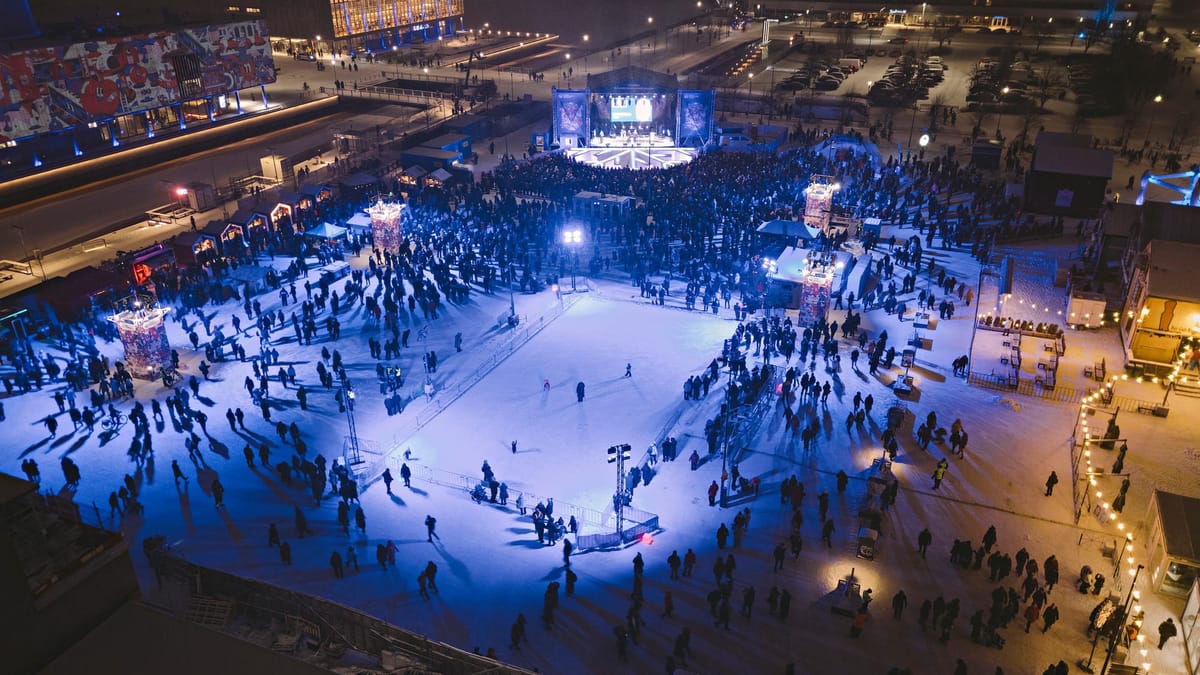
The European Capital of Culture title is most revealing when read as an operating environment rather than a celebration. For one year, permission, money, scheduling authority, and European attention compress into a single time box. Under that compression, a city’s cultural ecosystem is forced to carry volume, coordinate across actors, and remain coherent under scrutiny.
Two designs clarify the operating logic in 2026: Oulu and Trenčín. Both sit outside Europe’s habitual cultural gravitational fields, where institutional redundancy is limited and failure is rarely absorbed quietly. In such contexts, the title year does not simply amplify cultural life; it exposes the system that produces it.
Title years that leave residue force shared decisions, expanded production capacity, and post-year continuity into view. The question is not whether culture can be staged. The question is whether culture can be run.
Operability names what becomes measurable here: whether a cultural system can coordinate across actors, produce at scale, and retain working routines after the title year stops doing the binding.
Oulu and Trenčín do not become “centers” by outshining capitals. They become operating centers in a narrower sense: for one year, cultural work routes through them because the programme has been designed to carry load.
The Title Year as Governance Mechanism
A European Capital of Culture year concentrates legitimacy and then distributes it through schedules, calls, commissioning rules, municipal permissions, and the practical sequencing of work. Heritage and contemporary practice, civic participation and professional authorship, local specificity and European exchange are required to coexist within a single calendar logic. The pressure is productive precisely because it is condensed.
In large capitals, this can read as a strengthened season. In smaller ecosystems, it becomes infrastructural. Interfaces between municipalities, institutions, artists, producers, and publics have to work quickly, often without the cushion of dense systems. When those interfaces fail, the year still happens, but its effects collapse back into event sequences. When they hold, the year leaves behind competence: shared routines, durable partnerships, and production capacity that continues to function after attention withdraws.
What makes 2026 legible is that Oulu and Trenčín embody two different answers to the same operational problem.
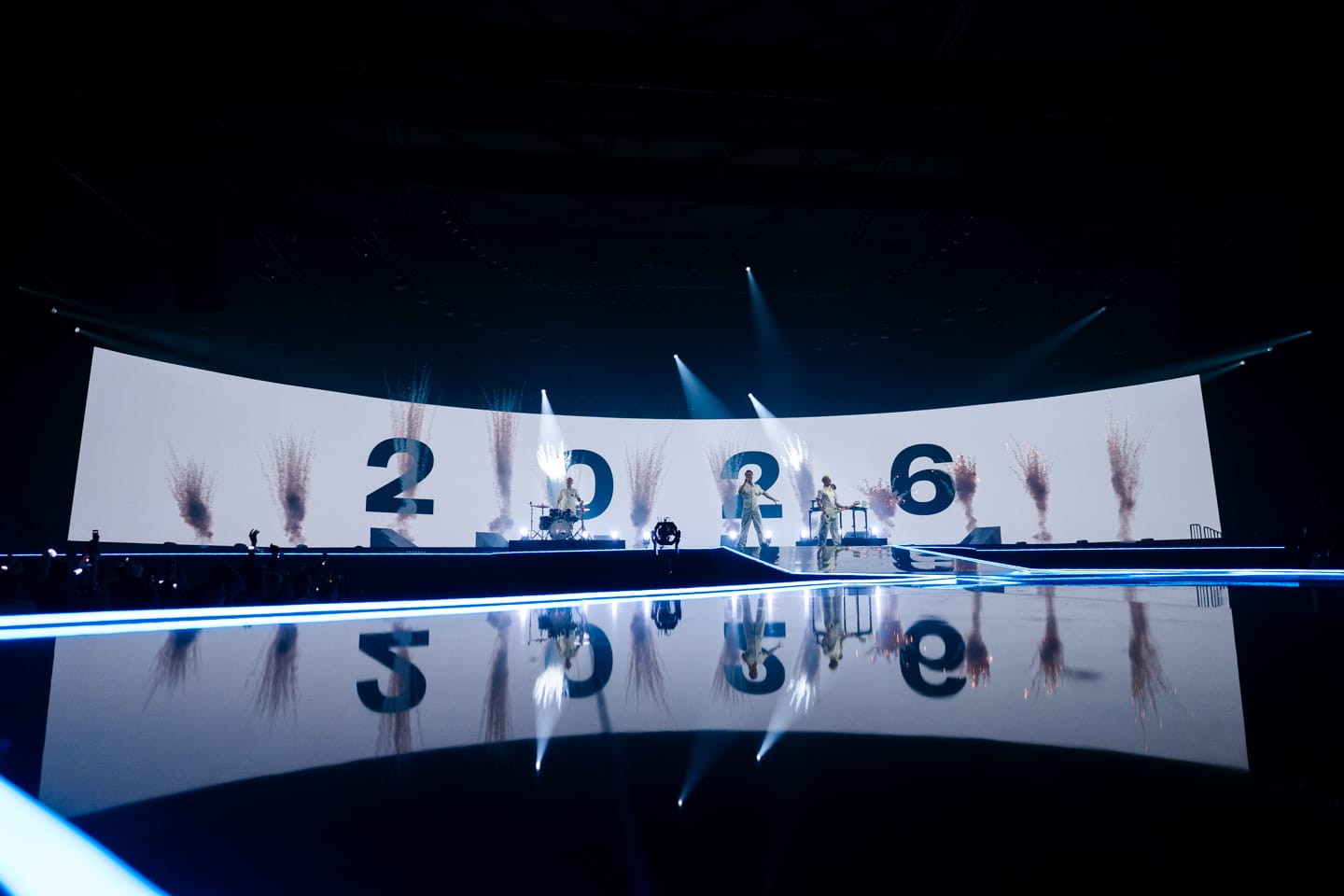
Oulu 2026: Regional Mesh as Production Logic
Oulu’s year is designed as a regional mesh. The programme is delivered with 39 partner municipalities, shifting the unit of culture from the singular event toward circulation: touring patterns, shared production workflows, and repeatable partnerships across a large northern territory. Scale is distributed rather than concentrated. The year does not peak at one metropolitan center; it moves.
The mesh becomes concrete when production begins to repeat across municipalities as routine rather than exception: reusable calendars, portable technical packages, staffing and touring circuits that recur often enough to become method.
The “art + tech” dimension sits naturally inside that operating design. In a region where technological systems are ordinary civic infrastructure, digital formats and media practice function as usable production tools across distance. They travel, adapt to multiple venues, and scale without requiring one flagship institution to carry the full custodial burden.
The governance architecture behind this design is deliberately formal. Finland’s Ministry of Education and Culture allocates €20 million for the year with a matching condition placed on the city; delivery is organized through the Oulu Culture Foundation; impact assessment is assigned to Cupore (Center for Cultural Policy Research) and the University of Oulu. Official programme framing currently describes 650 projects delivered across the municipal partner network. These figures matter less as spectacle than as throughput: they indicate that distribution is being treated as an operating premise rather than a peripheral outreach layer.
The mesh privileges work that can hold meaning in short encounters, move between sites without losing integrity, and function under northern constraints—winter mobility, distance, limited venue density—without recentralising by convenience. It also raises the premium on the least visible infrastructure in cultural production: producer headcount, facilitation competence, technical standardization, shared calendars, and the care labour required to keep participation from becoming merely performative.
A distributed system can carry wide participation and still degrade if production capacity does not scale with it. The symptom is structural: the region appears in programme language, while circulation fails to settle into routine. Once title-year intensity recedes, the mesh loses tension and the system recentralises by default. A regional mesh is only as real as the routines that survive it.
Trenčín 2026: Public Space as Interface, Heritage as Working Surface
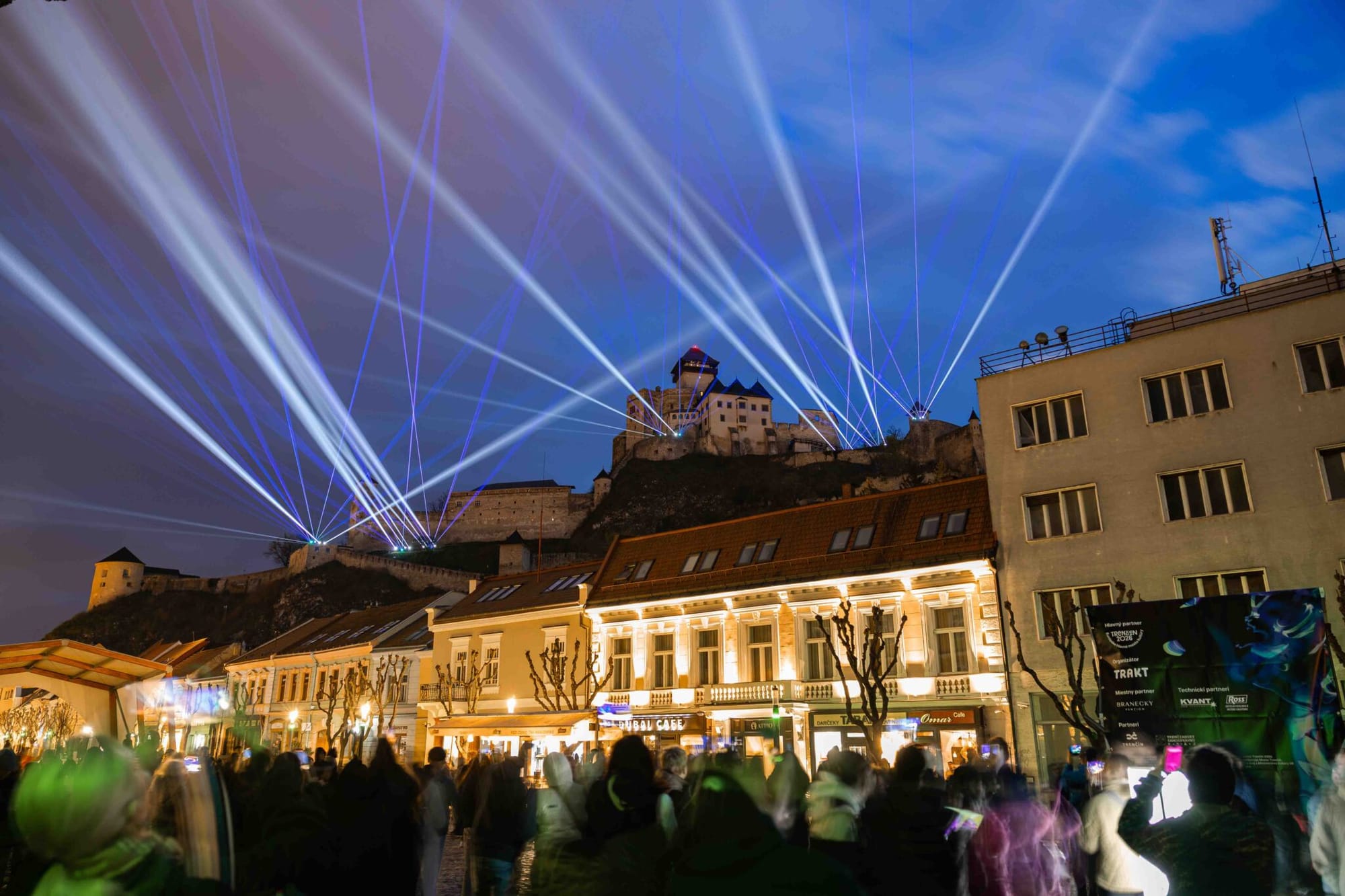
Trenčín’s operating design is urban rather than territorial. Heritage and public space are treated as working interfaces for contemporary practice, using the city itself as container when permanent venue density is limited. The programme is engineered to make municipal coordination a method: permissions, conservation constraints, public access, and production logistics are not background conditions but the medium in which the year operates.
The year is executed through a dedicated delivery body, Creative Institute Trenčín, formed to implement the programme and develop culture and creative industries across city, region, and European partnerships. This matters for continuity. When a title year is run as a temporary coalition, institutional memory dissipates as the calendar closes. When a delivery body is structured to persist, routines have somewhere to land.
In Trenčín, the European dimension is administered through calls. “Europe” becomes a selection condition with budgets, deadlines, and formats—less a banner than a commissioning rule. The structured call Europe to the City is a clear example of how prestige is routed downward into implementable municipal-scale production.
The programme’s early pressure point is time-fixed. Official framing specifies the opening ceremony scheduled for 13–15 February 2026, forcing operational coherence early rather than allowing gradual drift into delivery. The year’s visibility is therefore inseparable from municipal competence: the interface must hold.
This model privileges practices that can work productively with historical surfaces, compress meaning into encounter, and achieve visibility without demanding permanent institutional custodianship. It also makes a long-standing tension explicit. Public space can host cultural volume, but public space is also an obligation: maintenance, liability, access, and consent do not dissolve because the programme is temporary. When conservation and community decision rights are treated as friction rather than structure, activation spends legitimacy quickly. Public space can substitute for infrastructure, but it cannot substitute for obligation.
What These Two Designs Make Legible
Together, Oulu and Trenčín clarify what the title increasingly rewards. Success is no longer described only in symbolic terms—visibility, openness, celebration—but in operational terms: coordination, production competence, and repeatability.
Oulu shows what happens when a title year is designed as routing across territory. Trenčín shows what happens when a title year is designed as interface inside a compact city. Both make clear that the decisive work is less about programming volume than about how volume is carried: who holds calendar authority, how procurement distributes legitimacy, how producer capacity is built, and how continuity is protected once exceptional time ends.
This becomes relevant beyond 2026 because the programme’s pressure tends to privilege what is schedulable, scalable, and legible within a year. Practices that require slow institutional digestion—research cycles, conservation-heavy work, durational commitments, forms resistant to quick readability—do not vanish, but they encounter more friction when operability becomes the dominant measure of success. When operability becomes the benchmark, culture drifts toward what can be administered.
Operability as Cultural Authority
Oulu and Trenčín will not become Europe’s cultural centers in any global sense. In 2026, they function as operating centers in a more precise way: cultural authority is produced through competence—through routing, coordination, and continuity—under conditions that leave little room for symbolic performance alone.
The consequence is not that culture becomes managerial. The consequence is that management becomes cultural. Decisions about calendars, procurement, staffing, maintenance, and evaluation begin to determine which forms of practice remain viable at scale.
A title year does not merely host culture; it reveals what a cultural system is structurally able to carry, and what it quietly strains when volume becomes the medium. Exceptional time is easy to stage; continuity is the harder production.
© ART Walkway 2026. All rights reserved.