Contemporary Art in the House: When Domestic Space Becomes Cultural Infrastructure
How historic houses regulate access, allocate attention, and redistribute authority—reframing the rise of home-based exhibitions not as an alternative to institutional power, but as its reconfiguration.

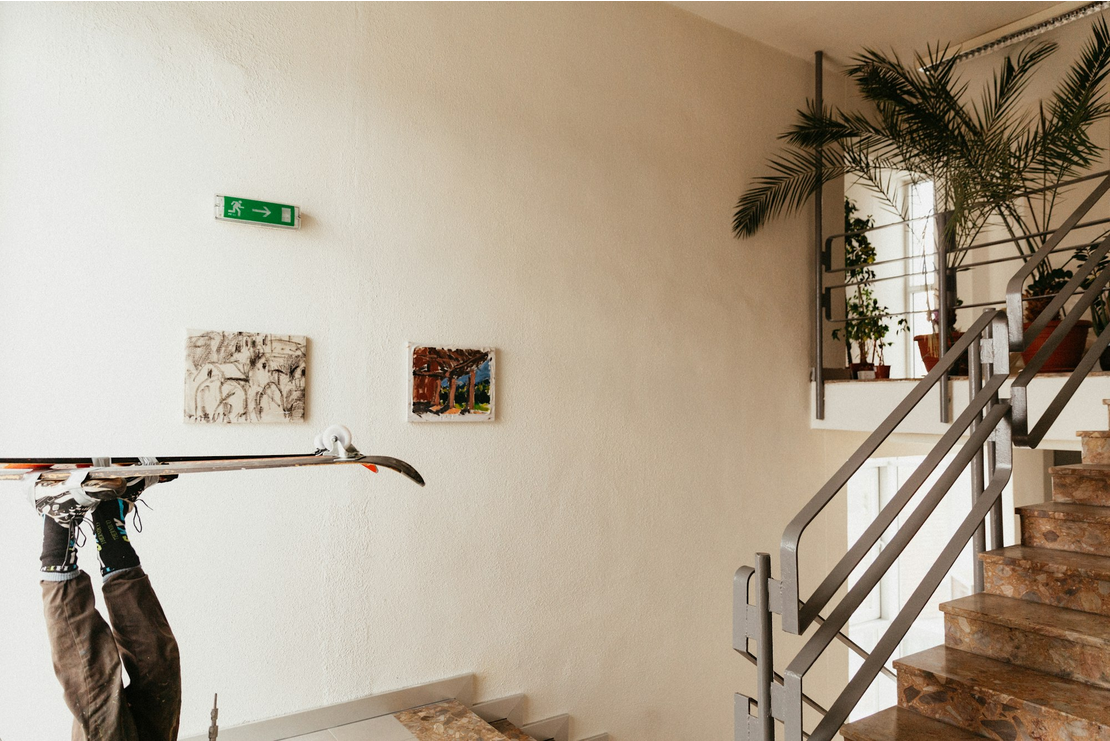
The movement of contemporary art from the white cube into historic homes is often described as a spatial experiment—an antidote to the neutrality and fatigue of the gallery. But read closely, the shift is not primarily architectural. It is operational. What is changing is not where art is shown, but how authority, access, and value are organized when art enters domestic structures that were never designed to be neutral.
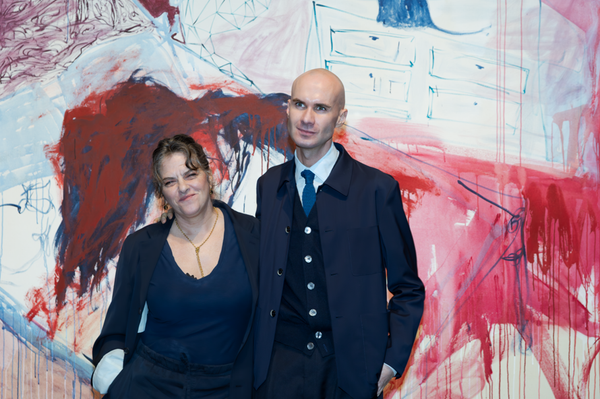
In recent years, projects such as those led by India Montgomery through The Dot Project have foregrounded historic houses as active exhibition environments. These settings are not presented as backdrops, but as collaborators—sites where contemporary work must negotiate with memory, use, and inheritance. The result is often framed as intimacy. What is less frequently examined is the system that intimacy produces.
From Alternative Venue to Operating Environment
Historic houses do not function as softened galleries. They operate as fully articulated environments, with their own protocols of movement, visibility, and behavior. Corridors regulate circulation. Thresholds define access. Rooms signal hierarchy long before any artwork is encountered.
When contemporary art enters these spaces, it does not simply gain context; it enters a pre-existing regime of order. Unlike the white cube—whose authority is asserted through abstraction—the house asserts authority through familiarity. Its power lies not in anonymity, but in recognition. Visitors intuitively know how to move, where to lower their voices, what not to touch. This knowledge is not taught; it is inherited.
In this sense, the historic home operates less as an alternative venue than as a parallel infrastructure—one that governs encounter through domestic codes rather than institutional ones.
Context as Allocation, Not Atmosphere
The appeal of exhibiting in homes is often articulated through atmosphere: warmth, scale, lived experience. Yet atmosphere is only the surface effect of a deeper mechanism. What these spaces actually do is allocate attention.
A sculpture placed beneath a painted ceiling does not merely contrast old and new; it enters a hierarchy of ornament that predates it. A work shown in a former bedroom inherits the room’s intimacy, but also its privacy—raising questions about who is permitted to look, and under what conditions. Context here is not neutral framing. It is selective amplification.
Unlike the gallery, which seeks to equalize works through repetition and display logic, the house differentiates relentlessly. Some rooms command gravity. Others recede. Art does not circulate freely; it is weighted by where it appears.
This is not a failure of the format. It is its defining condition.
Accessibility as a Regulated Condition
Domestic exhibitions are frequently positioned as more accessible than institutional ones. The claim rests on familiarity: homes feel legible, even comforting. But familiarity does not equal openness. Historic houses, in particular, are environments where access has historically been managed rather than extended.
What visitors encounter is not simply art in rooms, but a choreography of permission. How long can one linger? Where does one stand? Who speaks first? These questions are rarely explicit, yet they structure the experience decisively.
In this context, accessibility is not produced by informality. It is produced—or withheld—through implicit regulation. The house does not remove barriers; it replaces visible ones with social cues.
Recognizing this infrastructure changes how exhibitions are constructed. It affects not only what is shown, but how sequences are arranged, where interpretation is withheld, and which frictions are allowed to persist without resolution. Rather than treating domestic space as a neutral container, the exhibition becomes an exercise in calibration—deciding when to align with inherited rhythms of movement and when to interrupt them, when to invite familiarity and when to deny it. The work does not simply occupy the house; it tests the house’s capacity to absorb pressure.
Domesticity Without Neutrality
The rhetoric of “living with art” is often invoked to describe exhibitions in homes. In historic houses, however, domesticity is already institutionalized. These are not private dwellings; they are preserved domestic systems. Their function is not habitation, but continuity.
Art shown here does not quietly integrate into daily life. It interrupts a stabilized narrative of taste, lineage, and care. The most consequential works are not those that blend seamlessly with furniture or architecture, but those that reveal where the house resists accommodation—where scale, material, or subject matter creates friction.
This friction is not incidental. It is the point at which contemporary art tests the limits of inherited structures rather than being aestheticized by them.
What the Model Privileges
Exhibiting within domestic heritage environments advantages certain practices. Work that can operate episodically—legible within brief encounters, resilient to strong contextual framing—circulates effectively. Practices that rely on duration, opacity, or refusal encounter greater resistance. They are not excluded, but they are reframed.
The system does not declare preference. It produces alignment.
Understanding this is crucial. Without it, the domestic exhibition risks being read as an ethical alternative to the gallery, rather than as a different apparatus with its own biases and exclusions.
Making the Structure Legible
The movement of contemporary art into stately homes is not a retreat from institutional power. It is a reconfiguration of it. Authority is not dissolved; it is redistributed across architecture, memory, and behavior.
What matters, then, is not whether modern art belongs in historic houses. It is whether we are willing to recognize these spaces as infrastructures—capable of producing value, regulating access, and shaping interpretation as forcefully as any museum or fair.
The significance of this shift lies not in atmosphere, but in exposure. When art enters the rooms we have inherited, it does not humanize power. It renders its mechanisms visible.
© ART Walkway 2025. All rights reserved.