Born This Way, Still Expected to Change: Personality, Limits, and the Art World’s Faith in Formation
A critical examination of how personality stability challenges the art world’s belief in endless formation, adaptability, and transformation—and how development narratives quietly function as mechanisms of selection.

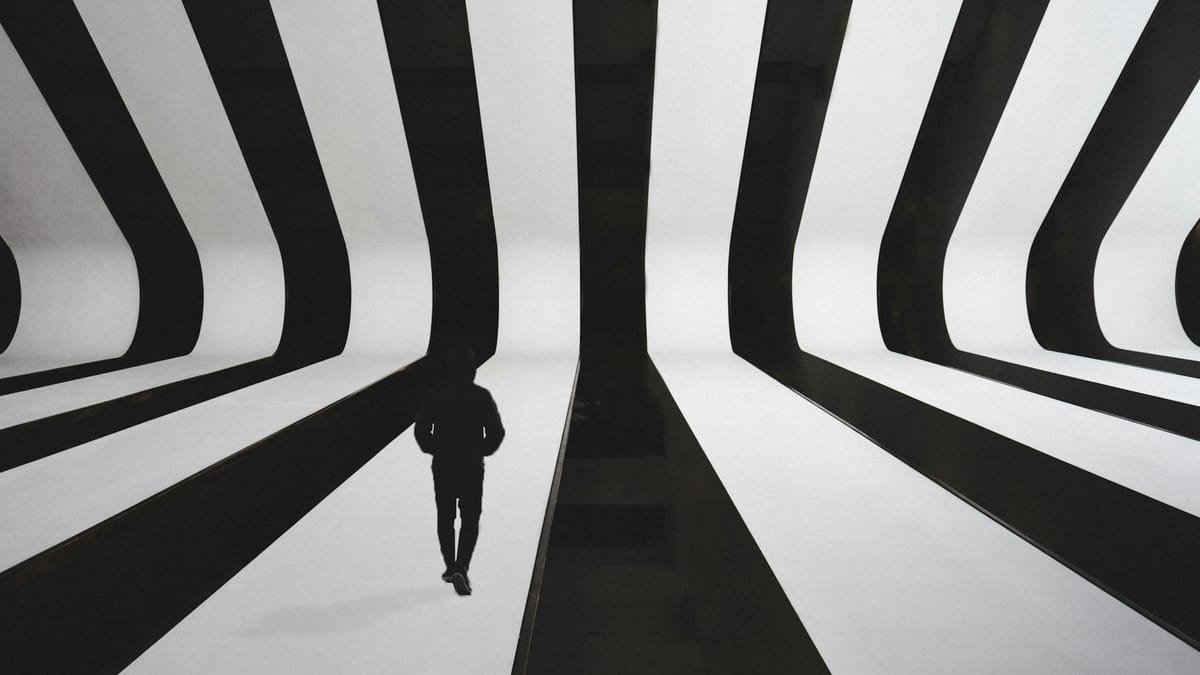
Contemporary art culture is deeply invested in the idea that people are made, not given. Artists are understood as shaped by education, exposure, critique, trauma, community, and institutional opportunity. Careers are narrated as arcs of development. Practices are expected to evolve. Failures are often explained as misalignment, insufficient support, or inadequate formation.
This belief is not merely cultural; it is moral. To suggest that outcomes reflect something fixed or constitutional is often treated as defeatist, exclusionary, or politically suspect. The art world prefers stories in which transformation is always possible, provided the right conditions are met.
Recent research in personality psychology complicates this faith more than the art world is prepared to acknowledge.
Personality Is More Stable Than We Like to Admit
Decades of behavioral genetics research converge on a finding that remains controversial outside specialist circles: a substantial portion of adult personality variation is attributable to genetic factors. Shared upbringing—the family environment, parenting style, early relational context—accounts for far less than most developmental narratives assume.
This does not mean personality is immutable. Traits can be moderated, expressed differently, and shaped at the margins. But it does mean that many enduring characteristics—affective intensity, impulsivity, sociability, suspicion, conscientiousness—are not primarily the results of childhood experience, education, or institutional exposure.
For fields that rely on training, mentorship, and critique as engines of transformation, this poses an uncomfortable question:
What if not everyone is equally formable?
The Art World’s Formation Narrative
Art institutions are organized around formation. Schools promise development. Residencies promise growth. Critique presumes plasticity. Funding decisions often rest on projected trajectories rather than current limits. Even failure is framed as temporary, something that can be corrected through better context or more time.
Art education sits at the center of this formation narrative. Critique, mentorship, and pedagogical sequencing are organized around the assumption that exposure produces adaptation: that repeated feedback will recalibrate temperament, that discomfort will eventually translate into resilience, that uncertainty will become generative with sufficient training. These assumptions are rarely stated, yet they structure how promise is assessed and how failure is interpreted. When students do not respond as expected—when anxiety hardens rather than loosens, when affective intensity escalates rather than refines—the problem is often framed as immaturity, resistance, or insufficient engagement with the process. What remains largely unexamined is the possibility that stable personality traits are being tested against pedagogical conditions designed for a narrower psychological profile.
But it also produces a quiet distortion. When individuals do not change in expected ways—when patterns persist despite support, when behaviors recur despite intervention—the explanation is often displaced. The problem becomes fit, attitude, resistance, or unresolved personal history. The possibility that stable traits are shaping outcomes is rarely entertained.
In practice, this means the art world tends to over-attribute causality to environment while under-acknowledging constitution.
Limits Without Blame
Acknowledging stable personality traits does not require abandoning responsibility or care. It requires recalibrating expectations.
Some individuals are dispositionally less tolerant of uncertainty. Others are more prone to affective volatility, interpersonal sensitivity, or risk aversion. These traits are not pathologies, nor are they moral failures. But they interact unevenly with an art economy built on precarity, ambiguity, delayed reward, and constant evaluation.
When institutions assume near-universal adaptability, they implicitly treat non-adaptation as personal failure. What appears as lack of resilience may instead reflect a genuine mismatch between constitutional traits and structural demands.
This mismatch is rarely named. Instead, individuals are encouraged—explicitly or implicitly—to keep working on themselves.
Therapy, Coaching, and the Endless Work of Adjustment
As therapeutic language has migrated into cultural institutions, so too has the assumption that psychological work can compensate for structural strain. Self-regulation, insight, flexibility, and growth are framed as skills that can always be developed further.
Personality research challenges this optimism. Psychotherapy can meaningfully change how people live with their traits, but it does not reliably transform core personality structure. Treatment helps individuals understand patterns, reduce suffering, and expand choice—not become someone else.
When art institutions implicitly expect therapy, coaching, or self-work to resolve structural incompatibilities, they shift responsibility downward. The demand is no longer just to produce work, but to continually adjust one’s psychological makeup to meet unstable conditions.
Selection Disguised as Development
This is where personality research intersects with the art world’s quieter mechanisms of selection.
If traits are more stable than assumed, then systems that reward only certain dispositions—high tolerance for uncertainty, emotional containment, social fluency, sustained self-direction—will predictably favor some individuals over others. This outcome is often misread as evidence of merit, professionalism, or readiness.
Those who struggle are offered more formation, more feedback, more self-examination. Eventually, many exit.
What presents as a neutral process of development thus functions, over time, as a sorting mechanism. Not of talent alone, but of temperament.
Rethinking Change Without Abandoning Hope
To take personality seriously is not to abandon change. It is to clarify its scope.
Change may mean learning how to work with one’s dispositions rather than against them. It may mean redesigning practices, roles, or timelines to accommodate stable traits. It may also mean acknowledging that some paths are unsustainable for some people, no matter how compelling the work.
This recognition is uncomfortable for institutions built on aspirational narratives. But it may be more humane than endlessly promising transformation while quietly relying on attrition.
What This Makes Visible
Personality research does not undermine the value of art education, critique, or support. It undermines a subtler assumption: that persistence, adaptability, and tolerance for instability are indefinitely cultivable.
The art world already relies on stable psychological traits it does not name, reward, or protect. By treating personality as endlessly malleable, it avoids confronting how much of participation depends on dispositions people did not choose.
The question is not whether art should accommodate every temperament. It is whether a field that depends so heavily on invisible psychological thresholds is willing to acknowledge them.
Change remains possible. But it is not infinite. And pretending otherwise does not expand opportunity—it obscures how it is distributed.
© ART Walkway 2025. All Rights Reserved.