ART SG 2026: When Regional Alignment Becomes Structural
How ART SG 2026 consolidates regional visibility, curatorial governance, and market coordination—marking a shift from platform-building to structural alignment within Southeast Asia’s art ecosystem.

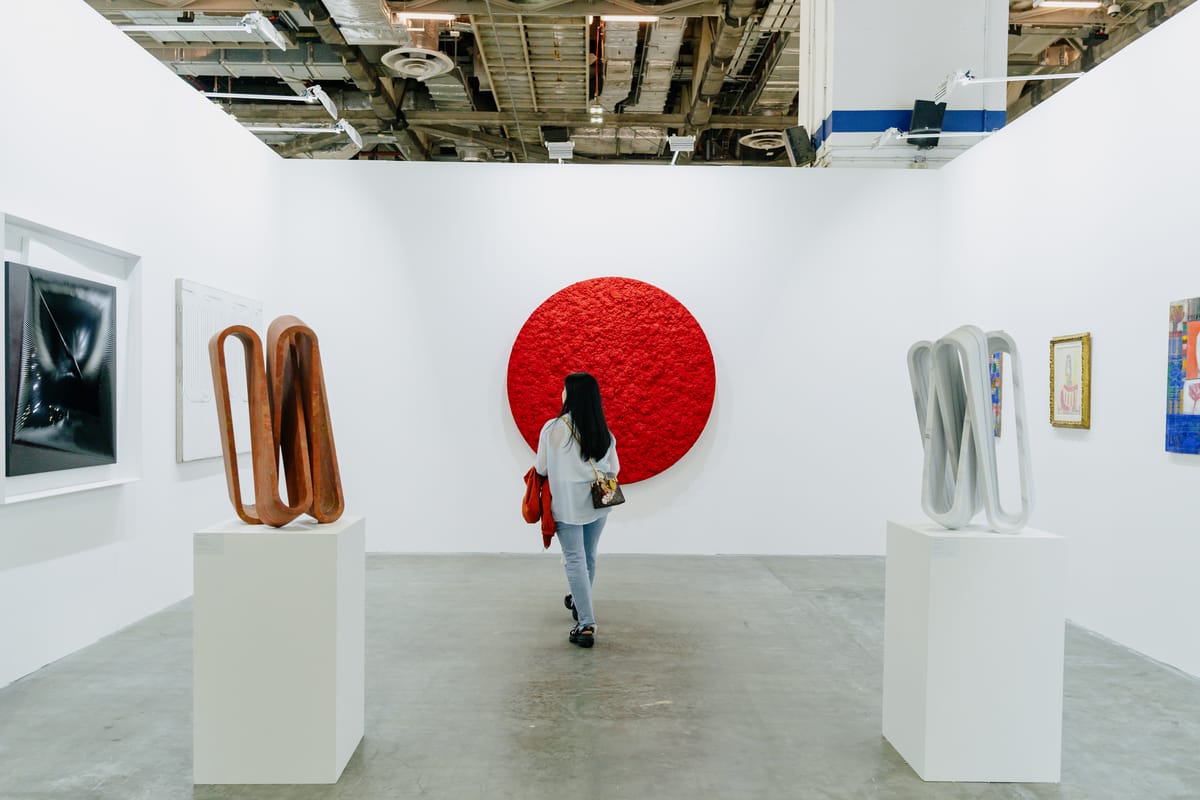
By the time ART SG enters its fourth edition in January 2026, the question of whether Singapore can sustain a major international art fair has already been resolved. Scale, partnerships, and institutional density are no longer provisional; they are operational. What now comes into view is a different question—how cultural production, circulation, and validation are reorganized once optimization becomes the default operating logic rather than a strategic choice.
ART SG no longer functions simply as a recurring event. It functions as infrastructure.
Integration as Synchronization
The co-presentation of S.E.A. Focus within ART SG under a single-ticket framework is publicly framed as integration with distinction: two platforms, shared access, retained identities. From an industry-mapping perspective, the more consequential shift is temporal rather than symbolic.
This move synchronizes curatorial, market, and institutional rhythms. S.E.A. Focus does not lose its curatorial mandate, but its operating tempo is now aligned with fair-time: compressed attention cycles, heightened moments of visibility, and accelerated pathways to acquisition and validation. These conditions expand reach and opportunity, while also recalibrating how long practices can unfold before they are expected to resolve into legible outcomes.
The effect is not reduction, but alignment. Alignment, in turn, produces selectivity.
Curatorial Frameworks as Interfaces
“The Humane Agency,” the curatorial framework guiding S.E.A. Focus 2026, operates effectively at scale because of its capacity to hold multiple urgencies within a shared ethical register. Compassion, care, and social response provide a language that can accommodate political conflict, ecological concern, and institutional ambition without requiring consensus on cause or consequence.
At this level, curatorial themes function less as interpretation than as interfaces. They allow diverse actors—artists, galleries, institutions, sponsors, and public bodies—to coordinate activity without negotiating every point of difference. The framework does not resolve tension; it renders it administrable.
This is a structural feature, not a rhetorical one.
Institutional Optics and Event Agility
ART SG’s collaboration with Rockbund Art Museum, alongside the introduction of a dedicated performance sector and offsite presentations staged in heritage hospitality environments, reflects a broader evolution in fair design. Museum-linked curatorial authority is paired with the temporal flexibility of event-based formats.
These hybrid models deliver institutional seriousness without assuming long-term custodial responsibility. They generate intensity, visibility, and public engagement while remaining mobile and time-bound. For audiences, this establishes an expectation of high-caliber cultural experience that is episodic rather than durational—encounter-based rather than relational.
Over time, this shifts how public culture is perceived: not as a continuous field, but as a sequence of activated moments.
Acquisition as Temporal Alignment
The ART SG–Singapore Art Museum acquisition fund further tightens the coupling between exhibition, market presence, and institutional collection. Fair-time becomes a key moment for canon formation, with acquisition decisions increasingly synchronized to the visibility and momentum generated within the fair’s compressed timeframe.
This alignment streamlines institutional collecting and strengthens the fair’s role as a gateway for public collections. At the same time, it privileges practices that can assert significance within these windows, while making it progressively harder for work that requires extended research cycles, deferred reception, or post-fair reassessment to find comparable traction.
Here, timing becomes not just logistical, but structural.
Singapore’s Operating Advantage
Singapore’s cultural ecosystem is shaped by administrative fluency: regulatory clarity, logistical precision, and an ability to coordinate complex systems across public and private actors. ART SG extends this fluency into the art-fair domain, positioning the city as a neutral relay through which Southeast Asian, South Asian, and broader Asia-Pacific practices circulate into global markets and institutions.
Neutrality, in this context, is not absence of influence. It is a design principle that emphasizes reliability, accessibility, and throughput. As ART SG consolidates its role within Singapore Art Week, participation increasingly aligns around its temporal and symbolic center. Other institutions, initiatives, and practices continue to exist, but their relative visibility and leverage are shaped by how closely they can—or choose to—synchronize with the fair’s cadence.
This is not exclusion. It is structural positioning.
Selectivity and Cultural Tempo
As systems consolidate, certain cultural tempos are advantaged. Practices that translate quickly, circulate clearly, and resolve within established cycles move efficiently through the infrastructure. Others—those rooted in opacity, refusal, or extended duration—remain present but operate under different conditions, often requiring additional mediation to sustain visibility and support.
What emerges is not homogenization of content, but a narrowing of viable operating speeds. The field remains diverse, but the range of tempos that align easily with dominant platforms becomes more limited.
Mapping the Condition
ART SG 2026 clarifies how contemporary art in the region is increasingly organized: through synchronized platforms that integrate market activity, curatorial framing, institutional acquisition, and public programming within tightly aligned temporal windows. This model delivers scale, access, and continuity, and it does so efficiently.
For the broader ecosystem, the question is not whether this configuration works—it demonstrably does—but how other institutions, practices, and rhythms will continue to negotiate their position alongside it as consolidation deepens. The long-term shape of the field will depend less on opposition than on how plural temporalities are maintained within an environment increasingly optimized for alignment.
ART SG does not determine that outcome alone. It makes the condition visible.
© ART Walkway 2025. All rights reserved.