Art Basel Qatar 2026: Patience as Market Protocol
How the inaugural edition reorganized buying without adopting market optics—using attention concentration, institutional time, and underwriting to make “slow” tempo operational.

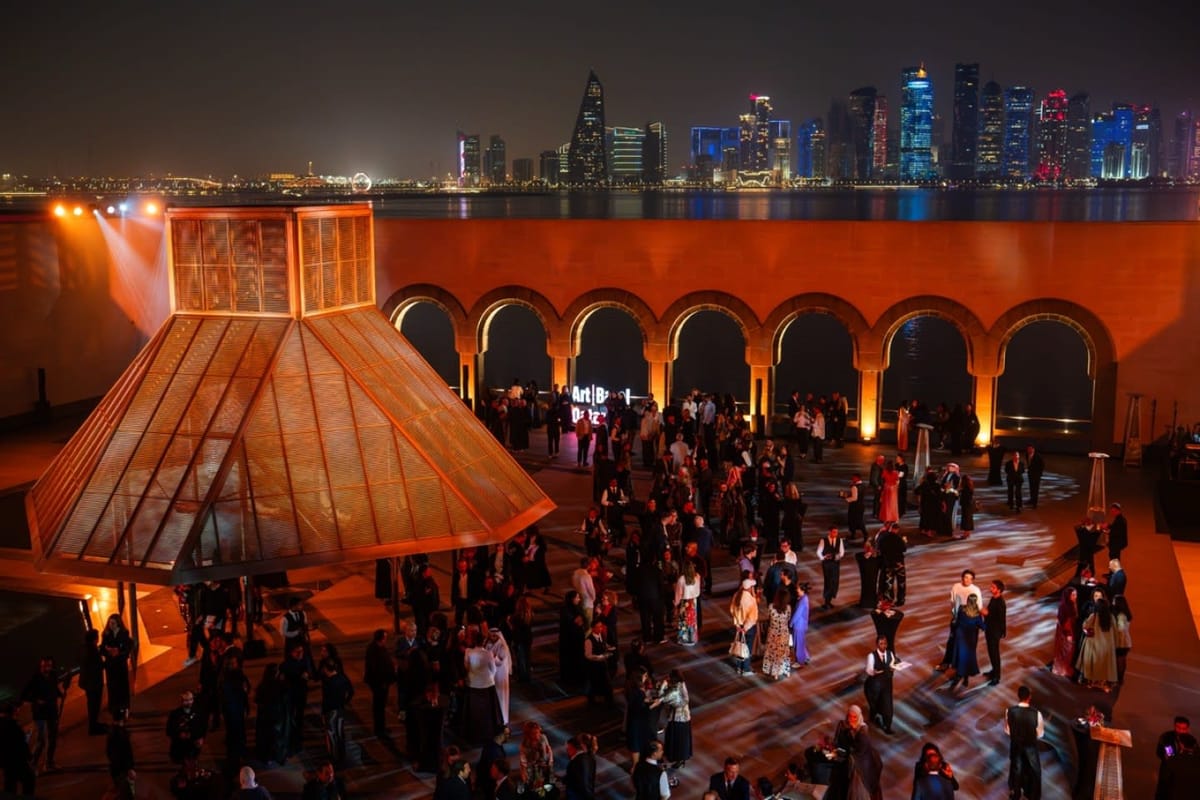
The inaugural edition made its wager early: a fair can stay explicitly commercial while refusing the cues that certify an Art Basel week as “successful.” It did not manufacture a first-day crescendo. It designed the week so it didn’t need one.
The result was not the absence of transactions. It was the emergence of a market protocol in which institutional priority—rather than collector competition—organizes the week’s sequence.
Patience, here, is not temperament. It is design.
The protocol is simple: concentrate attention—solo presentations—stage decision through institutional time—priority, holds—and de-risk participation through underwriting, so the market can behave slowly without losing velocity.
 Editorial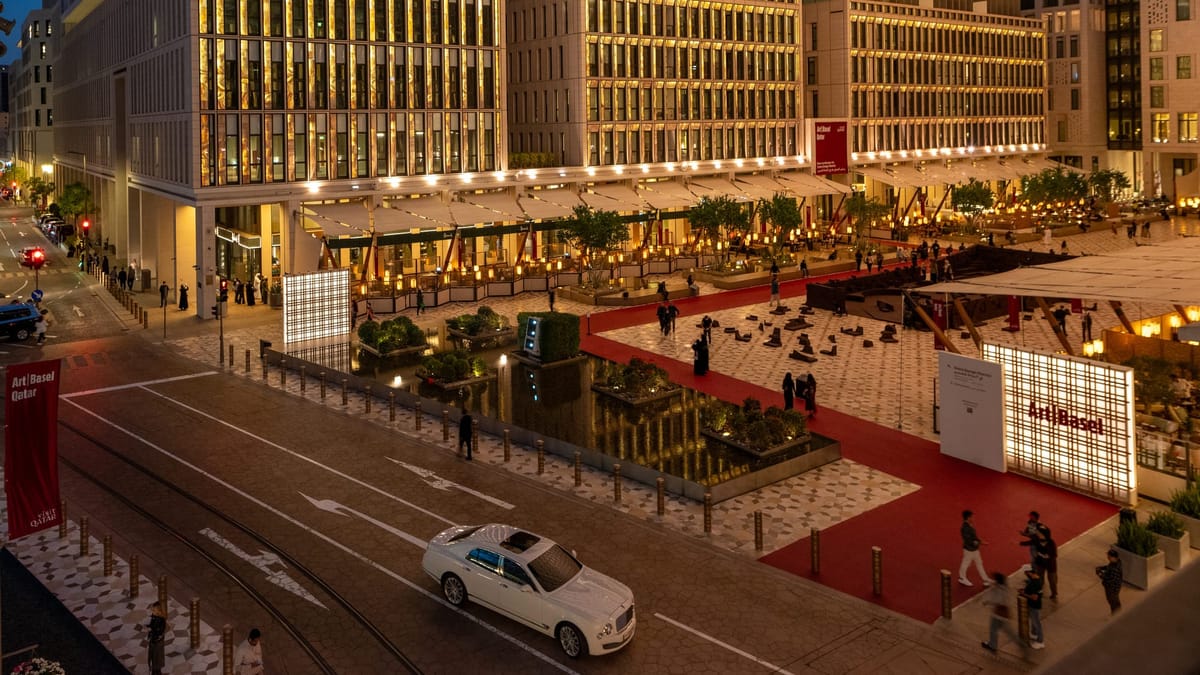
 Editorial
The Fair as Allocation Device
The solo-artist structure was positioned as a curatorial correction: fewer collisions, more coherence per presentation. Economically, it redistributes attention into bounded propositions.
A single-artist presentation compresses risk into a single claim. The claim becomes legible quickly; legibility converts into decision without manufactured heat. The fair’s “biennial” optics are therefore not in conflict with commercial intent. They are the mechanism that allows commerce to proceed without looking like commerce.
When work is framed as a complete thought rather than a fragment, buying can be narrated as alignment rather than capture. The market does not disappear. It is re-coded.
Underwriting as Structure
A key condition of the inaugural model was reduced exhibitor exposure. Logistics support and lower participation costs—relative to other editions—changed what the week was allowed to be.
Subsidy does not soften commerce; it changes its tempo.
When exposure is reduced, exhibitors are not forced into instant turnover to justify presence. They can treat the fair as placement infrastructure: meeting collectors, engaging institutions, routing work through longer conversations. “Measured refinement” becomes economically possible, not merely stylistic.
If calm is funded, calm is conditional. The model’s audit is simple: how it behaves if support thins, or if expansion reintroduces exposure as pressure.
Sequencing as Scarcity
Doha’s scarcity did not need to be manufactured by congestion. It was produced by priority.
Institutional shortlists, holds, and reservation dynamics—linked to acquisition timelines associated with major local institutions—organized the week’s sequence. Tempo was set not by crowd heat but by permission to release work. In this structure, the decisive market moment occurs upstream of the floor: the field is shaped by what becomes temporarily unavailable before it becomes widely visible.
It generates a specific collector tension. Private buyers encounter the fair not as a simultaneous field but as a timed release. This is not an ethical problem. It is a retention test.
Discretion as Market Technology
The visibility of placements aligned with the protocol the fair installed: institution-heavy, partially disclosed, distributed across a band where acquisition can occur without spectacle.
At the upper end, the fair’s validation layer stayed visible but unperformative. Trophy inventory circulated through private viewing contexts, functioning less as public scoreboard than as calibration signal.
In a market calibrated for discretion, opacity is not a defect. It is the preservation mechanism.
A Market That Refuses the First-Day Ritual
The inaugural week’s most distinctive outcome was not a set of numbers. It was a shift in what counts as market proof.
In Doha, legitimacy is not produced by the visibility of early sales. It is produced by the ability to hold a market inside an institutional atmosphere—by letting transactions occur without allowing transactions to become the fair’s defining image.
This is commercial confidence expressed through allocation, priority, and reduced exposure rather than through acceleration and spectacle. The fair treats selling as baseline rather than performance. It stabilizes buying by redesigning the conditions under which buying becomes legible.
The question now is whether designed tempo remains tempo—or becomes jurisdiction: priority as permanence, calm as hierarchy.
© ART Walkway 2026. All rights reserved.