Art Basel Hong Kong 2026: Ecosystem as Aggregation
How Art Basel Hong Kong aligns museums, districts, independent spaces, public programs, and gallery networks into a shared legitimacy surface—making Hong Kong’s art ecology more visible while increasingly organizing how that ecology is timed, converted, and read.
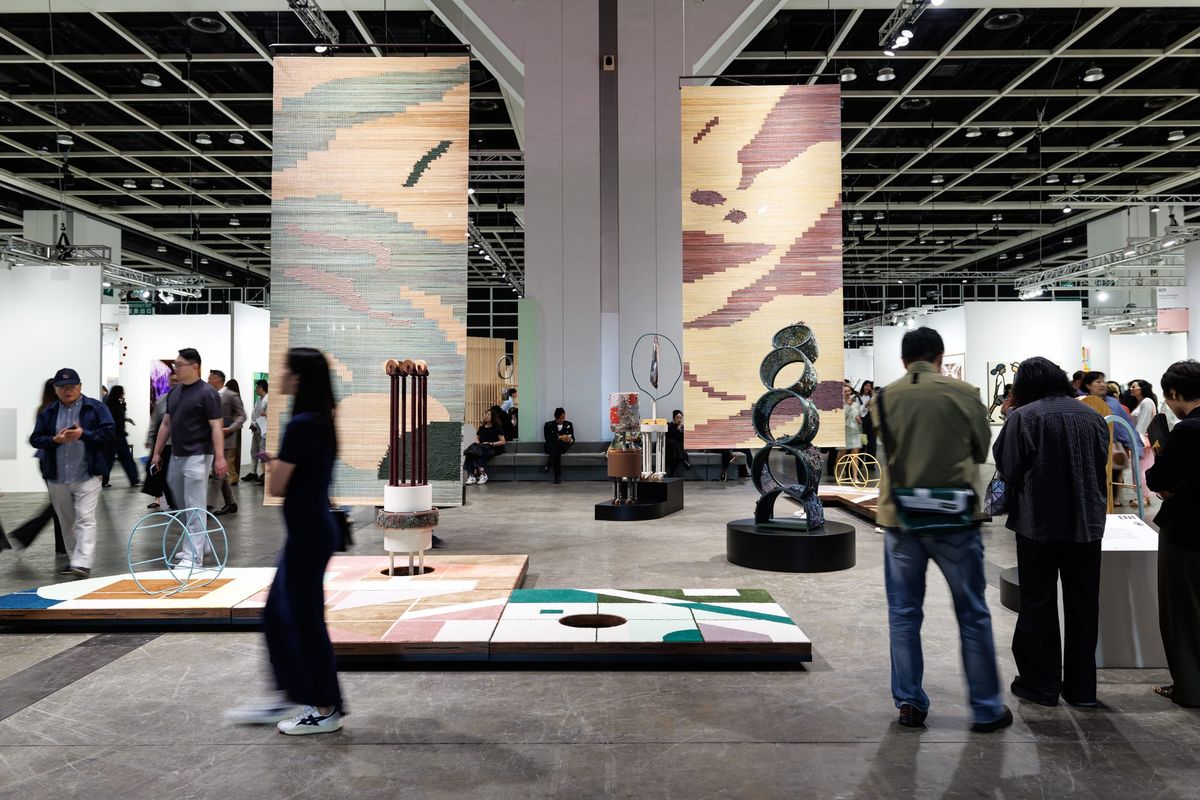
By the time Art Basel Hong Kong opened its 2026 edition, the question was no longer whether the fair belonged to the city. That had already been settled through repetition, infrastructure, and scale. The more operational question begins one step later: once the fair has proved Hong Kong’s centrality, what does that centrality begin to gather under its own frame?
In 2026, the answer is visible less in the fair hall than in the way the week is organized around it.
Art Basel Hong Kong no longer appears simply as one major fair inside a broader art ecosystem. It increasingly functions as the platform through which that ecosystem is synchronized and presented—across museums, independent institutions, gallery districts, nonprofit partners, public programming, collectors, and regional cultural traffic. The city does not disappear inside this arrangement. More of it becomes visible at once. But the forms of visibility are not distributed evenly. Once ecology is gathered at fair scale, some structures convert more quickly than others into relevance, traffic, and authority.
The issue, then, is not whether Art Basel supports Hong Kong’s art world. The issue is what happens when the fair becomes the most efficient site through which that world is assembled, timed, and made legible to itself and to others.
The Week as Alignment System
Hong Kong clearly has an art ecology that exceeds Art Basel: M+, Tai Kwun, Para Site, Asia Art Archive, the Hong Kong Museum of Art, gallery networks in Central and Wong Chuk Hang, artist-led and curatorial platforms, media-art histories, local collectors, university programs, and newer spaces still testing their position inside the city. None of this begins with the fair, and none of it depends on the fair to exist.
But during art week, these structures do not simply sit alongside one another. They enter a shared timing system.
Museum openings, institutional programs, district traffic, public commissions, satellite events, gallery launches, nonprofit activations, and collector movement begin to operate inside one intensified horizon of attention. That horizon is anchored by the fair. Art Basel does not need to contain every part of the week to shape how the week is read. It only needs to become the point through which multiple actors, at different scales, can convert presence into significance quickly enough for the alignment to hold.
This is where the fair’s ecosystem language becomes useful. “Ecosystem” does not only describe plurality. It helps stabilize a week in which very different structures—commercial, institutional, nonprofit, local, international—can be made to appear inside one coherent picture without having to resolve the differences between them.
That picture is productive. It allows many parts of the city to benefit from the same concentration. It also establishes a hierarchy of conversion: which institutions, spaces, programs, and districts become most legible once the week is organized around the fair’s timing and traffic.
Ecosystem as Operating Language
“Ecosystem” works well for Art Basel because it turns coordination into something that feels natural rather than arranged.
Under that language, museums, galleries, public partners, universities, nonprofits, districts, and collectors can be presented as parts of one shared cultural field. The word helps reduce the amount of friction visible between structures operating under very different pressures. A museum contributes continuity and institutional authority. A district such as Wong Chuk Hang contributes local density, repeat visitation, and a different collector rhythm from Central. Independent spaces contribute forms of experimentation and discursive seriousness that are not built for fair-time alone. The fair contributes concentration: timed visibility, regional traffic, sponsor density, and the ability to place different parts of the city inside one frame of relevance.
These contributions are not equivalent, but they become temporarily interoperable.
That interoperability is one of the fair’s most important achievements in Hong Kong. It allows institutions with year-round obligations and platforms built for short-term concentration to occupy the same week without appearing to be working at cross-purposes. It also means that the fair does not need to create the city’s ecology in order to benefit from it. It only needs to gather that ecology into a more usable arrangement.
This is what aggregation looks like at fair scale: not replacement, but alignment strong enough that many different forms of cultural value can be read together, even if they do not convert equally inside the same frame.
Public Program as Conversion Layer
The citywide Public Program is central to that arrangement. Film, Conversations, Exchange Circle, M+ facade commission, Tai Kwun collaborations, offsite Encounters, university affiliations, nonprofit partnerships, and new cultural partners do more than widen access. They create additional routes through which the fair’s authority can circulate beyond the booth.
That matters because a fair confined to the hall remains visibly commercial, however strong the presentations. A fair extended across screenings, talks, institutions, performances, public commissions, and city partnerships begins to operate differently. It can receive not only collector attention, but forms of civic, educational, and institutional attention that broaden the terms on which the week is understood.
This is one of the reasons Hong Kong has become so important to the fair’s global portfolio. The city has enough institutional infrastructure, enough district variation, enough museum authority, and enough programmatic depth for the fair to extend itself outward without looking artificially inflated. The surrounding city is not decorative. It is part of the mechanism through which Art Basel Hong Kong can appear as more than a marketplace.
The exchange is real. Museums and nonprofits gain visibility, footfall, and art-week intensity. The fair gains the ability to operate with the atmospherics of public culture while remaining a temporary platform. That does not make the public program incidental. It makes it functional.
The city is not outside the fair’s authority here. It is one of the ways that authority moves.
The City That Converts Cleanly
This arrangement does not make all parts of Hong Kong’s art ecology equally legible. It privileges the city that converts cleanly at fair scale.
M+, Tai Kwun, major museum programming, polished gallery districts, public commissions, new spaces opening at the right moment, local artists featured in campaign and partner contexts, alternative fairs that add range without disrupting the hierarchy—these all move well inside the fair’s organizing frame. They thicken the week and expand what the city can appear to be during it.
Other structures move differently.
Longer research timelines, neighborhood-level collector cultures, institutions whose significance is cumulative rather than event-based, artist-led or locally specific scenes that do not scale neatly through international visibility, and histories that resist immediate translation into art-week relevance remain present, but they travel less easily across the week’s main circuits. They still matter. They simply do not convert with the same speed into traffic, recognition, or symbolic return.
That difference becomes more visible, not less, when the week is working well. The stronger the alignment, the more efficiently the fair can gather very different kinds of cultural labor into one coherent image of Hong Kong as plural, active, and mature. But coherence at that scale depends on different kinds of work becoming readable together even when their actual operating durations remain very different.
The city remains broader than the week’s frame. The week makes some of that breadth more usable than other parts.
Uneven Conversion
This is clearest in the contrast between different kinds of urban cultural value.
A district like Wong Chuk Hang carries a gallery and collector logic built on repeat visitation, lower intimidation thresholds, larger spaces, and a sense of community not organized entirely by event prestige. Tai Kwun carries another kind of value: historical framing, exhibition depth, and the capacity to stage longer arguments about labor, infrastructure, social transformation, and Chinese art after 2008 that do not depend on fair tempo to matter. Para Site and Asia Art Archive carry still others: independent institutional seriousness, research, memory, and discursive continuity.
These structures gain from art week. But they do not all pass through the same conversion channel.
The fair can absorb them as signs of local depth, ecosystem maturity, and cultural seriousness. It cannot absorb the durations on which they depend quite so easily. What gives these structures their force often lies in recurrence, continuity, slow relation, and forms of value that are not built to peak inside one week of intensified attention.
That is where aggregation becomes more than visibility. It becomes ranking by convertibility.
Some structures move easily from local significance into fair-legible importance. Others remain important while traveling less efficiently across the same surface.
Not everything that matters in Hong Kong reads at the same speed.
What This Configuration Privileges
An ecosystem organized through aggregation privileges specific actors, tempos, and forms of legibility.
It privileges institutions and galleries able to turn fair-time into longer authority. It privileges structures already strong enough to benefit from proximity without depending on it entirely. It privileges work that can move between market, museum, and public-program registers without requiring major retranslation. It privileges local forms that can thicken the fair’s image of the city while remaining compatible with its timing and scale.
Other positions remain present, but not equally centered.
Smaller, slower, or less brand-compatible structures risk appearing as support rather than as central actors. Histories that do not peak at the right moment become less visible than programs timed to the week’s gravitational pull. Local significance that is cumulative, intimate, or difficult to package remains part of the city, but not all of it converts equally inside the main art-week frame.
The issue is not whether Art Basel Hong Kong is good or bad for the city. That question is too blunt for the scale at which the fair now operates. The sharper issue is what kind of urban cultural order becomes easier once ecology is organized through alignment, and alignment begins to determine what the city can most efficiently look like during its most visible week.
The fair does not create Hong Kong’s art world.
But the more convincingly it aggregates that world into its own legitimacy surface, the harder it becomes to separate the city’s ecology from the frame through which it is being timed, converted, and read.
© ART Walkway. All Rights Reserved.